








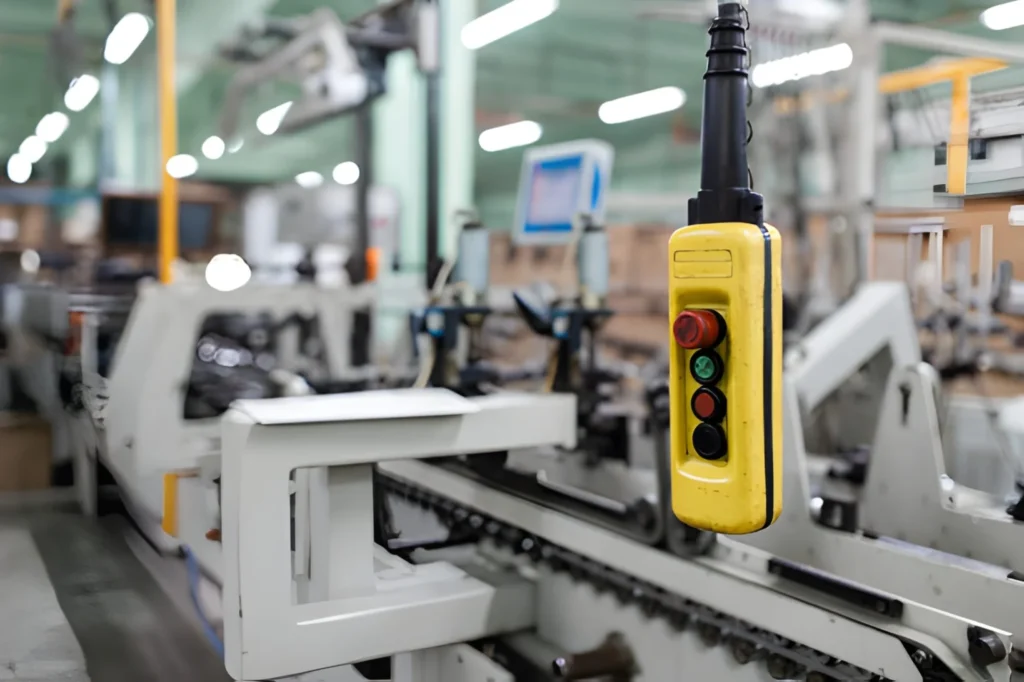
How to choose a suitable Pendant Control Station

كيفية اختيار محطة تحكم معلقة مناسبة

اختيار المناسب محطة التحكم المعلقة can feel like a small decision—until a crane stops over a 5‑ton load and the operator says, “These buttons don’t feel safe.” For B2B buyers, OEMs, and MRO teams, getting this component right means smoother lifting, fewer breakdowns, and less operator fatigue.

In this guide, you’ll see what a pendant control station actually does, how to choose the right one, which configurations are common in the market, and what to check for safety, installation, and maintenance.


ما هي محطة التحكم المعلقة؟

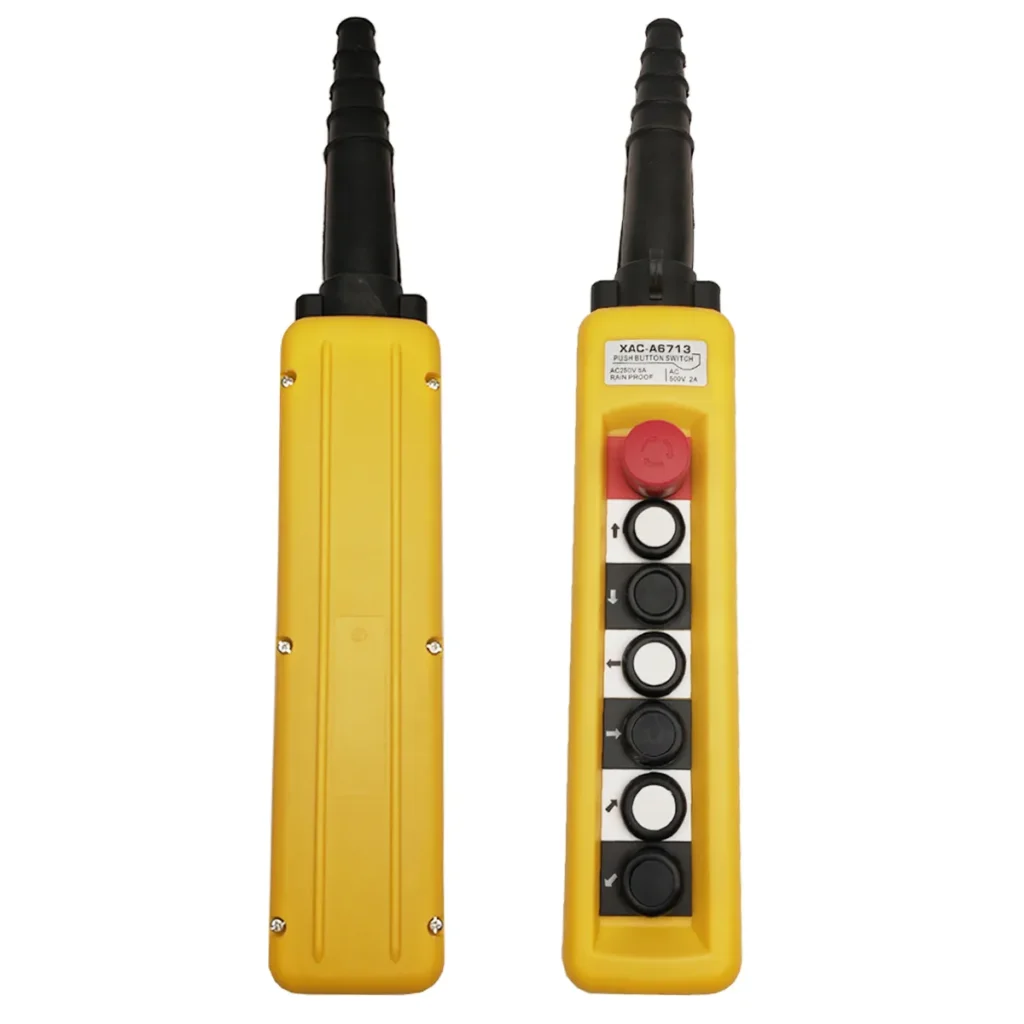
محطة التحكم المعلقة XAC-A6713 is a handheld control device with push buttons or switches that lets the operator remotely control equipment such as hoists, cranes, winches, and industrial doors. It usually hangs from a cable, giving the operator a clear line of sight to the load while keeping them out of danger zones.

In modern material‑handling systems, pendant control stations are used everywhere from factory production lines and warehouses to construction hoists and waste-handling machines, where precise, fingertip control over motion is critical.
Basic AspectPractical Description
Core functionHandheld remote interface to control motion (up, down, left, right, open, close, start, stop) on hoists, cranes, and other machinery.
Typical applicationsOverhead cranes, jib cranes, gantry cranes, electric hoists, winches, tail lifts, warehouse lifts, industrial doors.
Typical operatorsCrane and hoist operators, machine operators, maintenance technicians, production staff in factories and warehouses.
Typical designElongated housing with 2–12 push buttons, often including 2‑speed hoist control buttons and a red emergency stop pendant station mushroom head.
Enclosure protectionFrequently IP65 waterproof pendant control station housings or NEMA 4 / 4X‑style ratings for dust, water jets, and impact resistance.

Key Selection Factors for B2B Buyers

When you choose a pendant control station for an OEM project or a retrofit, start with the technical basics: the required voltage, current, number of functions, and whether you need single‑speed or 2‑speed hoist pendant control. At the same time, match the enclosure rating and materials to the environment—IP65 or NEMA 4 is typical for dusty, wet, or outdoor crane applications where durability and safety are non‑negotiable.

For B2B buyers, it is also smart to consider ergonomics, cable entry options, and standards compliance (for example, IEC/EN 60947 for industrial control gear), because these factors affect operator comfort, long‑term reliability, and audit or inspection outcomes. When you send an inquiry or RFQ for a pendant control station, include your load type, environment, wiring diagram, and required certifications—this helps suppliers quote faster and more accurately for your project.

عامل الاختيارما الذي تبحث عنهWhy It Matters
Electrical ratingsCheck control circuit voltage (e.g., 24 V, 110 V, 230 V) and contact ratings such as 10 A / 600 V where applicable.Ensures compatibility with your control system and prevents overheating or premature contact failure.
Number of buttons2–12 push buttons or more, including directions (up/down, left/right, open/close) and additional functions such as horn or inching.Supports all required motions and functions without overcomplicating operation.
Speed controlSingle‑speed or two‑speed pendant control station designs with mechanically interlocked up/down buttons.Allows smooth, precise load handling and reduces swing or shock loading.
Enclosure ratingIP65 crane pendant control, NEMA 4 or similar; look for impact‑resistant plastic or robust ABS housings.Protects against dust, water, and physical abuse in harsh industrial environments.
Safety featuresDedicated emergency stop pendant station button, positive‑opening contacts, double insulation, clear labeling.Reduces risk of accidents and meets safety policies and compliance requirements.
ErgonomicsSlim, lightweight body, comfortable grip, and easy‑to‑press buttons designed for one‑hand operation.Cuts operator fatigue and makes fine positioning easier during long shifts.
Standards & approvalsCompliance with IEC/EN 60947 and CE or other local certifications, depending on market.Simplifies approval for use in regulated markets and during customer audits.
Customization optionsCustom pendant control box layouts, logo printing, custom cable lengths, special button symbols.Lets OEMs and system integrators match the pendant exactly to their machinery and brand.

Quick tip: if you are working on a series project, ask your supplier for a standard pendant control station platform that can be slightly customized—this keeps your stock simpler while still covering different machines.


Common Configurations and Market Options

Most manufacturers offer pendant control stations in families: small 2–3 button models for compact hoists, mid‑range 4–6 button models with 2‑speed hoist crane control, and larger 8–12 button pendants for complex overhead crane systems. You will also see product lines that scale from basic “up/down + emergency stop” units to fully configurable multi‑row pendants with extra functions such as travel, traverse, horn, and auxiliary controls.

Modern industrial hoist control pendant products typically ship as complete kits or configurable housings, allowing you to choose the enclosure, buttons, contact blocks, and accessories while keeping the same mechanical platform. This gives B2B buyers a good balance between off‑the‑shelf availability and customization for project‑based orders or OEM series production.

Typical ConfigurationTypical Use CaseKey Characteristics
2‑button pendant control stationSimple electric hoists or single‑direction lifts.“Up/Down” control, often with a separate emergency stop on the machine or added as a third button.
3‑button small hoist pendantCompact hoists and small cranes needing an emergency stop.Up, down, and one red E‑stop in an IP65 or NEMA 4 housing for basic safety needs.
4‑button pendant with E‑stopLight‑duty bridge or jib cranes, doors, or winches.Two movement directions plus extra functions, plus integrated emergency stop in a plastic or ABS body.
6‑button 2‑speed pendant stationStandard overhead cranes and warehouse lifting systems.2‑speed hoist pendant control (slow/fast up and down) plus travel controls and emergency stop.
8–12 button crane pendantComplex cranes, multi‑motion systems, or process lines.Multiple rows of buttons for vertical and horizontal motions, horn, auxiliary outputs, and sometimes selector switches.
Wall‑mounted control stationTail lifts, doors, or fixed equipment where hanging pendant is not ideal.Uses similar push‑button technology but mounted on a surface instead of hanging from a cable.

If you are collecting supplier quotations, it helps to specify not just “6‑button pendant” but the exact functions you need (e.g., slow up, fast up, slow down, fast down, left, right, emergency stop) so that contact blocks and interlocks are chosen correctly.


Installation, Safety, and Maintenance Tips

Even the best waterproof pendant control station will fail early if installed with poor cable support or no strain relief, so pay attention to mounting accessories and cable glands when planning your project. Proper labeling of button functions, clear directional arrows, and visible emergency stop positions help operators react quickly and reduce training time.

From a safety point of view, it is worth checking that the pendant’s emergency stop function integrates correctly with your safety circuit and that the enclosure rating matches your wash‑down, outdoor, or dusty environment. Regular inspection for cracked housings, worn labels, sticky buttons, or damaged cables is a low‑cost way to avoid unplanned downtime in cranes and hoists.

AreaBest PracticeBenefit for Your Project
Mechanical installationUse proper strain reliefs, cable supports, and the correct diameter cable gland for the pendant cable.Prevents cable damage and unplanned failures due to mechanical stress.
Environment matchingChoose IP65 crane pendant control or NEMA 4/4X‑style housings for dust, water jets, or outdoor use.Extends service life and maintains safety functions in harsh conditions.
Safety integrationConnect emergency stop contacts into your main safety circuit using standards‑compliant devices.Ensures the pendant can safely stop motion in an emergency.
Labeling & symbolsUse clear arrows, text, or ISO symbols on each push button, especially for multi‑motion cranes.Reduces operator error and speeds up training for new staff.
Operator trainingTrain operators on 2‑speed operation, safe distances, and correct use of emergency stop.Improves productivity while reducing incidents and near‑misses.
Preventive maintenanceInspect buttons, housings, and cables regularly; replace worn components before failure.Minimizes downtime and keeps cranes and hoists ready for critical loads.

Planning a new crane line or upgrading older hoists? This is a great moment to standardize on one or two pendant control station types across your plant and send a consolidated RFQ to your preferred suppliers for better pricing and easier spare‑parts management.

If you are ready to source pendant control stations for a new line or as part of an MRO framework contract, send your preferred supplier a clear specification based on the factors above and ask for both standard and customizable options—this often reveals cost savings and simplifies future expansions. And of course, if you already work with a trusted industrial control manufacturer, sharing your typical crane and hoist layouts can help them propose a pendant control station platform that fits all your key applications with minimal engineering time.

الأسئلة الشائعة

What IP rating do I need?

IP65 or NEMA 4 is recommended for most crane and hoist uses, as it protects against water and dust.

When is two-speed control needed?

Use a two-speed pendant for applications requiring slow, precise load placement and smooth movement control.

How many buttons should I specify?

Count each required movement (hoist, travel, extras) separately and always include an emergency stop button.

Can button layouts be customized?

Yes. Many suppliers offer customizable layouts, allowing you to pick enclosure size, button types, and functions.

What standards should I check?

Look for IEC/EN 60947 compliance and relevant market approvals, such as CE certification.

What information should I give when requesting a quote?

State voltage, motion functions, environment (wet, dusty, outdoor), enclosure rating, cable length, and any special labeling or accessory needs.

منشورات ذات صلة

Pendant Control Station Supplier Selection Guide

دليل اختيار مورد محطة التحكم المعلقة

ما هي محطة التحكم المعلّقة، ولماذا يجب أن تكون مهمة لشركتك؟ محطة التحكم المعلقة عبارة عن جهاز مدمج ومريح ومحمول باليد يتيح للمشغلين التحكم في الماكينات الصناعية باستخدام أزرار ضغط ومفاتيح وإيقاف طارئ بسيط. وهي واجهة بالغة الأهمية في عمليات الرافعات، والناقلات، والرافعات، والعديد من الخطوط الآلية. عند اختيار المورد [...].

قراءة المزيد
Overhead Crane Remote Control the complete guide

الرافعة العلوية للتحكم عن بعد الدليل الكامل

في البيئة الصناعية سريعة الوتيرة اليوم، تُعد السلامة والكفاءة أمرًا مهمًا حقًا. لقد أصبحت أنظمة التحكم عن بُعد للرافعات العلوية واحدة من أكثر الأدوات قيمة للصناعات - سواء كان ذلك في التصنيع أو البناء أو الخدمات اللوجستية. فهي تسمح للمشغلين بالتحكم في الرافعات من مسافة آمنة، مما يوفر رؤية أفضل ويزيد من الإنتاجية. في هذا الدليل، سوف نستكشف الهيكل الأساسي [...].

قراءة المزيد
What is a Pendant Control Station?

ما هي محطة التحكم المعلقة؟

ما هي محطة التحكم المعلقة؟ واجهة بسيطة محمولة باليد تمنح المشغلين تحكمًا مباشرًا وآمنًا في المعدات الصناعية الكبيرة من مسافة بعيدة. اعتبرها بمثابة اليد الممتدة للمشغل، مما يتيح لك تشغيل أو إيقاف أو رفع أو توجيه رافعة أو ناقل دون الاقتراب من الأجزاء المتحركة. فهو يجمع بين التصميم المريح والكهرباء القوية [...].

قراءة المزيد