
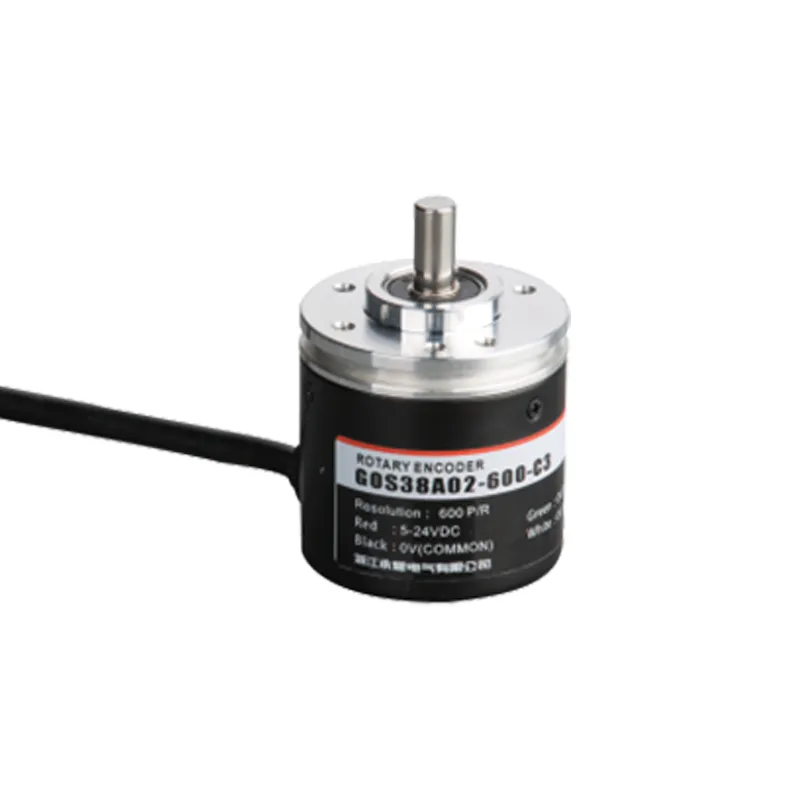
Incremental Rotary Encoder is engineered for industrial automation control, delivering high-precision position and speed feedback. It supports multiple output modes and is suitable for machinery transmission, CNC equipment, and robotic systems.
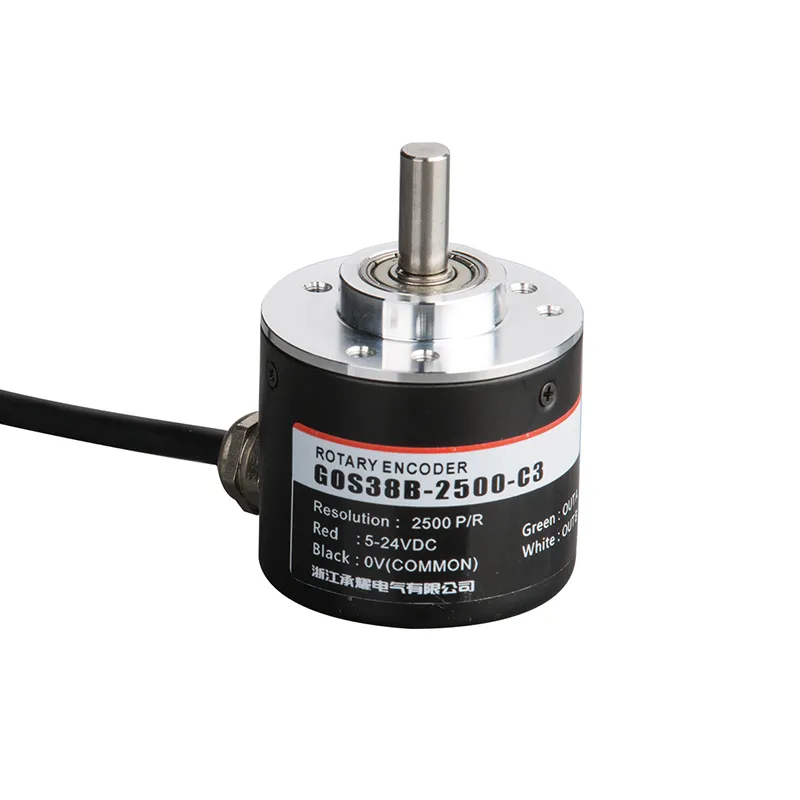
If you’ve ever wondered how machines track rotation and position so precisely, the answer often lies with an جهاز التشفير الدوار التزايدي. These devices are the unsung heroes behind accurate motion control in many industries. Whether you’re working with robotics, CNC machines, or conveyor belts, understanding this technology can simplify your selection process and improve system performance.
An incremental rotary encoder converts the mechanical motion of a rotating shaft into digital signals, precisely counting pulses to determine position, speed, and direction. Let’s delve deeper into the exciting world of incremental encoders and explore why they matter in your industrial applications.
What is an Incremental Rotary Encoder?
Simply put, an incremental rotary encoder is a sensor attached to a rotating shaft. It produces pulses—electrical signals—as the shaft turns, which can be counted to measure rotation angle, speed, and direction. Unlike absolute encoders that provide a unique position value instantly, incremental encoders require a reference point or counter to track position cumulatively.
This technology plays a critical role in machine automation, providing information to controllers for accurate motion and process control. Incremental rotary encoder is often searched because it's a fundamental component in improving manufacturing precision.
How Does an Incremental Rotary Encoder Work?
Key Working Mechanism:
- The encoder disc features patterns or slits (often optical or magnetic).
- A sensor detects these patterns as pulses when the disc rotates.
- Pulses occur in two channels—called A and B signals—which are square waves shifted by 90° to determine direction.
- An optional Z channel can give a reference or "home" position pulse per revolution.
Understanding Pulses and Resolution (PPR)
- PPR (Pulses Per Revolution): Number of pulses generated per one full shaft rotation. More pulses mean better resolution and accuracy.
- For example, if an encoder has 1024 PPR, it outputs 1024 pulses every full turn. This allows fine control of angular position.
Direction and Speed Detection
- By checking which channel (A or B) leads, the rotation direction can be easily determined.
- Counting pulses over time provides the shaft speed.
| Signal Channel | Function | الوصف |
|---|---|---|
| Channel A | Pulse output | Primary pulse signal |
| Channel B | Quadrature signal | Shifted 90° to detect direction |
| Channel Z | نبض المؤشر (اختياري) | Marks one revolution for position reset |
By understanding this, you can apply incremental encoders to applications needing precise feedback on mechanical movements.
Important Technical Parameters of Incremental Rotary Encoder
Choosing the right encoder means understanding these critical specs:
| المعلمة | الوصف | Typical Range/Values |
|---|---|---|
| القرار (PPR) | Pulses per shaft revolution | 100 to 5000+ (higher = finer control) |
| نوع إشارة الإخراج | Electrical output format | TTL، HTL، المجمع المفتوح |
| جهد الإمداد | Voltage to power the encoder | 5V, 10-30V DC |
| الحد الأقصى لعدد الدورات في الدقيقة | Max mechanical shaft speed | Up to 12000 RPM or more |
| Starting Torque | Force to initiate shaft rotation | Typically <0.05 Nm |
| Protection Rating (IP) | Resistance to dust and water | IP65, IP66, IP67 |
| Bearing Type | Type of shaft support | Ball, Sleeve bearings |
| Environmental Range | Operating temp & conditions | -40 °C to +85 °C |
نصيحة: When selecting an encoder, check if these parameters match your machine’s operational needs. If unsure, ask for assistance or place an inquiry for tailored advice.
Applications of Incremental Rotary Encoders
They’re everywhere—maybe more than you realize! Here are common use cases:
- الأتمتة الصناعية: Robotics arms, CNC machines, and packaging lines rely on precise position feedback.
- التحكم في المحرك: Adjusting speed and position in electric motors for elevators, cranes, or factory automation.
- Conveyor Systems: Syncing belt speeds and position detection to ensure smooth handling.
- الأجهزة الطبية: Precision in lab automation and imaging equipment.
| الصناعة | التطبيق | Why Use Incremental Encoder? |
|---|---|---|
| التصنيع | ماكينات التحكم الرقمي باستخدام الحاسب الآلي، والروبوتات | High accuracy & cost-effective |
| Logistics & Warehousing | Conveyors & sorting systems | Seamless speed & position monitoring |
| السيارات | Electric power steering | Fast response & durability |
| الطاقة المتجددة | Wind turbines | Robust speed and direction control |
If your industry requires improving efficiency and repeatability, incremental encoders are a smart investment. Reach out for custom solutions tailored to your needs!
How to Choose the Right Incremental Rotary Encoder
You might wonder: “With so many options, how do I pick the best encoder for my needs?” Consider these factors:
- Resolution Requirements: Higher resolution for fine positioning; lower for speed-only monitoring.
- Mounting & Shaft Size: Ensure compatibility with your machine’s shaft diameter and mounting style.
- بيئة التشغيل: Dusty, wet, or harsh environments need IP-rated sealed encoders.
- Output Signal & Interface: Match the encoder output (TTL, HTL) to your controller or PLC input.
- Durability & Lifespan: Choose bearings and construction that support expected usage hours and loads.
- Budget & Brand Reliability: Balance cost with proven product quality and after-sales support.
| Selection Criterion | What to Consider | أمثلة على الاختيارات |
|---|---|---|
| القرار | Precision needed | 500 PPR (basic) to 4000 PPR (high accuracy) |
| Environmental Protection | Indoor vs outdoor/dusty or wet areas | IP54 (standard) vs IP67 (waterproof) |
| Electrical Output | Compatibility with controllers | TTL (low voltage) or HTL (high voltage) |
| Shaft Size & Mounting | Ensure fit and ease of installation | 6mm shaft, hollow or solid shaft |
| Speed Range | Maximum rotational speed needed | Up to 10,000 RPM for fast machinery |
Need expert help? Contact us for custom encoder recommendations based on your application requirements.
Incremental rotary encoders are essential for accurate, cost-effective position and speed feedback in countless industrial applications. Their simplicity, adaptability, and reliability make them a popular choice for B2B customers worldwide.
Choosing the right encoder involves understanding your mechanical and electrical requirements, environmental conditions, and control system compatibility. With thoughtful selection, incremental encoders can greatly enhance the precision and efficiency of your machinery.
الأسئلة الشائعة
What is the maximum resolution for incremental rotary encoders?
Most commercial incremental encoders offer resolutions from 100 PPR up to 5000 PPR or more, depending on application needs.
How does an incremental encoder detect rotation direction?
By analyzing the phase difference between Channel A and B signals, the controller determines the direction.
What is the typical lifespan of an incremental encoder?
High-quality encoders can last millions of revolutions, often exceeding 20,000 to 30,000 hours of operation.
Can incremental encoders be used in wet or dusty environments?
Yes. Choose encoders with appropriate IP ratings like IP65 or higher for harsh conditions.
How are incremental encoder outputs connected to PLCs?
Outputs are typically TTL or HTL signals connected to PLC input cards configured for pulse counting.
Should I choose incremental or absolute encoders?
It depends on your application complexity, budget, and need for position retention after power loss.