A miniature circuit breaker (MCB) trips for four main reasons: an overloaded circuit, a short circuit, an earth (ground) leakage fault, or a faulty or undersized breaker itself. When the handle keeps jumping to the OFF position, the fastest way to a fix is to work through these causes in order, unplugging devices and isolating circuits as you go. If you are unsure what is causing a repeated trip, treat the circuit as potentially live, cut the supply, and have a licensed electrician inspect it.
This guide explains how an MCB decides to trip, the most common triggers you are likely to meet, a safe step-by-step way to narrow down the cause, and when to stop and call in a professional.
What an MCB Does and Why It Trips
An MCB is a resettable protective switch that disconnects a circuit when the current flowing through it is unsafe. It protects the wiring and the equipment downstream from overheating and damage. To do that, it reacts to two separate fault types: overloads and short circuits. If you want the full breakdown of how an MCB works and the different types available, our guide to miniature circuit breakers covers the internal parts and trip curves in detail.
The important point for troubleshooting is that a trip is the breaker doing its job. Your job is to find out why the current was too high, fix that cause, and only then reset the breaker. Simply switching it back on repeatedly—without finding the fault—can damage wiring and, in the worst case, start a fire.
The Main Reasons an MCB Keeps Tripping
Almost every repeat trip falls into one of these categories. Read through them to match your symptoms.
Overload. The circuit is carrying more current than it is rated for, usually for a sustained period. Too many appliances on one circuit, or a single high-power device, are typical causes.
Short circuit. A live conductor touches a neutral or earth conductor, creating a very low-resistance path and a huge current surge that trips the breaker almost instantly.
Earth (ground) leakage fault. Current leaks to earth through damaged insulation, wet equipment, or a faulty appliance, tripping an RCD/RCCB or, in some setups, the MCB after the leakage.
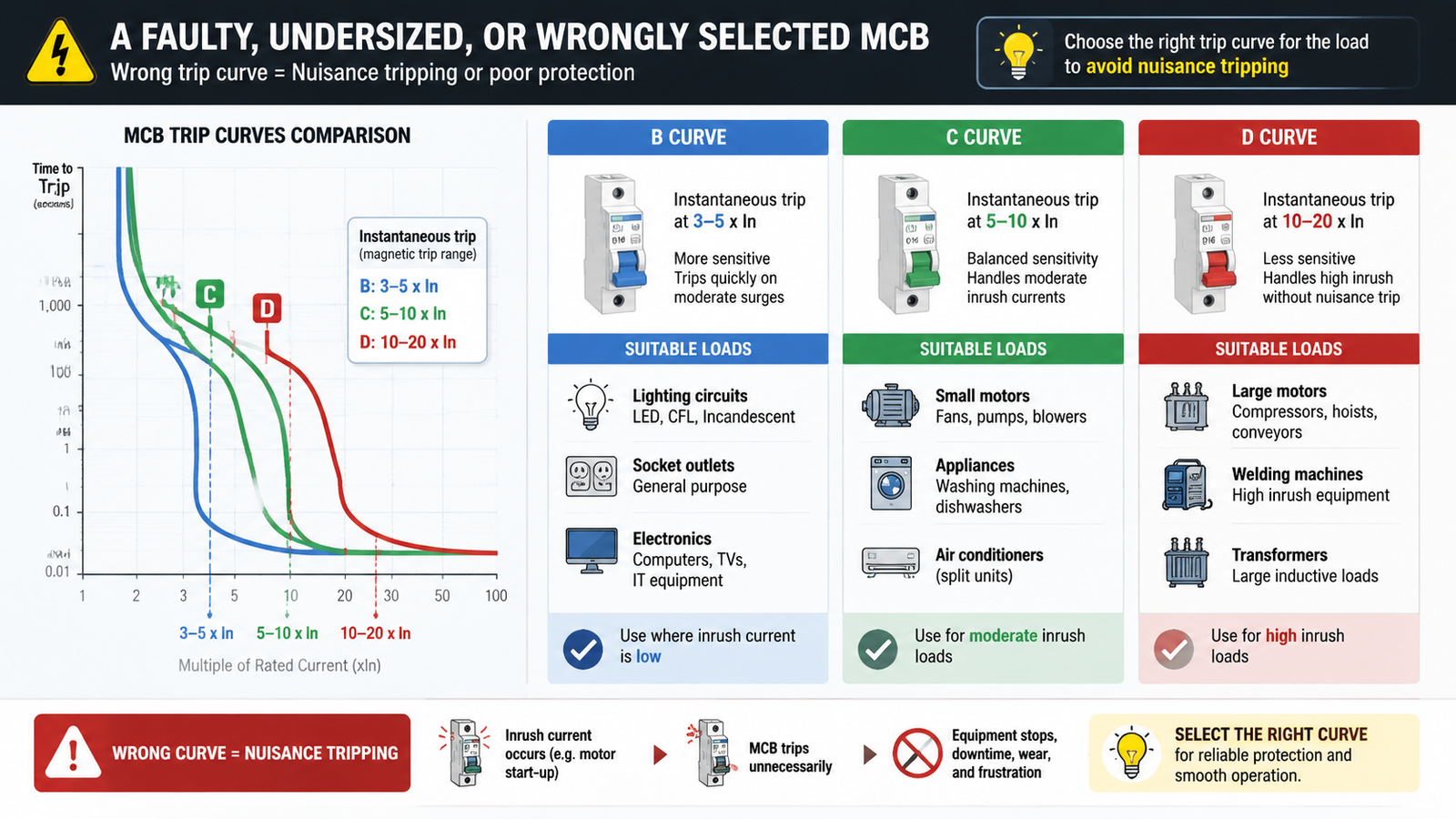
Faulty, undersized, or wrongly selected MCB. The breaker itself may have failed, be rated too low for the circuit, or use the wrong trip curve, causing nuisance tripping.
Overload: The Most Common Cause
An overloaded circuit is the reason most MCBs trip in a home. It happens when the total current drawn by everything connected to the circuit exceeds the breaker’s rated current for long enough to heat up the bimetallic strip inside, which then trips the mechanism.
How to recognize an overload
Overload trips usually happen when you switch on several appliances at once, or when one device runs for a long time. The breaker may stay on for a while and then trip, rather than tripping instantly.
How to fix an overload
Unplug everything on the affected circuit.
Reset the MCB. If it stays on with nothing plugged in, the circuit itself is not shorted.
Plug appliances back in one at a time, giving each a moment, until the breaker trips again. The last appliance added is the likely overload charger.
Reduce the load—don’t run so many high-power devices at once—or move some of them to another circuit.
If you regularly overload a circuit, the permanent fix is to balance the load across circuits, upgrade the circuit breaker rating only if the cable can safely carry it, or add a new circuit. Choosing the correct rating matters here: too low and it nuisance-trips, too high and it stops protecting the cable.
Short Circuit
A short circuit is the more serious cause and usually trips the MCB instantly. It occurs when a live wire touches a neutral or earth conductor, giving the current an almost resistance-free path.
Signs of a short circuit
The breaker trips the moment you turn it on, or the moment a specific device is plugged in, even with the circuit otherwise lightly loaded. You may also smell something burnt or see a scorch mark near a socket, switch, or the panel.
How to fix a short circuit
Turn off the main supply or isolate the affected circuit.
Unplug all appliances and switch off all lights on that circuit.
Reset the breaker. If it trips with everything unplugged, the fault is in the fixed wiring, an appliance socket, or the breaker itself—this needs an electrician.
If it holds, reconnect devices one by one until one trips the breaker. That device has an internal short and should be repaired or replaced.
Do not keep resetting a breaker that trips instantly with the circuit unloaded. That points to a wiring fault or a damaged breaker, both of which require the power to stay off while a professional investigates.
Earth Leakage (Ground Fault)
Current can leak to earth through damaged cable insulation, water inside equipment, or a faulty appliance. In many modern installations this is detected by a residual current device (RCD or RCCB) that sits alongside the MCBs; when it trips, it may take an MCB or RCD handle with it. Leakage faults are a key reason a “trip” happens even when the load is small.
How to recognize an earth leakage fault
The trip often happens when you use a particular appliance—especially one near water, like a kettle, heater, or outdoor power tool—or after rain or damp weather if the equipment is outdoors.
How to fix an earth leakage fault
Unplug the suspect appliance and reset the breaker.
If it stays on, plug the appliance back in. A trip when the appliance is switched on points to leakage inside that device—stop using it and have it checked.
Inspect sockets and outdoor outlets for moisture or damage.
An earth leakage trip is a genuine safety signal about live parts touching ground. If you cannot find the leaking device, or the breaker trips with everything disconnected, call an electrician rather than bridging or disabling the protection.
A Faulty, Undersized, or Wrongly Selected MCB
Sometimes the MCB is the problem, not the circuit. This is worth checking once you have ruled out overload, short circuit, and earth leakage.
Faulty breaker. MCBs have a limited mechanical and electrical life. After many trips it can wear out and trip unpredictably. A breaker that trips for no apparent reason, or that feels loose or hot, should be replaced.
Undersized rating. If the MCB’s rated current is lower than the circuit’s normal load, it will trip under normal use. The breaker needs to match both the load and the cable’s safe current-carrying capacity.
Wrong trip curve. Each MCB has a trip curve (such as B, C, or D) that controls how much overcurrent it tolerates before tripping instantly. A curve that is too sensitive for the load causes nuisance tripping—for example, when a motor or transformer draws a large starting (inrush) current. Unnecessary tripping from inrush is often solved by choosing the right MCB for the load rather than by disabling the breaker.
If you suspect the breaker is at fault, have it tested or replaced by a qualified person using the correct rating and trip curve for the circuit. When buying a replacement, match the pole count, rated current, breaking capacity, and trip type; Wilmall’s miniature circuit breaker range covers common single- and multi-pole ratings, and the team can help you confirm the specification for your panel.
Step-by-Step Troubleshooting Checklist
Use this sequence to work through a tripping breaker safely and quickly. Always start with safety.
Turn off the affected circuit’s MCB and, where possible, the main breaker.
Unplug all appliances and switch lights off on that circuit.
Reset the breaker with the circuit unloaded.
Reconnect devices one at a time, waiting a moment between each, until the breaker trips.
Identify the triggering device or the pattern (instant vs. delayed trip) to match it to a cause above.
If it trips with nothing plugged in, stop resetting it and get an electrician to inspect the wiring and the breaker.
For context on where circuit breakers and protection devices sit in an installation, see our guide to choosing the right distribution box for your needs.
When to Call an Electrician
Some situations are not safe to troubleshoot yourself. Call a licensed electrician when:
The breaker trips instantly with everything on the circuit unplugged and switched off.
You smell burning, see scorch marks, or the panel feels hot.
The breaker repeatedly trips for no obvious pattern or after a recent repair or installation.
You are not confident isolating the circuit or working near a live panel.
Working near a consumer unit carries a real risk of electric shock. When in doubt, shut off the power and get professional help rather than risking injury.
Часто задаваемые вопросы
Why does my MCB trip but not the RCD?
That usually means the fault is an overload or a short circuit between live and neutral, which the MCB detects, rather than a leakage to earth, which the RCD would catch. It can also happen when the circuit is protected by an MCB without a separate RCD.
Why does my breaker trip only sometimes?
Occasional trips usually point to an overload that only happens when several devices run at once, or to inrush current from a motor triggering a sensitive MCB. Track which appliances are on when it trips to narrow it down.
Can a faulty appliance cause my MCB to trip?
Yes. A faulty appliance can cause an overload, a short circuit, or an earth leakage, all of which trip the breaker. Unplugging devices one by one is the quickest way to find it.
How do I know if the MCB itself is faulty?
If the breaker trips with the circuit fully unloaded, or trips without a clear overload, short, or leakage cause, the breaker may have worn out. Have it tested and replaced by a qualified person rather than resetting it repeatedly.
Is it safe to keep resetting an MCB?
No. Repeatedly resetting a breaker without fixing the underlying fault can overheat wiring and start a fire. If a breaker trips again right after being reset, leave it off and investigate the cause or call an electrician.
Заключение
An MCB trips because it detects an overload, a short circuit, an earth leakage fault, or a problem with the breaker itself. Work through the cause in a sensible order—unload the circuit, then reconnect devices one at a time—and you can usually identify and fix the trigger safely. When the breaker trips with the circuit unloaded, or you are not comfortable working near the panel, stop and call a licensed electrician.
If you are replacing a breaker or building a new distribution panel, make sure the MCB rating and trip curve match the circuit. The Wilmall team can help you select the right miniature circuit breakers for your application.
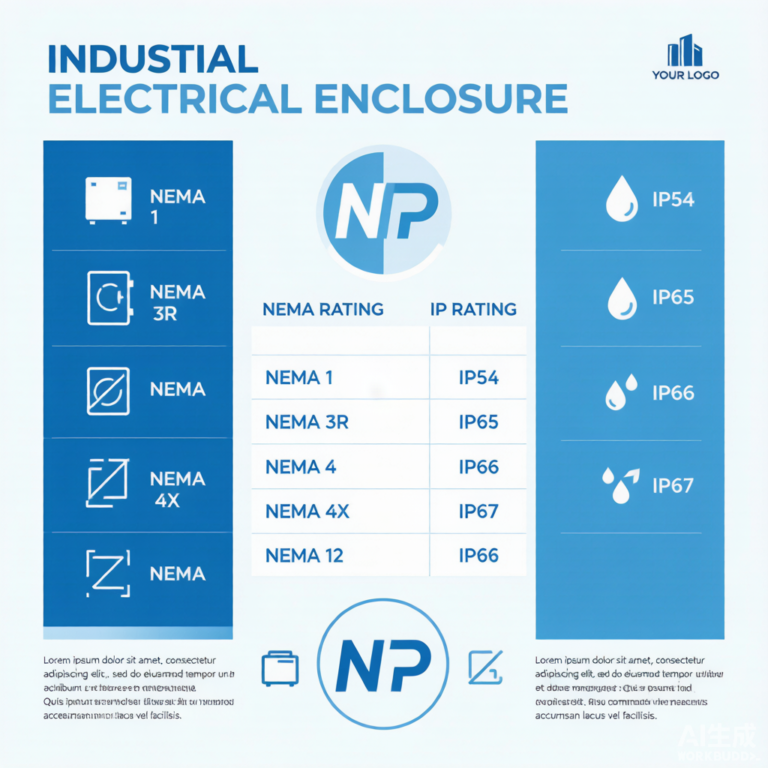
Choosing the right electrical enclosure means navigating two major rating systems: NEMA and IP. Both describe how well an enclosure protects internal components, but they measure different things and are not interchangeable. Specifying the wrong rating can lead to equipment failures, code violations, and costly field corrections. This guide breaks down the key differences, provides […]
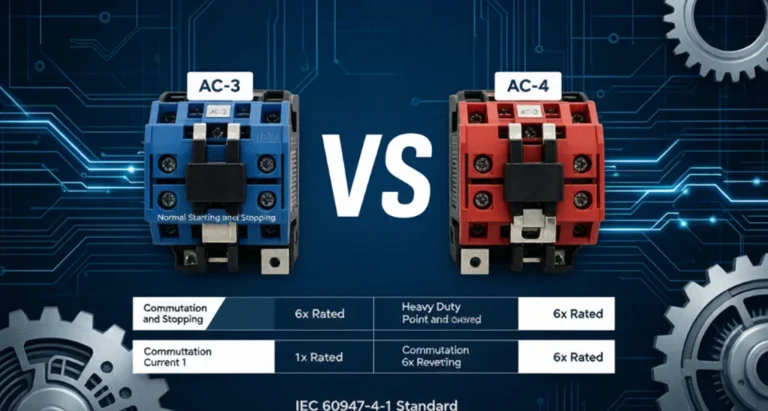
Why Utilization Categories Matter for Contactor Selection Specifying a contactor by rated current alone is one of the fastest ways to end up with welded contacts, short electrical life, and unplanned downtime. The contactor utilization category—defined in IEC 60947-4-1—tells you what kind of load the contactor can switch and how severe that switching duty is. Two […]
Choosing the right electric hoist push button switch is not just about finding a handheld control with a few buttons. In real lifting applications, the wrong choice can create wiring mismatch, poor operator control, replacement delays, or unnecessary safety risks during hoist and crane operation.