






Rotary Encoder Knob with Push Button and Detents
Wilmall supplies Rotary Encoder Knob for B2B buyers, wholesalers and exporters, with factory price, OEM/ODM, custom, private label and white label service.
Read More
Escolhendo o caminho certo incremental rotary encoder can seem like a puzzle, especially if you’re new to automation or industrial control systems. But don’t worry—it’s not rocket science! Incremental rotary encoders are essential components in many mechanical and electronic systems, translating rotational motion into electrical pulses to measure speed, position, or direction. They play a critical role in robotics, servo motors, conveyor belts, and many other industrial applications.
In this guide, we’ll unravel the secrets behind selecting an incremental rotary encoder that fits your needs perfectly. Whether you’re upgrading existing equipment or designing a new system, read on to learn about key parameters, types, and practical tips to make your decision easier. Plus, there’s a handy FAQ section at the end where we tackle common questions asked by professionals just like you.
Before diving into selection criteria, let’s brush up on what incremental rotary encoders actually are.
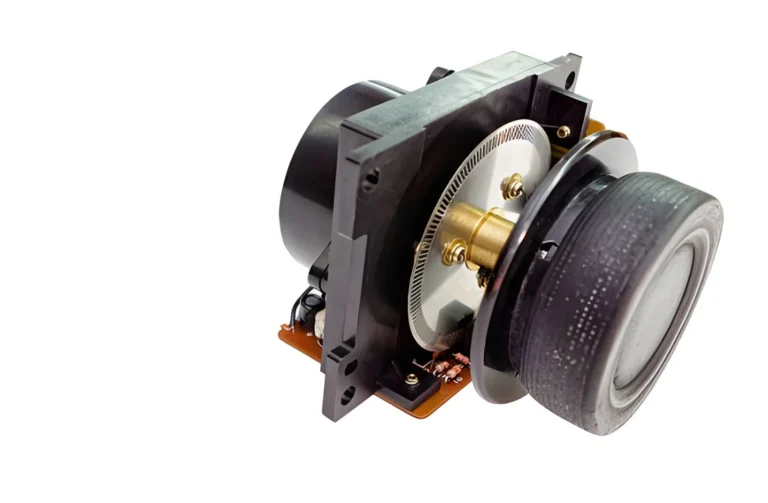
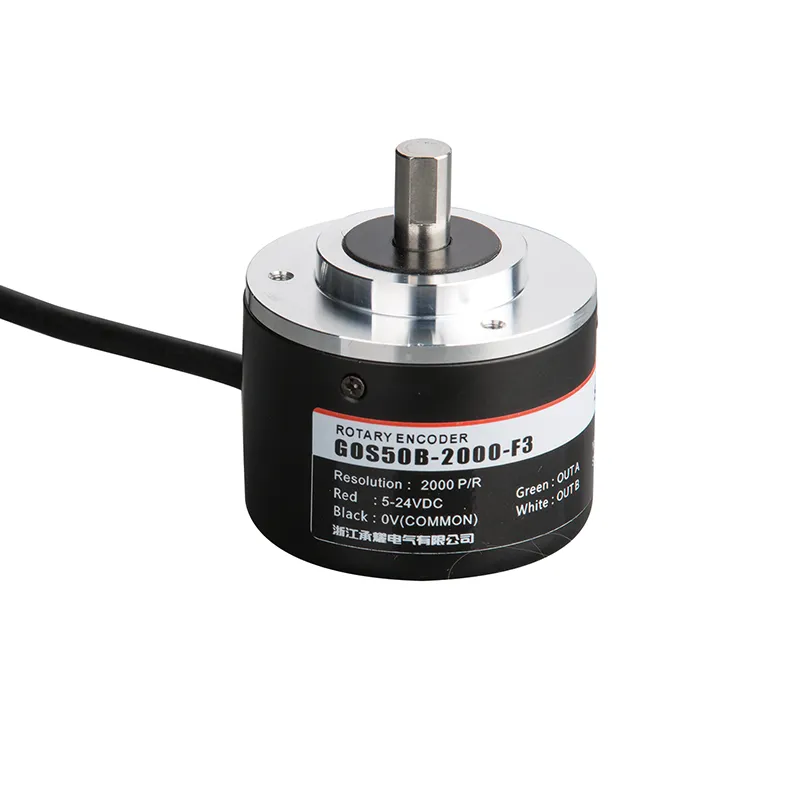
An incremental rotary encoder generates electrical pulses as its shaft rotates. These pulses correspond to movement or position changes. It typically produces two output signals, called the A and B phases, which are offset by 90 degrees. This phase difference helps identify the rotation direction. Some models also have a Z phase, a reference pulse that occurs once per revolution to signal a home or zero position.
Incremental Encoders
Absolute Encoders
| Recurso | Codificador incremental | Codificador absoluto |
|---|---|---|
| Position signal | Pulses (relative position) | Digital code (absolute position) |
| Perda de energia | Position lost, needs homing | Retains position after power loss |
| Complexidade | Simpler, lower cost | More complex, higher cost |
| Common applications | Speed measurement, incremental control | Precise position feedback |
Understanding this difference is key, especially when precision or memory of position matters in your application.
Choosing the right encoder depends on several technical factors. Let’s break down the most important ones.
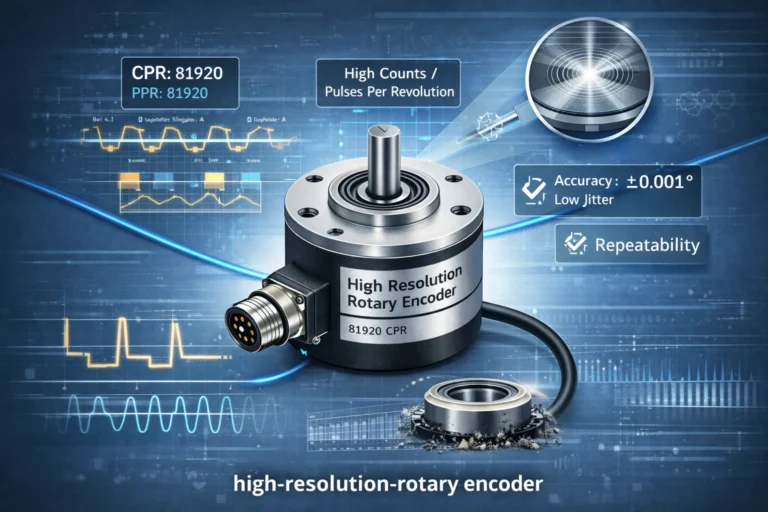
Resolution determines how many pulses the encoder produces per single shaft revolution. Higher resolution means higher precision.
| Resolução (PPR) | Typical Applications |
|---|---|
| 100 – 500 | Basic speed/speed control |
| 500 – 1024 | Medium precision machinery |
| 1024 – 5000+ | High-precision robotics, CNC machines |
Higher resolution often comes with higher cost but allows finer control and measurement accuracy.
The standard signals are:
Output circuits might be push-pull, open collector, or line driver. Make sure your controller supports the encoder’s output type.
Consider the operating temperature, dust, moisture, and vibration resistance. For harsh environments, look for IP ratings (e.g., IP65 or IP67 for water and dust resistance).
| Parâmetro | Faixa típica |
|---|---|
| Operating temperature | -20°C to 85°C or higher |
| Protection rating | IP54, IP65, IP67 |
| Vibration resistance | Up to 100 m/s² |
| Shock resistance | Up to 1000 m/s² |
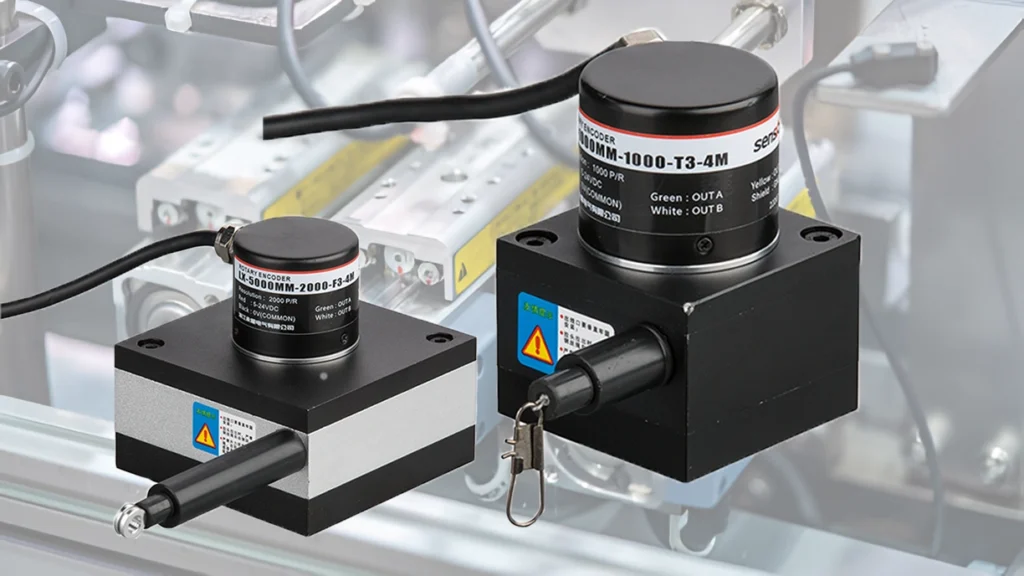
Discover your perfect incremental rotary encoder today—boost accuracy and reliability!
Different applications require different encoder attributes. Here are some typical scenarios:
| Aplicativo | Key Encoder Needs |
|---|---|
| Servo motors | High resolution, low starting torque, fast response |
| Robótica | Compact size, high precision, environmental protection |
| Conveyor belts | Moderate resolution, durable housing |
| Industrial machinery | High IP rating, shock and vibration resistance |
For instance, if your equipment operates in dusty, humid conditions, a magnetic incremental rotary encoder with IP67 protection might suit better than an optical type which can be sensitive to contamination.
If you’re ready to optimize your system’s feedback, consider reaching out to suppliers for customized options based on your exact needs.
No matter how great the encoder is, installation and environment can lead to challenges.
Installation Tips
Troubleshooting Signals
While price matters, the brand and quality assurance often determine long-term satisfaction. Well-known brands usually provide better technical support, consistency, and warranty services. Evaluate certifications (ISO, CE, RoHS), user reviews, and after-sales service policies.
Consider a balance between cost and performance. Sometimes a little more investment upfront saves trouble and money later.
Selecting the right incremental rotary encoder is a critical step for achieving accurate motion control and reliable system performance. By understanding key parameters such as resolution, output signals, mechanical compatibility, and environmental factors, you can make an informed choice tailored to your application.
Don’t hesitate to ask suppliers for detailed specifications and support for your unique requirements. Whether you need a high-resolution encoder for robotics or a rugged model for industrial machinery, the right product is out there waiting to boost your system’s efficiency and precision.
Ready to take the next step? Contact reputable manufacturers today to find the perfect incremental rotary encoder that fits your needs!