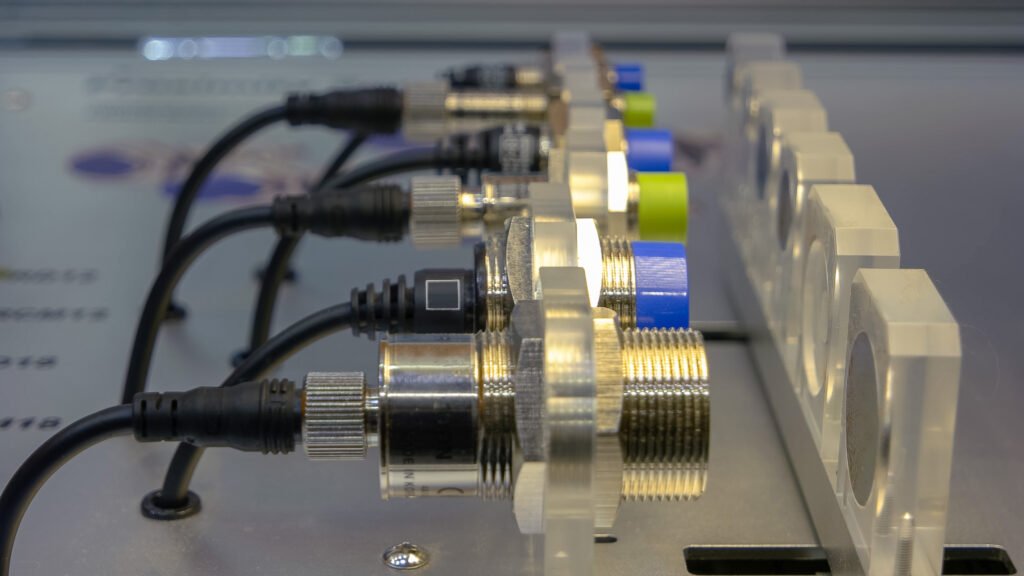
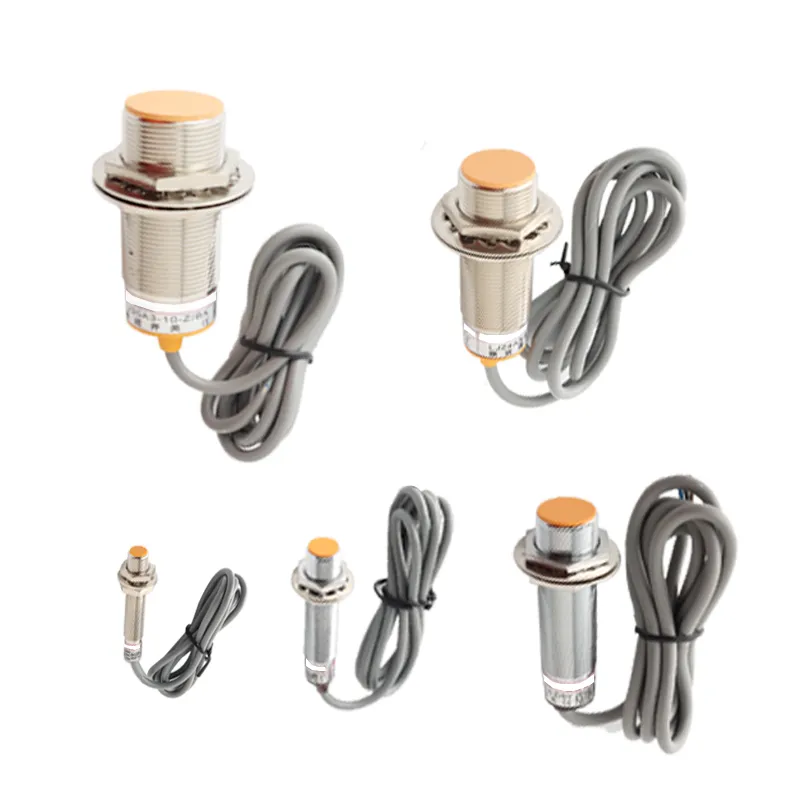
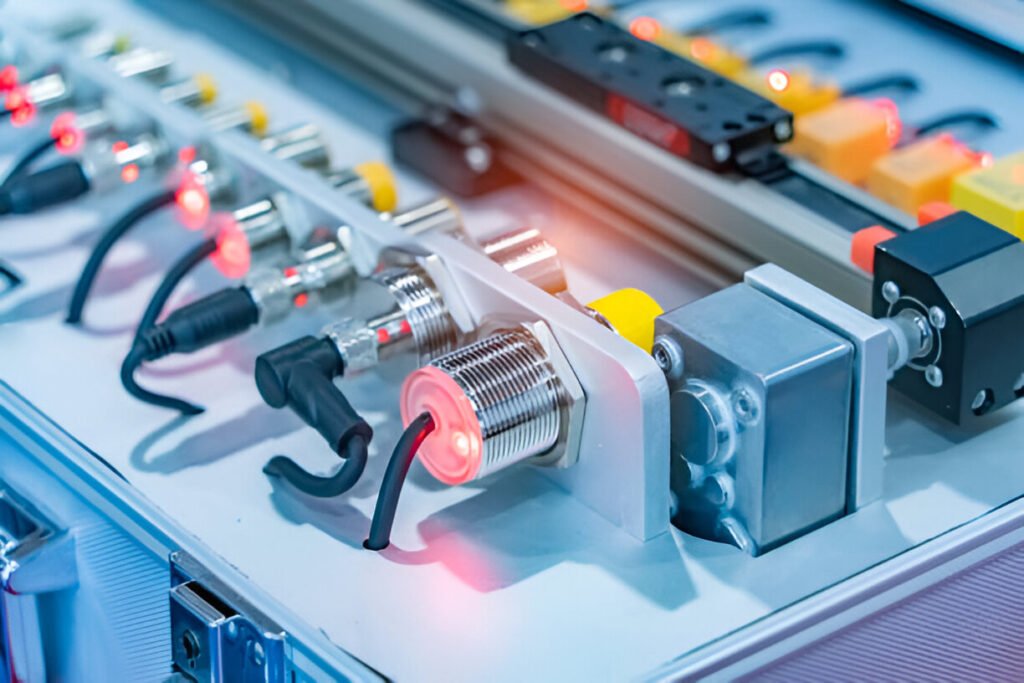
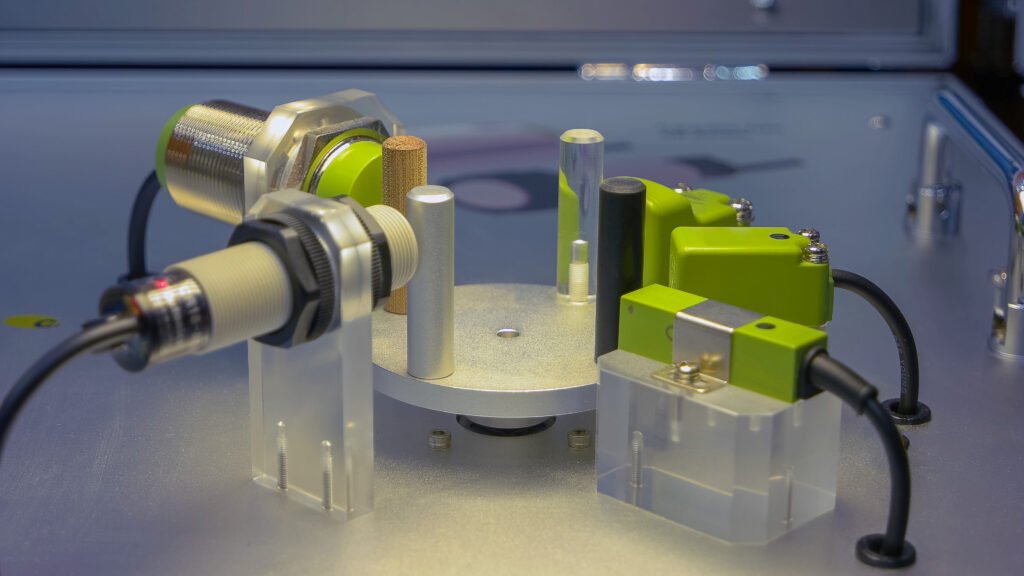
The working principle of proximity switches is mainly based on electromagnetic induction, photoelectric induction and capacitive induction. Different types of proximity switches use different mechanisms when detecting objects. The following are the working principles of several common types:
Inductive proximity switch
Inductive proximity switches detect metal objects by generating a high-frequency alternating magnetic field. When a metal object approaches the switch, it interacts with the magnetic field, causing the frequency of the internal oscillation circuit to change. This change is detected by the induction circuit, triggering the output signal. Specifically, when a metal object approaches, the eddy currents generated will cause energy loss in the oscillation circuit, causing the oscillation amplitude to decrease, and ultimately triggering a change in the switch signal.
Capacitive proximity switch
Capacitive proximity switches work by detecting changes in the capacitance of the surrounding environment. When an object approaches the sensor, it changes the dielectric constant between the sensor and the object, thereby affecting the capacitance value. This change is detected by the internal circuit and converted into a switch signal. Capacitive proximity switches can detect a variety of materials, including metals and non-metals, so they are more flexible in application.
Photoelectric proximity switch
Photoelectric proximity switches use the reflection or obstruction of a light beam to detect objects. When the light beam is blocked or reflected by an object, the photosensitive element inside the sensor senses the change in light intensity and outputs a corresponding signal. This type of proximity switch is usually used for long-distance detection or in environments with large changes in light conditions.
Magnetic proximity switch
Magnetic proximity switches work by detecting changes in magnetic fields. It is usually used to identify approaching magnetic objects (such as permanent magnets). When a magnetic object approaches, it changes the internal magnetic field, triggering the switch action. This type of switch is widely used in security monitoring and automation systems.
Common Types of Proximity Switches
Proximity switches are essential components in various automation and control systems, designed to detect the presence or absence of objects without physical contact. The most common types of proximity switches include inductive, capacitive, photoelectric, magnetic, and ultrasonic sensors. Each type has unique characteristics and applications suited to different environments and materials.
Chaves de proximidade indutivas
Inductive proximity switches are primarily used for detecting metallic objects. They operate on the principle of electromagnetic induction. When a metallic object approaches the sensor, it alters the electromagnetic field generated by the switch, which triggers a response. These sensors are widely utilized in manufacturing and automotive applications due to their robustness and ability to function in harsh environments. They excel in high-speed operations and are resistant to dust and moisture, making them ideal for industrial settings.
Applications:
Detecting metal parts on assembly lines
Position sensing in automated machinery
Collision detection in robotic systems
Chaves de proximidade capacitivas
Capacitive proximity switches can detect both metallic and non-metallic objects, including liquids and granular materials. They work by measuring changes in capacitance caused by the presence of an object within their electric field. This versatility allows them to be used in a variety of applications beyond just metal detection.
Applications:
Liquid level sensing in tanks
Object counting on conveyor belts
Proximity detection for non-metallic items in packaging industries
Photoelectric Proximity Switches
Photoelectric proximity switches utilize light beams to detect objects. They consist of a light source (often an LED) and a receiver. When an object interrupts or reflects the light beam, it triggers the switch. There are several types of photoelectric sensors, including through-beam, retro-reflective, and diffuse reflective types, each suited for different detection scenarios.
Applications:
Object detection in packaging lines
Safety barriers in industrial settings
Counting items on conveyor systems
Chaves de proximidade magnéticas
Magnetic proximity switches detect the presence of magnetic fields generated by ferrous or magnetized objects. They typically use reed switches or Hall-effect sensors to sense changes in the magnetic field when a magnet comes close to the switch. These sensors are particularly reliable and are often used in security systems and consumer electronics.
Applications:
Door position detection in security systems
Speed sensing in motors
Position feedback in automated machinery
In summary, understanding the different types of proximity switches is crucial for selecting the right sensor for specific applications. Each type offers distinct advantages based on the materials being detected and the environmental conditions they will operate under.
Já se perguntou como os elevadores sabem quando devem abrir as portas ou como a tela do seu telefone se desliga quando você o encosta no ouvido? O herói desconhecido por trás dessas interações inteligentes é o sensor de proximidade. Esses dispositivos minúsculos, porém poderosos, detectam a presença ou ausência de objetos sem contato físico, tornando-os indispensáveis em [...]
In today’s industrial automation field, proximity switch sensor play an increasingly vital role. Whether it’s detecting materials on a production line or enabling precise environmental sensing for robots, these non-contact sensing devices are indispensable. Ever wondered what makes these small switches so reliable and smart? In this article, we will take you deep into the working principles, […]
A escolha do interruptor de proximidade correto é uma etapa fundamental para garantir que seu sistema de automação opere com eficiência. Aqui estão algumas diretrizes de seleção úteis para ajudá-lo a encontrar o melhor sensor de proximidade para suas necessidades entre as muitas opções. Identifique o objeto de detecção e as necessidades Primeiro, você precisa identificar o tipo de objeto que deseja [...]
Usamos cookies para aprimorar sua experiência de navegação, veicular anúncios ou conteúdos personalizados e analisar nosso tráfego. Ao clicar em "Aceitar tudo", você concorda com o uso de cookies.