







BRM7-PV1000 PV Surge Protector for 1000 V DC Arrays
A solar array is never a quiet electrical system. Every string is a long loop of conductor stretched across a roof or an open field, and that geometry makes it an efficient antenna for induced transients. A strike a few hundred metres away couples energy into the loop, and the pulse runs along the cable toward whatever semiconductor sits at the far end of it. The BRM7-PV1000 is a Type 2 PV surge protector built to divert that energy to earth before it reaches the inverter input terminals.
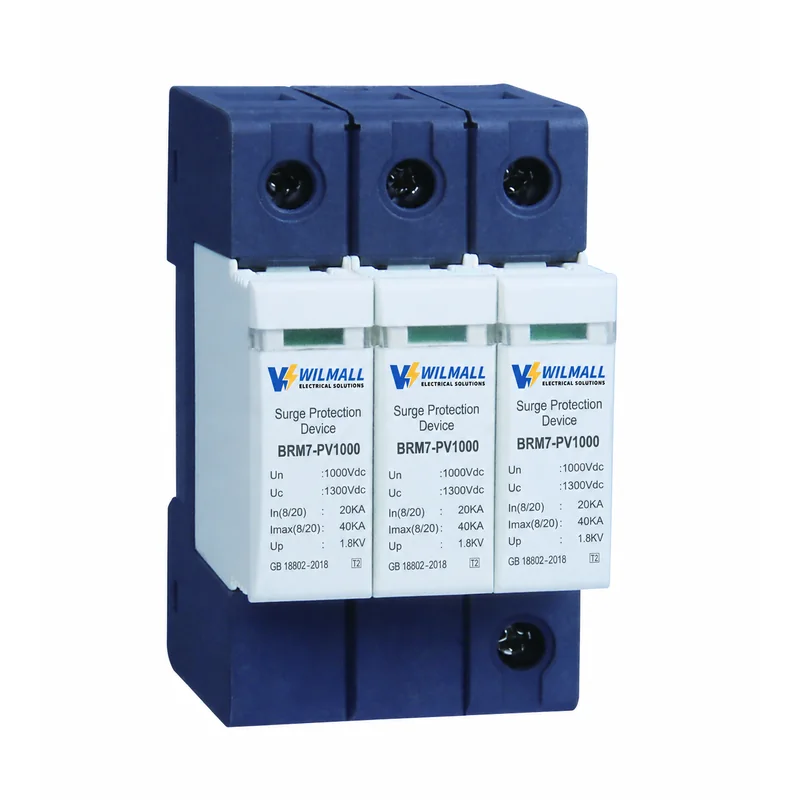
It is a three-pole device for 1000 V DC nominal arrays, with a maximum continuous operating voltage of 1300 V DC. The poles are arranged for the positive rail, the negative rail and the protective earth, which is exactly what a floating photovoltaic array requires.
Why the DC Side Cannot Borrow AC Habits
Surge protection on the AC side is often treated as a single component bolted into a distribution board. Copying that habit onto a photovoltaic installation leads to three predictable failures.
- An arc struck on direct current does not self-extinguish at a zero crossing, so every fault on the array side is a potential sustained arc until something physically separates the contacts.
- String voltage is present whenever daylight falls on the modules. There is no isolator upstream that a maintenance technician can rely on to make the conductors dead during working hours.
- Fault current is capped by the array itself, which means a conventional breaker may never reach the instantaneous region where it would trip quickly.
Those three conditions are why a PV surge protector is a dedicated product rather than a re-badged AC module. The varistor stack, the disconnection mechanism and the housing are all chosen around a supply that is always live and always direct current.
Where the Unit Belongs on a 1000 V Array
A PV surge protector is normally installed at the boundary between the array field and the equipment that cannot be replaced cheaply. In practice that means one of three places: the output of a string combiner box, the input of a recombiner, or the DC input compartment of the inverter. On larger plants it is common to fit a unit in the combiner and a second one at the inverter, so that the pulse is clipped at two points along its path.
Mounting is on a standard 35 mm DIN rail with multi-strand copper conductors from 6 to 35 mm². The earth conductor should be at least 16 mm² and should run to the equipotential bonding bar by the shortest practical route. Long, looped earth leads raise the clamping voltage that the inverter actually sees, which defeats the purpose of fitting the device at all.
What the Front Label Is Telling You
Four numbers on the face of each pole carry most of the technical story, and buyers who read them correctly avoid most specification mistakes.
Un and Uc are not the same figure
The rated working voltage of this unit is 1000 V DC, matching a 1000 V string design. The maximum continuous operating voltage is higher, at 1300 V DC, and that headroom is deliberate: a crystalline array runs above its nominal voltage in cold weather, and a device rated at exactly 1000 V would sit too close to its own limit on a frosty morning. The gap between the two numbers is the margin that keeps the varistor from conducting on ordinary open-circuit voltage.
In, Imax and Up
The nominal discharge current is 20 kA for an 8/20 µs waveform, the maximum discharge current is 40 kA for the same waveform, and the voltage protection level is 1.8 kV. In describes the impulse the device absorbs repeatedly across its service life. Imax describes the single larger event it survives once. Up describes the residual voltage that reaches the inverter while the device is conducting, and that is the figure the equipment manufacturer cares about most.
Inside the Three-Pole Module
A varistor stack sized for continuous DC bias
Metal oxide varistors degrade when they are held under continuous bias close to their knee point. The discs in this device are selected with enough margin to sit quietly at 1300 V DC for years while still clamping hard when a surge arrives. That balance between standing voltage and clamping performance is the reason a purpose-built DC device cannot be improvised from AC stock.
Thermal disconnection with a visible result
When a varistor reaches the end of its life it tends to fail into a low-resistance state, which on a DC circuit would mean sustained current through a failed element. Each pole carries a thermal link that opens the circuit before that happens, and the status window on the front changes from green to red so that the condition is visible without test equipment. A red window means the cartridge has done its job and needs replacing, not that the panel has a wiring fault.
Remote signalling as an option
An auxiliary contact can be fitted for installations that are monitored from a distance — a rooftop plant on a building the operator does not visit, for example. The contact mirrors the window state, so a failed cartridge raises an alarm instead of waiting for the next maintenance round.
Choosing Between the 1000, 1200 and 1500 V DC Versions
The same body is produced in three voltage classes so that a single panel layout can serve different system designs. A 1000 V DC array takes the unit shown on this page. A 1500 V DC utility-scale string takes the higher-rated version, which uses a longer varistor stack and a wider creepage distance. Specify the class from the maximum system voltage of the array, not from the inverter’s rated input, and leave the continuous voltage margin in place.
Placing It Inside a Complete PV Protection Plan
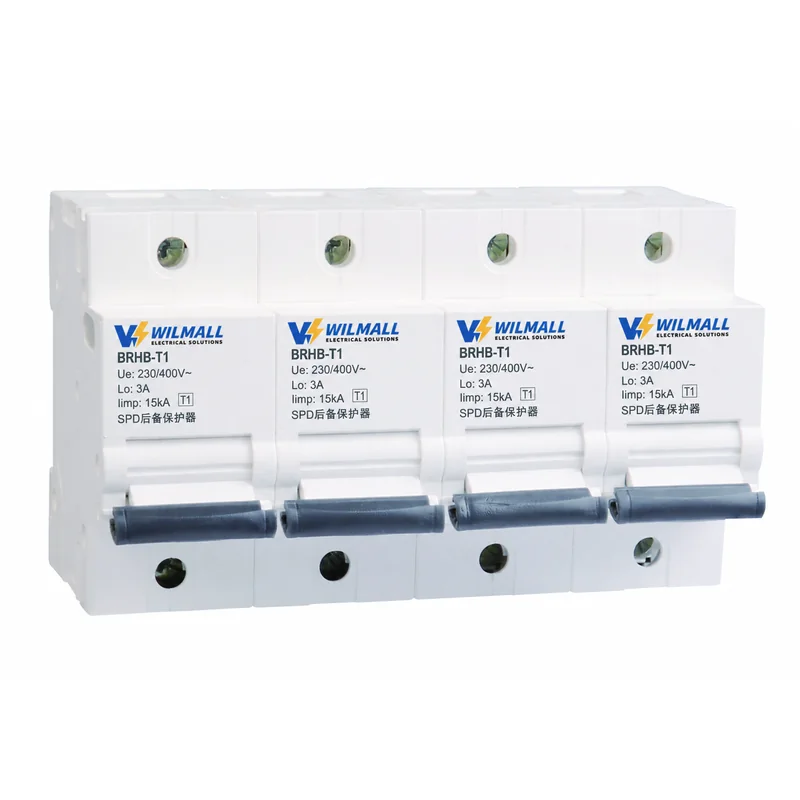
A PV surge protector is one layer of a scheme that also needs isolation and overcurrent protection on the DC side, and residual current protection on the AC side of the inverter. Where the AC distribution board is being assembled at the same time, the WW10-63 residual current circuit breaker covers earth leakage on the output, and the ETL3-63MH RCBO combines that function with overcurrent protection in a single module. On the DC side, the companion BRHB surge backup protector is fitted in series ahead of the surge device to clear a follow current without tripping the rest of the string. The full solar PV protection range is listed separately if the bill of materials covers more than one item.
What EPCs and Distributors Ask Before Ordering
The questions that come up most often about a PV surge protector are about matching, packing and paperwork rather than about the device itself. On matching, the decisive figure is the inverter manufacturer’s stated withstand level: if the equipment is rated for a 2 kV residual, a device with a 1.8 kV protection level is a comfortable fit. On packing, units ship in standard export cartons with the quantity per carton confirmed at quotation. On paperwork, test reports and declarations for the relevant standard can be supplied with the shipment when the tender requires them.
Supplied Direct From the Production Line
Every PV surge protector in this range is assembled, tested and marked in our own plant, and the enclosure can be printed with a distributor’s own brand for volume orders. Because the marking is applied in-house, a private-label batch does not involve a third party handling the goods between test and packing. Send the array voltage, the inverter model and the annual quantity, and the voltage class, the marking and the delivery schedule are confirmed in one reply.
For BRM7-PV1000 price, datasheet, sample order or OEM supply terms, contact our sales team with the system voltage and the number of strings in the plant.
PERGUNTAS FREQUENTES
Can this unit be used on a 1500 V DC string?
No. The BRM7-PV1000 is the 1000 V DC class device, with a rated working voltage of 1000 V DC and a maximum continuous operating voltage of 1300 V DC. The same body is produced in 1200 V DC and 1500 V DC classes for higher system voltages, so tell us the array design before ordering rather than pushing this one past its rating.
Why is Uc higher than Un?
A crystalline array runs above its nominal voltage when the modules are cold, so a device rated at exactly the string voltage would sit against its own limit on a frosty morning. The 1300 V DC continuous rating leaves that headroom while still clamping a surge well below the inverter's withstand level.
Does it need a backup protector in series?
Yes, one is recommended on each pole. If a varistor fails into a low-resistance state, the array will keep feeding the fault, and the backup device is what clears it. The BRHB range is made for this position; match the backup class to the surge device it guards.
What does the red window mean?
A red window means the thermal link has opened because that cartridge has reached the end of its life. The device has done its job and the cartridge needs replacing. It is not an indication of a wiring fault, though the cause of the failure is worth checking before the new cartridge goes in.
How are the three poles connected?
One pole on the positive rail, one on the negative rail and one on the protective earth. A floating photovoltaic array needs all three paths guarded, because the surge can arrive on either rail and has to reach earth through the device rather than through the inverter.
Can the front cover carry our own brand?
Yes, for volume orders. The marking is applied in our own plant, so a private-label batch does not pass through a third party between the routine test and the packing station.
Request Quote
Tell us your specifications, quantity, or application scenario and we will reply with a tailored quote.