In today’s industrial automation field, sensor do interruptor de proximidade play an increasingly vital role. Whether it’s detecting materials on a production line or enabling precise environmental sensing for robots, these non-contact sensing devices are indispensable. Ever wondered what makes these small switches so reliable and smart?
In this article, we will take you deep into the working principles, types, pros and cons, and real-world applications of proximity switch sensor. Tailored specifically for B2B customers, our goal is to help you make informed decisions when purchasing and using these sensors. Additionally, we gathered practical maintenance tips and common FAQs to solve typical factory challenges.
Let’s uncover the secrets of these amazing “sensors” and unlock a new era of efficient manufacturing! If you’re looking for reliable sensor solutions to upgrade your factory’s automation, this article is your perfect guide.
What is a Proximity Switch Sensor?
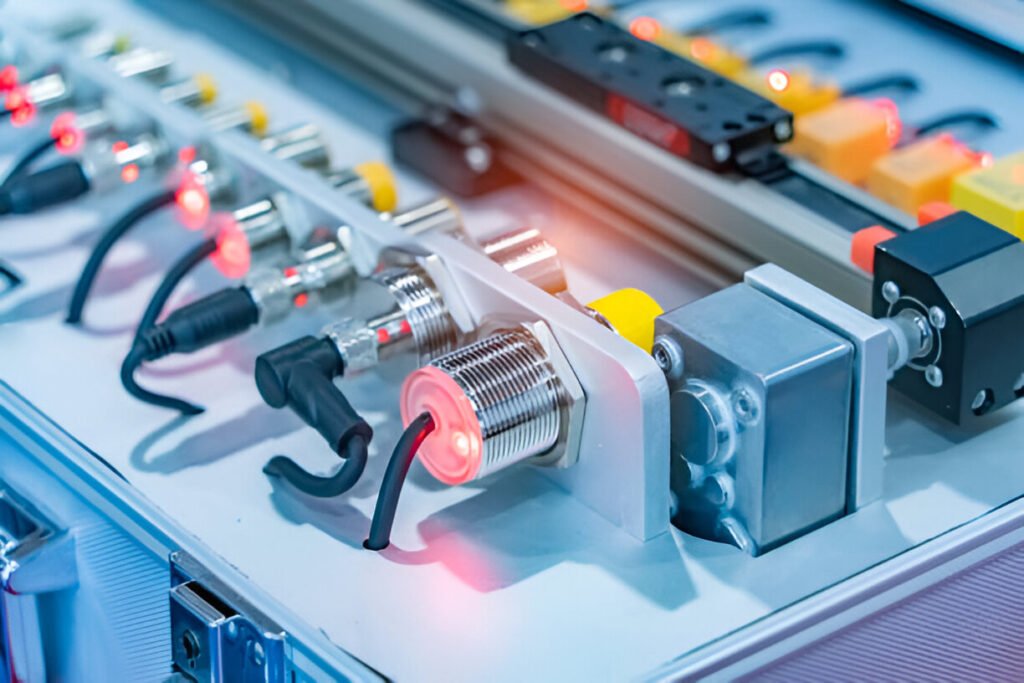
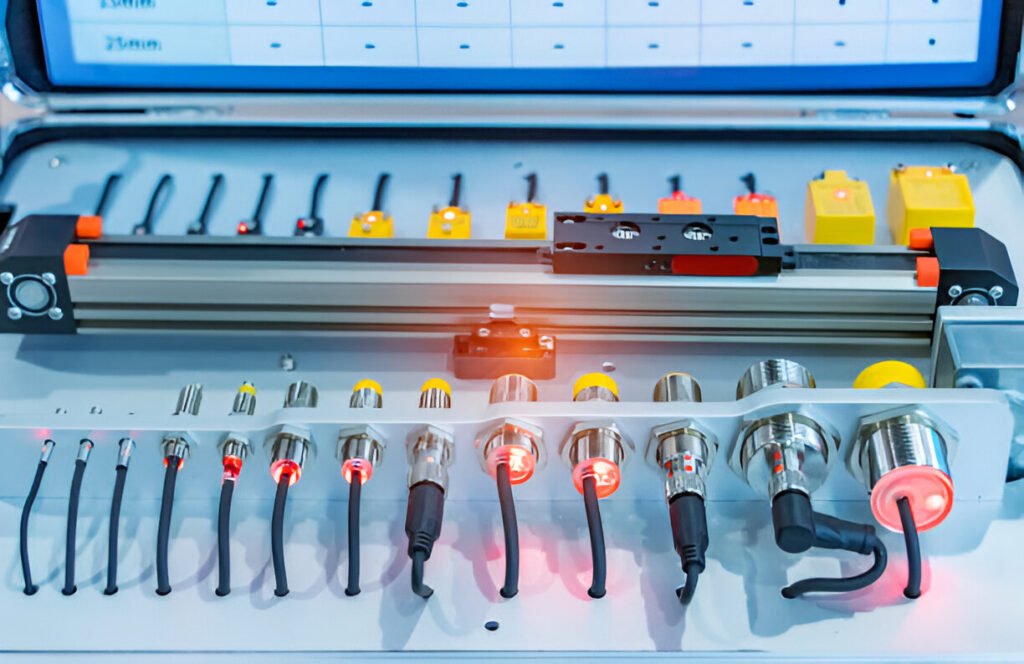
A proximity switch sensor is a device that can detect the presence of an object without physical contact. It senses changes in different physical signals—such as electromagnetic fields, light, or magnetic fields—to determine whether an object is within its sensing range.
Tipo de sensor
Princípio de funcionamento
Detectable Objects
Typical Applications
Indutivo
Electromagnetic induction to sense metal
Metal
Mechanical positioning, automated assembly
Capacitivo
Changes in capacitance detect various objects
Metal and non-metal
Liquid level detection, object presence
Fotoelétrico
Emitting and detecting light
Any object (depends on light reflection)
Object detection, counting, packaging
Magnético
Detects changes in magnetic field
Objetos magnéticos
Access control, automotive industry
Ultrassônico
Uses ultrasonic wave reflection
Various objects
Distance measurement, obstacle detection
This diverse range allows proximity sensors to meet broad industrial needs—from precise metal component detection to non-contact liquid level monitoring.
Proximity Switch Sensor Working principle
The core appeal of proximity switch sensor lies in their “contactless detection” ability. This means they detect objects entering a preset detection range and trigger corresponding electrical signals without physical touch.
Sensores indutivos
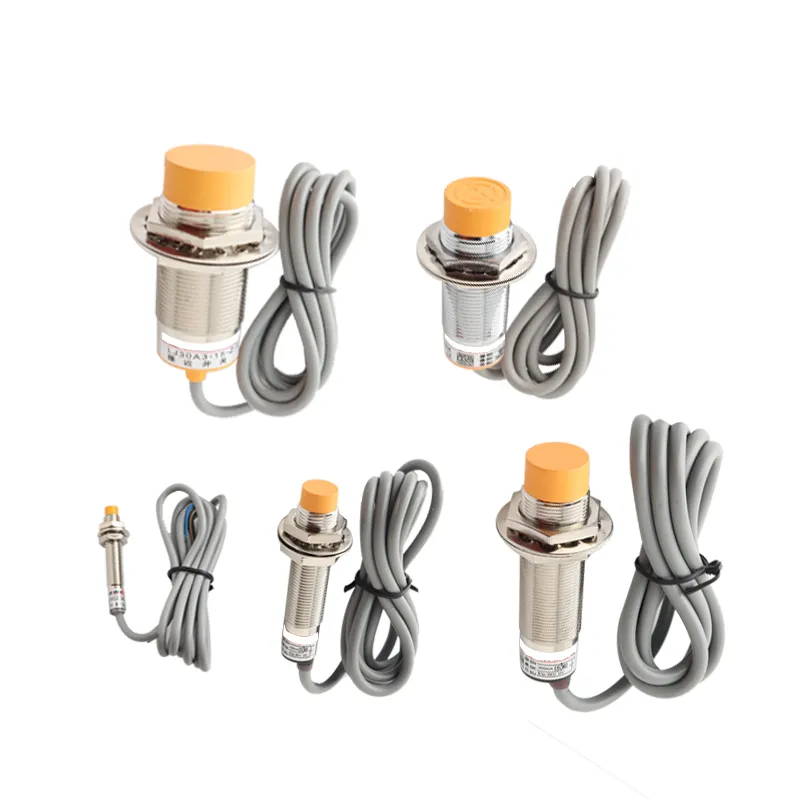
Inductive sensors focus on metal targets. When a metal object approaches the sensor coil, it alters the electromagnetic field, which triggers a switch action. They’re known for durability and are perfect in harsh environments, commonly used in machine tools and production lines.
Sensores capacitivos
By detecting changes in capacitance, capacitive sensors can sense both metal and non-metal objects, including liquids and powders. Applications cover food packaging lines and liquid level monitoring.
Photoelectric Sensors
These sensors emit a light beam and detect the reflected light. They come in through-beam and reflective types. External light may sometimes affect their stability, so proper installation is key.
Magnetic Sensors
Magnetic sensors detect changes in magnetic fields, frequently used to monitor magnetic objects or magnetic switch positions—common in security systems and automotive switches.
These sensors exploit various physical principles to address diverse industrial detection requirements.
If you are looking for reliable proximity switch sensor and professional support, feel free to contact us.
For example, inductive sensors usually offer millisecond response times suited for high-speed lines, while capacitive sensors, although more sensitive, may be affected by humidity. Selecting sensors based on these parameters is crucial for optimal performance.
Applications and Industries
Proximity switch sensors are the “eyes” of industrial automation, becoming smarter, more accurate, and reliable. With advancing technology, they evolve into intelligent devices integrated into smart manufacturing systems. Proximity switch sensors are extensively applied in:
Linhas de produção automatizadas: Precisely detecting component positions to reduce errors and increase efficiency.
Setor automotivo: Non-contact switches for doors and seat detection ensure safety and comfort.
Robótica: Enable environmental awareness for adaptive and intelligent operations.
Food Packaging and Logistics: Non-contact detection maintains hygiene while boosting process accuracy.
Setor
Use Case
Key Advantage
Mechanical Manufacturing
Component positioning and counting
High precision and stability
Automotivo
Non-contact door locks and safety sensors
Reliable safety and fast response
Food & Beverage
Material and liquid level monitoring
Hygiene and no direct contact
Warehousing & Logistics
Automated sorting and handling systems
Efficiency gain and reduced errors
These examples highlight the indispensable role proximity sensors play in modern industrial setups.
Proximity Switch Sensor Pros and Cons Analysis
Vantagens
Desvantagens
Non-contact detection reduces mechanical wear and maintenance costs
Limited sensing distance, unsuitable for long-range detection
Fast response time for high-frequency automation
Sensitive to electromagnetic interference, causing instability
High reliability and ability to operate in dusty, humid environments
Some models have higher initial costs and may require calibration
Can detect both metal and non-metal objects
Photoelectric types may suffer from false triggers due to strong ambient light
Long lifespan and simple maintenance
Depend on stable power supply; voltage fluctuations can affect performance
Understanding these pros and cons helps determine the best sensor type for your specific industrial application.
Buying Guide Proximity Switch Sensor
When choosing a proximity switch sensor, consider:
Object Material: Inductive for metal; capacitive for non-metal or liquids.
Condições ambientais: Select models with sufficient IP ratings for moisture, dust, or explosion-proof needs.
Installation Space: Sensing distance and size affect installation options.
Performance Metrics: Compare sensitivity, response time, and lifespan.
Supplier Credentials: Brands that offer strong technical support and after-sales service.
Fator de seleção
Importance
Recommendation
Object Material
High
Inductive for metal; capacitive for non-metal/liquids
Meio ambiente
High
Confirm required IP rating and safety standards
Sensing Distance
Médio
Match according to process requirements
Budget
Médio
Balance performance and cost
After-Sales Support
High
Choose reputed suppliers with warranty
Maintenance and Troubleshooting
Regular maintenance is key to sensor longevity and reliability:
⚠️Clean the sensing surface: Remove dust and oils regularly.
⚠️Check power supply stability: Avoid voltage fluctuations causing errors.
⚠️Avoid strong electromagnetic interference zones: To prevent signal distortion.
⚠️Diagnose faults: Identify common issues and resolve timely.
Problem
Possible Causes
Solutions
Frequent false triggers
Strong light, EMI interference
Add shielding, adjust installation location
No output signal
Power failure, sensor damage
Check power; replace sensor if needed
Slow response
Dirt on sensor, sensor aging
Clean sensing area; replace if necessary
As a core component of industrial automation, proximity switch sensor offer non-contact detection, rapid response, and versatile applications. They are essential for precision positioning of metal parts and effective monitoring of non-metal materials. Choosing the right sensor model considering object type, environment, and performance will maximize your production efficiency.
Remember, regular maintenance and timely troubleshooting are keys to sustained, stable operation.
If you are looking for reliable sensor de proximidade and professional support, feel free to contact us. Let help you accelerate your journey into Industry 4.0 and achieve intelligent, automated, and efficient manufacturing!
PERGUNTAS FREQUENTES
Q1: What is the typical sensing distance of proximity switch sensors?
Generally between a few millimeters and several centimeters, depending on type and model.
Q2: Can proximity sensors detect non-metal objects?
Ao procurar o sensor de chave de proximidade certo, você pode se deparar com alguns termos técnicos como "tipo de saída", especialmente NPN e PNP. Não se preocupe - eles parecem complicados, mas a escolha do tipo de saída correto é crucial para a operação do seu dispositivo. Isso afeta não apenas a compatibilidade com o seu sistema de controle, mas também a estabilidade e a segurança do [...]
O que é um interruptor de proximidade? Um interruptor de proximidade é um dispositivo eletrônico que detecta a presença ou ausência de um objeto dentro de uma determinada faixa sem nenhum contato físico. Esses interruptores são amplamente usados em sistemas de automação e controle para aumentar a eficiência e a segurança. Eles podem detectar vários objetos, inclusive metais, plásticos e líquidos, tornando [...]
Você já se perguntou como as máquinas "veem" objetos sem tocá-los? Entre no mundo dos interruptores fotoelétricos de reflexão difusa - uma tecnologia fascinante que está revolucionando discretamente a automação. Seja você um entusiasta da tecnologia ou um profissional do setor, este guia o guiará por tudo o que você precisa saber sobre esses dispositivos incríveis. Vamos nos aprofundar! - O que é [...]
Usamos cookies para aprimorar sua experiência de navegação, veicular anúncios ou conteúdos personalizados e analisar nosso tráfego. Ao clicar em "Aceitar tudo", você concorda com o uso de cookies.