Imagine a device that can detect objects without even touching them—sounds like something out of a sci-fi movie, right? Well, capacitive proximity switch sensors make this possible in the real world! These clever little gadgets are everywhere, from your smartphone screen to industrial automation systems. But how do they work, and why should you care? Buckle up, because we’re diving deep into the world of capacitive sensing!
What Is a Capacitive Proximity Switch Sensor?
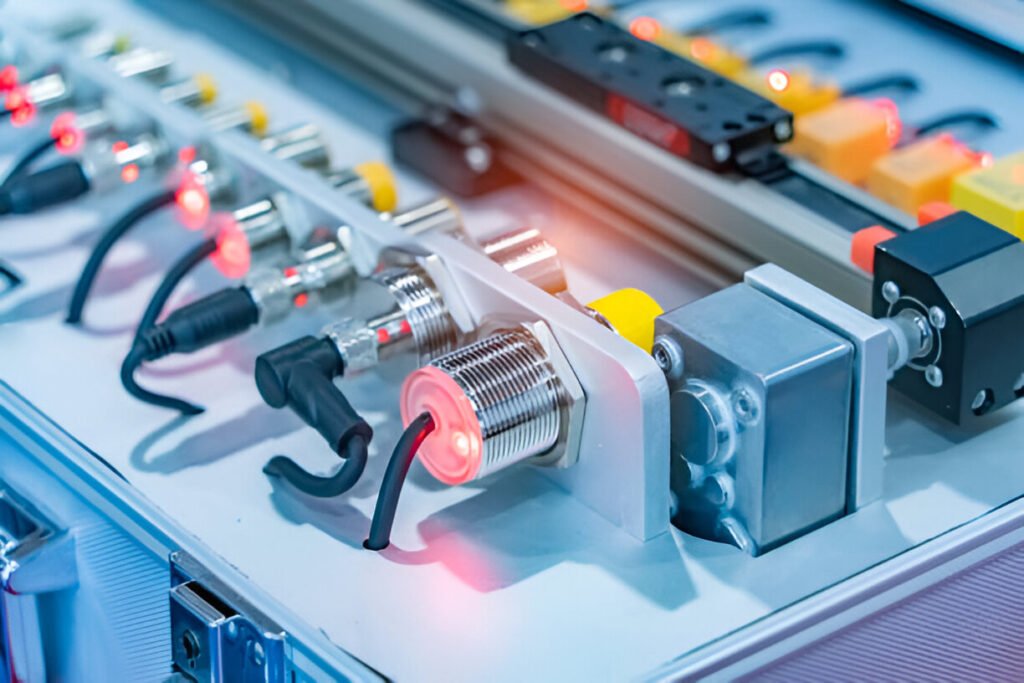
A capacitive proximity switch sensor is an electronic device that detects nearby objects without physical contact. Unlike mechanical switches, which require a button press, capacitive sensors work by sensing changes in an electrical field. Think of it like a silent guardian—always watching but never touching.
These sensors are widely used in consumer electronics, automotive systems, and industrial machinery. Ever wondered how your phone knows when your face is near the screen? Yep, that’s capacitive sensing in action!
How Does a Capacitive Proximity Sensor Work?
At its core, a capacitive sensor operates like an invisible force field. It generates an electrostatic field and monitors disturbances caused by conductive or dielectric objects. When something enters this field, the sensor detects a change in capacitance (the ability to store an electrical charge) and triggers a response.
A ciência por trás disso
Electrostatic Field
Capacitance Change
Signal Processing
It’s like throwing a pebble into a still pond—the ripples tell you something’s there.
Key Components of a Capacitive Proximity Sensor
Wondering what makes these sensors tick? Here’s a breakdown:
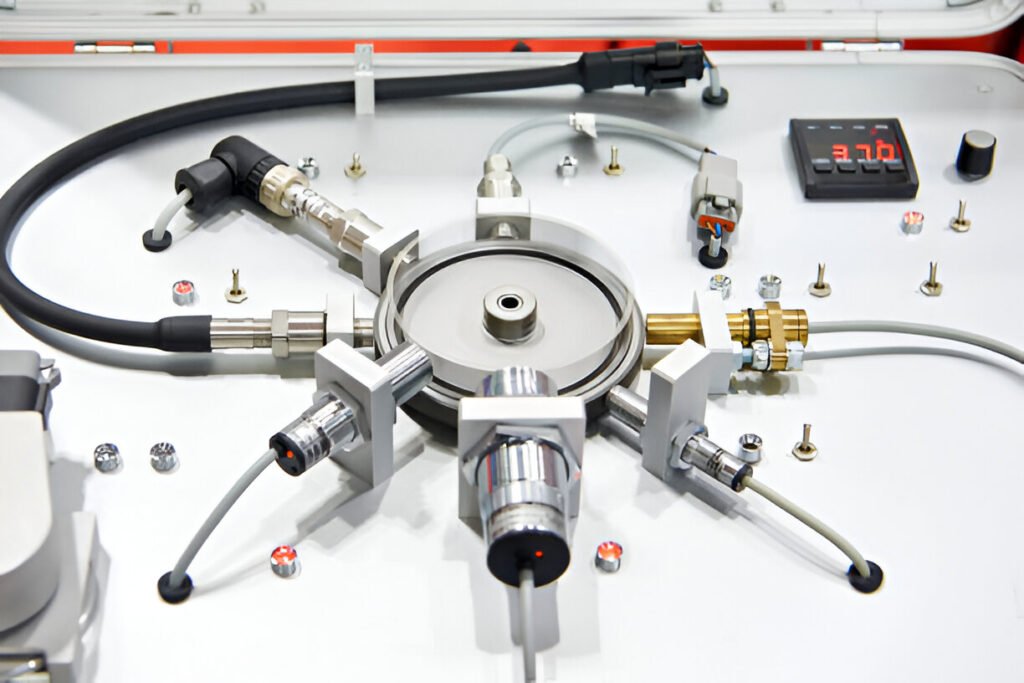
1. Oscillator Circuit: Generates the electric field.
2. Sensor Electrode: The part that interacts with the external object.
Capacitive proximity switch sensors are the unsung heroes of modern tech, blending precision with versatility. Whether you’re designing a smart device or optimizing a factory line, these sensors offer a reliable, touch-free solution. Ready to harness their power?
Perguntas frequentes
How far can a capacitive proximity sensor detect?
Most sensors have a range of a few millimeters to about 50mm, depending on the object’s material and sensor type.
Can capacitive sensors detect through walls?
Yes, but only if the wall is thin and non-metallic. Thick or conductive materials block the electric field.
Do capacitive sensors work in wet environments?
Absolutely! They’re great for liquid detection and humid conditions, unlike some optical sensors.
Why does my capacitive sensor give false triggers?
This could be due to environmental noise, improper grounding, or incorrect sensitivity settings.
Are capacitive sensors expensive?
They’re generally affordable, with prices varying based on features like adjustability and shielding.
Got more questions? Drop them in the comments—we’d love to help! 🚀
Inductive proximity switches might sound like something out of a sci-fi movie, but they’re actually a cornerstone of modern automation. Ever wondered how machines “sense” objects without touching them? That’s where these little marvels come into play. In this article, we’ll dive deep into the world of inductive proximity switches, breaking down what they are, […]
In today’s industrial automation field, proximity switch sensor play an increasingly vital role. Whether it’s detecting materials on a production line or enabling precise environmental sensing for robots, these non-contact sensing devices are indispensable. Ever wondered what makes these small switches so reliable and smart? In this article, we will take you deep into the working principles, […]
O sensor de chave de proximidade é uma parte essencial de inúmeros sistemas automatizados. Eles detectam a presença ou ausência de objetos sem contato físico. Essa capacidade os torna perfeitos para ambientes industriais adversos, onde o desgaste é uma preocupação. Dois dos tipos mais populares são os sensores de proximidade NPN e PNP. A escolha entre esses dois tipos depende muito de sua [...]
Usamos cookies para aprimorar sua experiência de navegação, veicular anúncios ou conteúdos personalizados e analisar nosso tráfego. Ao clicar em "Aceitar tudo", você concorda com o uso de cookies.