






Current Sense Transformer High Accuracy Isolated AC Current Sensing Solutions
CST-500 current sense transformer for factories, suppliers, exporters, and distributors needing bulk purchase, custom OEM/ODM, and wholesale pricing.
Read More
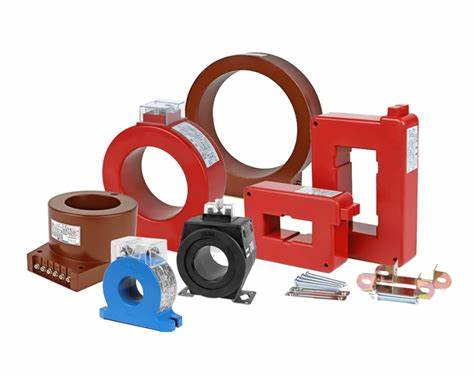
Solid core current transformers (CTs) are essential instrument transformers designed to provide accurate current measurement and reliable electrical protection. Featuring a robust toroidal core, these through-hole current transformers are widely used in low voltage CT applications to monitor and control electrical systems effectively. The solid core design ensures consistent performance in demanding industrial and utility environments.
Our solid core current transformers prioritize precision, durability, and safety. Built with high-permeability magnetic materials and engineered winding configurations, they offer exceptional accuracy classes such as 0.5 for metering and 5P10/10P for protection class CTs. The design emphasizes minimal magnetic losses and stable thermal performance, making them ideal for both metering class current transformer and protection class CT requirements. The window type construction enables easy cable or busbar insertion, ensuring seamless integration.
These ring type CTs are adaptable to a wide range of installations, from panel mount current transformers in distribution boards to busbar current transformer setups in switchgear. Their solid core architecture supports current ratio options like 100/5A or custom secondary current outputs (1A/5A), matching diverse application needs. Installation is straightforward with various mounting accessories, accommodating space constraints and simplifying electrical system integration.
Understanding the technical specs of a solid core current transformer (CT) helps you get the right fit for your needs, from accuracy to safety. Here’s a clear covering the essential points:
Common primary to secondary current ratios include 100/5A, 200/5A, and customized options. The secondary current output typically comes in 1A or 5A, suitable for most low voltage CT applications and instrumentation needs. This ratio ensures safe, precise current measurement by stepping down high primary currents.
| Параметр | Типичные значения |
|---|---|
| Primary Current | 5A to 1200A+ |
| Secondary Current | 1A or 5A |
| Common Ratio | 100/5A, 200/5A, etc. |
Accuracy classes dictate how precise the CT readings are. Metering class CTs generally have Class 0.5 or 1.0 accuracy, ideal for billing and energy metering. Protection class CTs come in 5P10, 10P, built to hold up under fault conditions with reliable operation.
| Class Type | Typical Use | Accuracy Rating |
|---|---|---|
| Metering Class | Energy metering | 0.5, 1.0 |
| Protection Class | Protective relays | 5P10, 10P |
The burden rating indicates the load the CT can handle without compromising accuracy. Typical burden values range from 5VA to 15VA, depending on the application, ensuring minimal signal distortion for both metering and protection uses.
| Burden Rating (VA) | Приложение |
|---|---|
| 5 – 15 VA | Low burden to standard burden loads |
Solid core CTs feature robust insulation designed for low voltage environments. They meet international safety standards, offering protection against electrical faults and ensuring durability in panel mount or busbar-mounted systems. The insulation class supports safe operation under specified voltage levels, with increased resistance against transient spikes.
For more on transformer variations, you can check our details on split core CT current transformers designed for flexible installation without downtime.
This concise technical helps you quickly pinpoint solid core current transformers that fulfill your performance and safety requirements in industrial or commercial setups.
Choosing the right solid core current transformer (CT) from Wilmall is simple when you follow these three key steps:
The current ratio is fundamental. It specifies the relationship between the primary current and the secondary current output, commonly shown as 100/5A, 200/5A, or sometimes with secondary current at 1A or even milliamps (mA). This ratio ensures compatibility with your system and measurement devices.
| Primary Current (A) | Secondary Current (A) | Common Use |
|---|---|---|
| 100 | 5 | Standard metering |
| 200 | 5 | Mid-range loads |
| Various | 1 | Precision metering |
Choosing the right ratio avoids overloading and guarantees accurate readings. For more details on available ratios and specifications, check Wilmall’s full range of current transformers for energy meters and protections.
Wilmall solid core CTs come in metering class и protection class:
Select the class based on your accuracy needs: metering for detailed consumption data or protection for system safety and fault detection.
The window or aperture size of the CT must match the conductor or busbar it encircles. Ill-fitting CT windows result in poor installation or inaccurate measurements.
| Step | Рассмотрение | What to Check |
|---|---|---|
| 1 | Current Ratio | Primary/secondary (e.g., 100/5A) |
| 2 | Application Class | Metering (0.5 class) vs Protection (5P10) |
| 3 | Window Size (Aperture) | Fit conductor/busbar thickness |
Following this guide ensures your Wilmall CT fits your system perfectly—whether for precise metering or robust protection.
Explore more on selecting and using different current transformers at Wilmall’s current transformer product page.
When working with a solid core current transformer, knowing the exact dimensions and mounting choices is key for a smooth installation. These ring type CTs come with detailed schematics showing the window size, overall dimensions, and terminal layout, ensuring compatibility with your setup.
| Параметр | Size (mm) | Notes |
|---|---|---|
| Window Aperture (WxH) | 50 x 50 | Size of the through-hole |
| Overall Diameter | 120 | Outer frame size |
| Depth (Thickness) | 40 | Mounting depth |
| Terminal Positioning | Top/Side terminals | Depending on model |
For a smooth installation with assured accuracy, double-check your required aperture size and terminal layout using the full dimensional schematics provided by suppliers. If you’re interested, you might also want to explore our low voltage current transformer models with accuracy class 0.5, which come with comprehensive mounting options.
Solid core current transformers (CTs) are widely used in both industrial and commercial electrical systems. Their robust design and reliable performance make them ideal for various applications, particularly where precise current measurement and protection are critical.
For specific needs, such as specialized instrument transformers or low voltage CTs, Wilmall offers tailored options. Refer to products like our indoor single-phase epoxy resin voltage transformer for complementary solutions in power measurement and protection setups.
No matter the application, choosing the right solid core current transformer with the appropriate current ratio, secondary current (1A or 5A), and burden rating (VA) will ensure accurate readings and reliable system protection in your electrical network.
Here are answers to common questions about solid core current transformers (CTs), covering key points like ratio, accuracy, and installation.
| Question | Answer |
|---|---|
| What is a solid core current transformer? | It’s a toroidal or ring type CT with a fixed, non-opening core. Ideal for permanent installations. |
| How do I choose the current ratio? | Match the primary (line) current and secondary output (1A or 5A). Common ratios: 100/5A, 200/5A. |
| What’s the difference between metering and protection class? | Metering class offers accuracy (e.g., 0.5), protection class CTs (5P10, 10P) handle fault currents. |
| How important is the burden rating (VA)? | Burden indicates the max load CT can drive without accuracy loss. Check your instrument burden specs. |
| Can I use a solid core CT for busbars? | Yes, window type CTs work well for busbar installation, ensuring secure current measurement. |
| Is installation difficult? | Solid core CTs require disconnection of the primary conductor during installation—plan accordingly. |
| What safety precautions apply? | Always short CT secondary when primary energizes to avoid dangerous voltage; follow insulation standards. |
For extra tips on choosing the right CT for your setup, refer to our selection guide and explore related products like split core CTs for easier installation. For more support on industrial instrumentation, check out our article on how to choose a suitable proximity switch.