10 Pin Aviation Connector: Pinout, Wiring and Cable Assembly
How a 10-pin aviation connector is numbered, a proven pin allocation for mixed power and signal circuits, current limits per pin and clean assembly steps.
Read More
When buyers compare aviation connectors, they usually compare pin counts and prices — and then wonder why one “identical” GX16 connector survives 500 mating cycles and another starts chattering after 80. The difference lives in three places: the housing material, the pin base metal, and the plating on top of it. This guide explains what each part is made of, what those materials cost you in durability, current and price, and how to specify them for OEM orders instead of guessing.
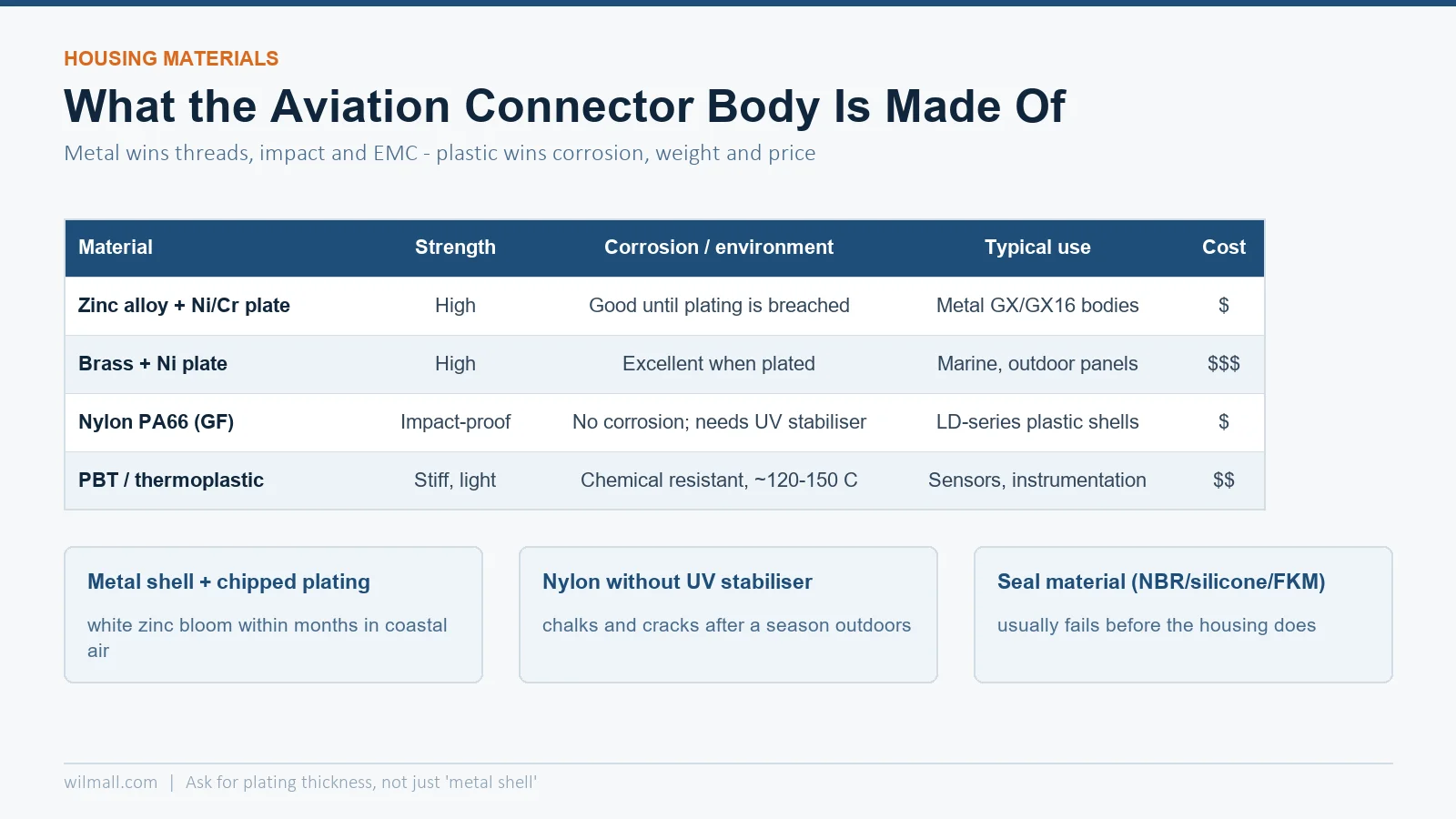
The housing does three jobs: mechanical strength, environmental sealing, and shielding continuity. Four materials cover almost every aviation connector on the market:
| Housing material | Strength / weight | Corrosion & environment | Типичное использование |
|---|---|---|---|
| Zinc alloy (die-cast), nickel/chrome plated | High strength, heavier | Good with plating; degrades fast if plating is scratched deep | Metal GX/GX12/GX16 style industrial connectors |
| Brass, nickel plated | Strong, machinable, medium weight | Excellent corrosion resistance when nickel plated | Premium metal connectors, marine and outdoor panels |
| Nylon (PA66), glass-fibre filled | Impact resistant, light | Inherently corrosion-free; UV stabilisers matter outdoors | LD-series plastic industrial connectors, cost-sensitive builds |
| PBT / thermoplastic | Good stiffness, light | Strong chemical resistance, stable to ~120–150 °C | Sensor and instrumentation connectors |
The practical trade-off is weight and environment versus price. Metal housings win on impact, thread durability and EMC shielding continuity (the shell is part of the shield path); plastic housings win on corrosion, weight and cost. For washdown or coastal installations, a nickel-plated brass or glass-filled nylon body with stainless hardware is the safer pairing — a zinc shell with chipped plating will bloom white corrosion within months.
Inside the shell, contacts are almost always brass (good conductivity, cheap, easy to machine) or phosphor bronze (better spring properties, keeps contact force over more cycles). Copper is rarely used bare because it oxidises quickly; beryllium copper appears in high-reliability spring contacts. The base metal mostly sets the mechanical life — how many insertion cycles the socket retains its grip force — while the plating sets the electrical life.
For solder-bucket and crimp contacts alike, check two numbers in the datasheet: the contact retention force (how hard the socket grips the pin) and the rated mating cycles. A connector rated 500 cycles usually has phosphor bronze or a well-designed brass socket; the cheapest 30-cycle parts are thin-stamped brass.
Plating is where most of the performance difference hides. The layer is thin — measured in micrometres — but it decides contact resistance, oxidation behaviour and mating life:
| Plating | Contact resistance | Mating cycles | Best for | Watch out for |
|---|---|---|---|---|
| Gold (flash 0.1–0.3 µm or 0.5–1 µm full) | Very low and stable | High (500+ with adequate thickness) | Signal, data, low-voltage dry circuits | Cost; thin flash wears through on high-cycle power use |
| Silver (2–5 µm) | Lowest of the common platings | Средний | Higher current contacts | Tarnishes (sulphide film) — fine when mating wipes it, bad in storage |
| Tin (3–5 µm) | Higher, less stable | Low (10–50) | Cost-driven, rarely-mated connections | Fretting corrosion in vibration; avoid dry circuits |
| Nickel underplate | — (barrier layer) | — | Under gold/silver to stop base-metal diffusion | Skimping the underplate shortens gold life dramatically |
A common misconception is that gold plating is “for quality” in general. Gold earns its cost on low-force, low-voltage signal contacts where any oxide film would break the circuit. On a 10 A power contact, gold is wasted — the contact force and wiping action keep less noble platings stable, and silver or tin does the job for a fraction of the price. Conversely, putting tin-plated pins on a data line is the classic false economy: within months the contact resistance creeps and the “intermittent signal” tickets start.
In waterproof series (SD16/SD20 style bayonet and threaded waterproof connectors), the housing is only half of the ingress story. The seals are typically NBR (general purpose, economical), silicone (wide temperature, UV stable) or FKM/Viton-type (oil and chemical resistance). Ask what the gland and rear seals are made of whenever the connector faces washdown, oil mist or outdoor UV — a perfect metal shell with a cheap NBR O-ring still fails IP68 after a season in the sun. If you are choosing between series for an outdoor build, the aviation connector types guide maps which series are designed for sealing in the first place.
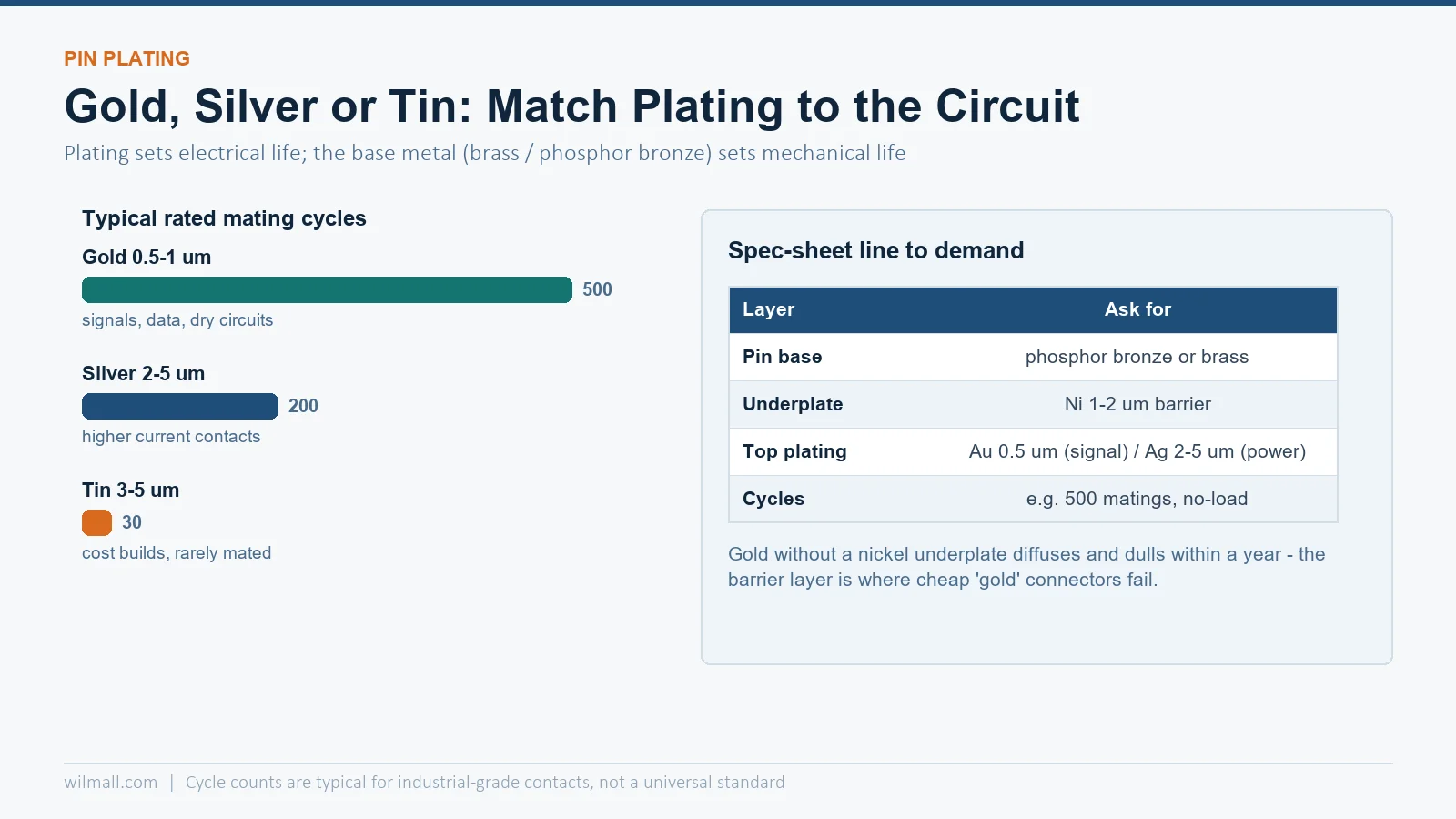
When you request a custom or OEM build, put these five points in the specification instead of “high quality metal connector”:
For pin-count and thread sizing decisions that pair with this material choice, the GX16 vs GX12 vs LD16 size and pin chart covers the mechanical dimensions, and the 4-pin wiring guide shows where a gold-plated signal pin actually pays off. A good reference point for a full metal-body build is the LD28 series aviation connector, which pairs a larger shell with multi-pin inserts for higher-current industrial connections.
Almost always brass or phosphor bronze base metal with a protective plating — gold for signals, silver for higher current, tin for low-cost rarely-mated contacts. The plating, not the base metal, sets the electrical performance.
No. Metal wins on impact, threads and EMC shielding; glass-filled nylon wins on corrosion, weight and cost. Outdoor corrosion-prone sites often get longer life from quality nylon bodies than from zinc shells with thin plating.
Flash plating of 0.1–0.3 µm suits low-cycle signal use; 0.5–1 µm over a nickel underplate is the standard for connectors rated at hundreds of mating cycles. Always ask for the thickness, not just “gold plated”.
Silver reacts with sulphur in air and forms a sulphide film. In service, each mating wipes the film away and contact stays low-resistance, but silver-plated spares stored unmated for years may need cleaning before use.
Nickel-plated brass or 300-series stainless hardware paired with silicone seals, or glass-filled nylon bodies with stainless couplers. The weakest link is usually the seal and plating rather than the bulk housing.