








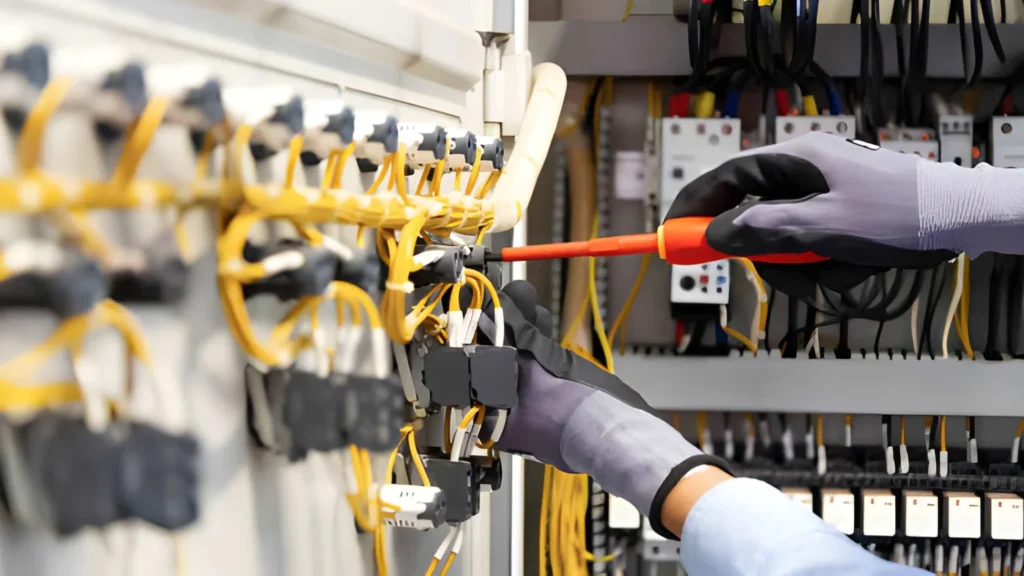
Current Transformers High Accuracy Class 0.5 to 10P
Índice
Product Overview: Introduction, Core Application, Key Features
Current transformers (CTs) are essential instrument transformers used to measure alternating current (AC) in electrical systems. They step down high primary currents to manageable secondary currents for metering and protection devices, ensuring safety and accuracy.
Core Application
- Metering: Provides precise current measurement for billing and monitoring.
- Protection: Supplies accurate current data for relays and circuit breakers to detect faults.
- Control Systems: Interfaces with automation and monitoring equipment.
- Energy Management: Supports load analysis and power quality checks.
Características principales
| Característica | Descripción |
|---|---|
| CT Ratio | Converts high primary current (e.g., 1000 A) to standard secondary current (5 A or 1 A). |
| Accuracy Class | Class 0.5 or 1.0 for metering; 5P10 or similar for protection. |
| Burden (VA) Rating | Rated secondary load capacity, ensuring precise output under load. |
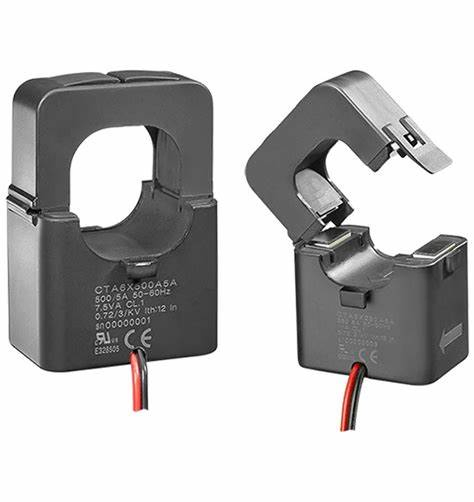
| Construction Types | Window type, bar type, toroidal, and split core options for varied installation needs. |
| Polarity Markings | Clear P1/P2 labels to maintain correct phase relationship. |
| Safety Insulation | Designed to isolate high voltage primary circuits safely from measurement instruments. |
Current transformers maintain system reliability by delivering accurate current scaling and ensuring safe, effective operation of meters and protection devices.
Technical Specifications & Performance Data
Understanding the technical specs of a current transformer (CT) is key to picking the right one for your needs. Here’s a breakdown covering current ratio configuration, accuracy, protection classes, and burden rating.
Current Ratio Configuration
The CT ratio defines the relationship between the primary current (input) and the secondary current (output). Common ratios include 100:5, 200:5, or custom configurations depending on your system. This ratio ensures correct scaling for metering or protection devices.
| Parámetro | Valores típicos |
|---|---|
| Primary Current | 5A up to several kA |
| Secondary Current | Standard 5A or 1A |
| Ratio Range | e.g., 100:5, 200:5, 400:5 |
Accuracy & Metering Classes
Metering CTs must be highly accurate to ensure precise readings. Accuracy classes like 0.5 y 1.0 indicate how closely the CT output matches the actual current. For example:
- Class 0.5: Max error of 0.5% under stipulated conditions
- Class 1.0: Max error of 1%
Protection Classes (Saturation Characteristics)
Protection CTs, often rated as 5P10 or 10P20, are designed to handle high fault currents without saturating too early. This means they maintain accuracy during short circuits or overloads.
- 5P10: Saturation point at 10 times nominal current, suitable for protection relays
- 10P20: For more demanding protection applications
Rated Burden (VA Rating)
The burden rating (VA rating) is the maximum load that the CT secondary can drive while maintaining accuracy. It includes wiring, meter, and relay impedance. Typical burdens range from 5VA to 30VA or higher. The rated burden ensures the CT delivers reliable output without overheating or distortion.
| Especificación | Detalles |
|---|---|
| Rated Burden (VA) | 5VA to 30VA or more |
| Secondary Current | 1A or 5A |
| Accuracy Class | 0.5, 1.0 (Metering) |
| Protection Class | 5P10, 10P20 |
Selecting the right combination of these specs means your instrument transformer will support your application whether for metering or protection. For wiring and setup details, check out our resources on pendant control station solutions for integrated control systems.
Construction & Dimensions
Current transformers come in various designs tailored for different applications. Understanding their construction and size helps you pick the right type for your setup.
Casing Material
- Plastic (Thermoplastic): Lightweight, corrosion-resistant, ideal for indoor use.
- Metal (Aluminum/Stainless Steel): Durable, provides better shielding, suited for harsh industrial environments.
- Composite Materials: Enhanced insulation and mechanical strength.
Mounting Options
- Panel Mount: Fixed directly onto switchboards or meter panels.
- Busbar Mount: Designed for easy installation on busbars in switchgear.
- DIN Rail Mount: Fits standard DIN rails for compact setups.
- Clamp/Split Core: Openable core for retrofit without disconnecting conductors.
Window/Aperture Size
| Tipo | Aperture Size Range | Aplicación |
|---|---|---|
| Toroidal (Ring) CT | 20mm to 150mm | Cable or busbar pass-through |
| Bar Type CT | Fixed bar or rod | Direct conductor integration |
| Window Type CT | Large opening for conductor | Easy installation in busbars |
Terminal Details
- Screw Terminals: Common for secure connections in fixed setups.
- Plug-in Connectors: Quick connect/disconnect, often found in panel-mount CTs.
- Lead Wires: Pre-attached insulated wires for flexible wiring.
Choosing the right construction depends on your installation environment, space constraints, and conductor type. For example, split core CTs are perfect for retrofitting existing circuits without downtime, whereas panel-mount, sealed casing CTs offer robust performance in controlled settings.
For related accessories, consider checking the SD13 series connectors designed for secure and efficient CT wiring.
Selection Guide: Metering vs. Protection CTs
Choosing the right current transformer (CT) depends mainly on whether it’s for metering or protection purposes. Metering CTs focus on accurate measurement and monitoring of electrical current, making them essential for billing and system analysis. These typically feature a CT ratio designed to precisely scale down the primary current to a measurable secondary current, with tight accuracy classes like Class 0.5 or 1.0, ensuring minimal error over a wide range of loads. Metering CTs usually have a rated burden (VA rating) optimized for high accuracy at normal operating loads.
Protection CTs, on the other hand, are built to quickly respond to fault conditions and trigger protective relays. They are designed with protection classes such as 5P10, which indicate their ability to endure short-duration overcurrents without saturating. This makes them more robust but less focused on precision under normal load. Protection CTs, including types like split core CT or bar type CT, often deal with higher burdens and need to maintain accuracy during transient events.
When selecting, consider:
- Metering CT for billing, regular monitoring, and energy management.
- Protection CT for system safety, fault detection, and relay operation.
- Ensure the CT polarity (P1/P2) y window/aperture size fit your installation.
- Match the burden VA rating to your equipment load.
- Check compatibility with the system voltage and current levels.
For detailed options, like low voltage CT or busbar-mount window type current transformers, explore Wilmall’s range including reliable models such as the low voltage current transformers for protecting electrical energy that fit various metering and protection needs seamlessly.
Installation & Wiring Diagrams: Polarity Marking and Safety Warnings
Proper installation of current transformers (CTs) is crucial for accurate performance and safety. Always pay close attention to CT polarity markings, usually indicated as P1 and P2 on the primary side and corresponding terminals on the secondary side. Correct polarity ensures correct phase relationships and accurate readings, especially important when using multiple CTs in metering or protection schemes.
When wiring your CT, refer to clear wiring schematics to connect the secondary terminals correctly to measuring instruments or protection relays. Miswiring can lead to inaccurate current ratio readings or damage the connected devices.
Key Installation Tips:
- Observe CT Polarity: Connect P1 to the source side and P2 to the load side to maintain correct phase angle.
- Secure Secondary Wiring: The secondary circuit must never be open under load; always short the secondary terminals before disconnecting to avoid dangerous high voltages.
- Follow Safety Guidelines: Use insulated tools and ensure the power source is de-energized before installation.
- Use Proper Mounting: Depending on CT type — whether a window type current transformer or a split core CT — ensure it is mounted securely on busbars or cables.
For detailed safety and installation instructions, always consult the manufacturer’s documentation. Safe wiring practices not only protect equipment but also personnel from electrical hazards.
For further insights on sensor wiring and installation practices, explore our guides on proximity switch sensor wiring that share practical wiring tips applicable in similar industrial environments.
Why Choose Wilmall Current Transformers?
When it comes to current transformers (CTs), Wilmall stands out for several key reasons. Whether you need a toroidal current transformer, bar type CT, or a specialized split core CT, our products deliver consistent performance you can trust.
Garantía de calidad
- Rigorous Testing: Each CT undergoes comprehensive testing to ensure accuracy, durability, and safety.
- Durabilidad: Built with high-grade materials that withstand industrial environments.
- Reliable Accuracy: Supports classes like class 0.5 accuracy y protection class 5P10, meeting the demands for precise metering and protection.
Standards Compliance
Wilmall current transformers comply with major international standards, including IEC and ANSI, ensuring compatibility and safety. This means you get:
| Standard | Beneficio |
|---|---|
| IEC 60044-1 | Accurate metering & protection CT performance |
| ANSI C57.13 | Industry-approved design and safety |
These certifications guarantee that your instrument transformers perform reliably in your system.
Customization Options
We offer tailored solutions to fit your unique application needs:
- CT Ratio: Configurable primary/secondary current ratios (e.g., 2500/5A).
- Burden VA Rating: Options suitable for different load conditions.
- Mounting Styles: From busbar CTs to window type current transformers made to fit your setup.
- Special Features: Custom casings, aperture sizes, and terminal arrangements.
Need a CT matched to your exact requirements? Wilmall’s team is ready to help.
For detailed specs on low voltage CTs, check out our reliable BH 0.66kV 2500/5A Current Transformer for an example of our quality and customization in action.
Frequently Asked Questions (Technical FAQ)
| Question | Answer |
|---|---|
| What is a CT ratio? | The CT ratio is the relationship between primary and secondary current, e.g., 1000:5 A. |
| What are metering and protection CTs? | Metering CTs provide accurate current measurement (Class 0.5), while protection CTs handle fault currents (Class 5P10). |
| What does burden (VA rating) mean? | Burden refers to the load the CT can supply on the secondary side without accuracy loss. |
| How to identify polarity P1 and P2? | Polarity marks P1 and P2 indicate the primary current direction and are essential for correct wiring. |
| What is secondary current injection? | A testing method where a known current is injected on the secondary to verify CT accuracy. |
| Can I use a split core CT or toroidal CT for busbar measurement? | Yes, split core and toroidal current transformers are ideal for easy installation around busbars or cables, like those found in low voltage applications. See our DSC Series Low Voltage AC Current Transformer for options. |
| What construction types are available? | Options include bar type, window type, and split core CTs to suit different mounting and wiring needs. |
| What standards do Wilmall CTs comply with? | Wilmall CTs meet international standards for accuracy, safety, and performance to ensure reliable operation. |
If you have more questions about specific applications or technical details, our split core instrument transformers page offers detailed insights and product choices to match your needs.