








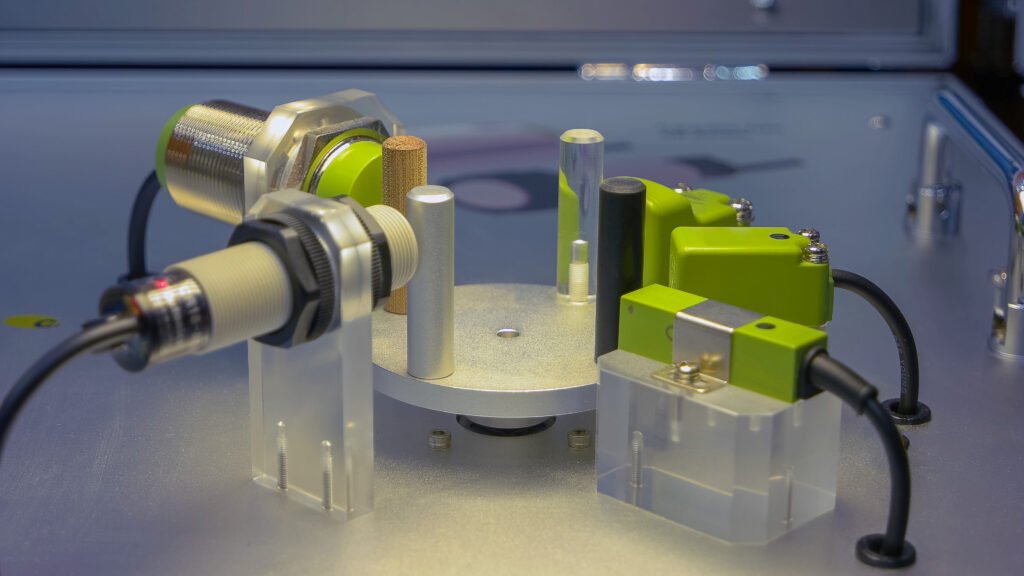
Comment choisir un détecteur de proximité adapté
Choisir le bon proximity switch is a key step in ensuring your automation system operates efficiently. Here are some helpful selection guidelines to help you find the best proximity switch for your needs among the many options.

Identify the detection object and the needs
First, you need to identify the type of object you want to detect. Proximity switches can be divided into several types, each suitable for different materials:
- Inductive proximity switches: mainly used to detect metal objects.
- Capacitive proximity switches: suitable for non-metallic objects such as plastics, wood and liquids.
- Magnetic inductive proximity switches: used to detect magnetic signals.
Once you know your detection object, you also need to consider the required detection distance. Generally speaking, the detection distance of proximity switches ranges from a few millimeters to tens of millimeters. If you need a longer detection distance, you can consider photoelectric or ultrasonic proximity switches.
Consider environmental conditions
Environmental conditions are crucial to the selection of proximity switches. For example, when working in hot or humid environments, you need to choose a proximity switch with a high degree of protection and stability. In addition, dust and chemicals may also affect the performance of the switch, so it is very important to ensure that the selected device can withstand these factors.
Choose the right appearance and installation method
Proximity switches have a variety of appearance shapes, such as cylindrical, square, etc. The selection should be determined according to the installation location and space limitations. At the same time, consider the installation method, such as threaded connection, flange connection or card installation, to ensure convenient and stable installation.
Pay attention to technical parameters and performance
In the selection process, technical parameters are important factors that cannot be ignored. You need to pay attention to the following aspects:
- Rated voltage and current: Select the appropriate rated voltage according to the power supply system, and ensure that the load current does not exceed the rated output current of the proximity switch.
- Switching frequency: For applications that require high-frequency switching, a proximity switch with a high switching frequency should be selected.
- Type de sortie: Proximity switches usually have two output types, NPN and PNP. The selection should be determined according to the needs of the control system or equipment.
- Response time: The response time refers to the time required from detecting an object to outputting a signal. Applications with fast response should choose devices with shorter response times.
Consider brand and after-sales service
Finally, brand and after-sales service are also important considerations for selection. Choosing a well-known brand can ensure product quality and performance stability. At the same time, understand the supplier’s after-sales service policy, including technical support, repair and replacement, to ensure timely support during use.
By comprehensively considering the above factors, you can more effectively select the proximity switch that best suits your needs, thereby improving the efficiency and reliability of the automation system.