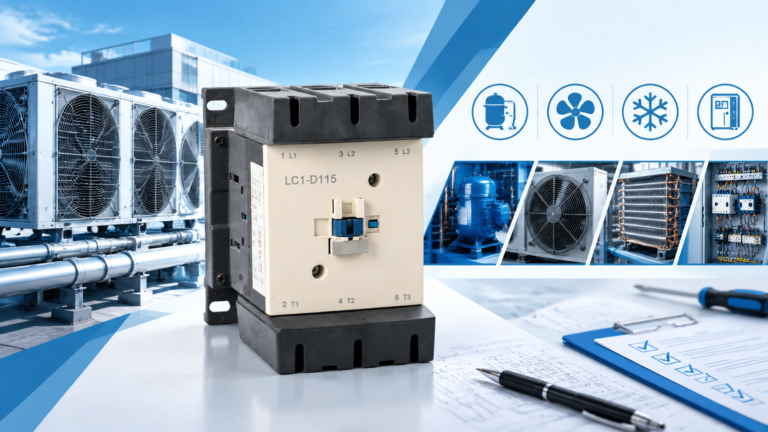
How to specify and replace HVAC contactors: definite purpose vs IEC vs NEMA types, nameplate sizing from RLA and FLA, pole count, derating, and a replacement checklist.
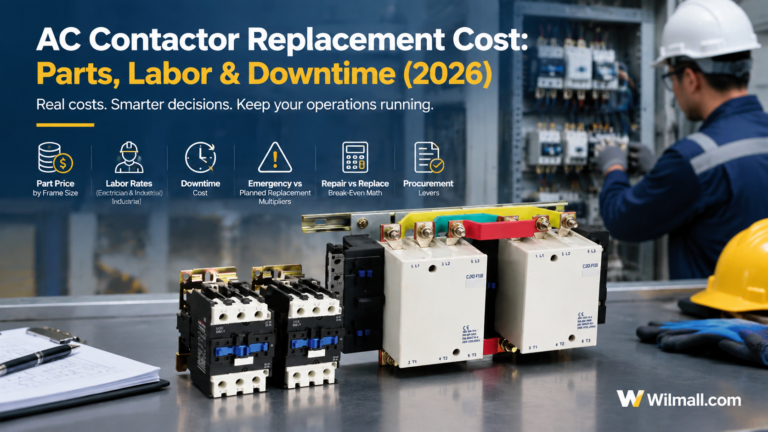
AC contactor replacement costs $15–$80 for the part alone, or $500–$5,000 installed in a plant once labor and downtime count. 2026 cost breakdown by size and duty.
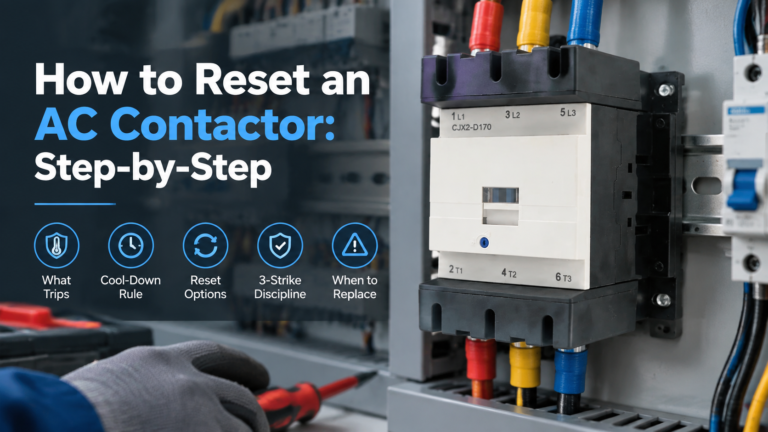
An AC contactor has no reset button. Learn which device actually tripped, how to reset the overload relay safely, the cool-down rule, and when to replace instead.
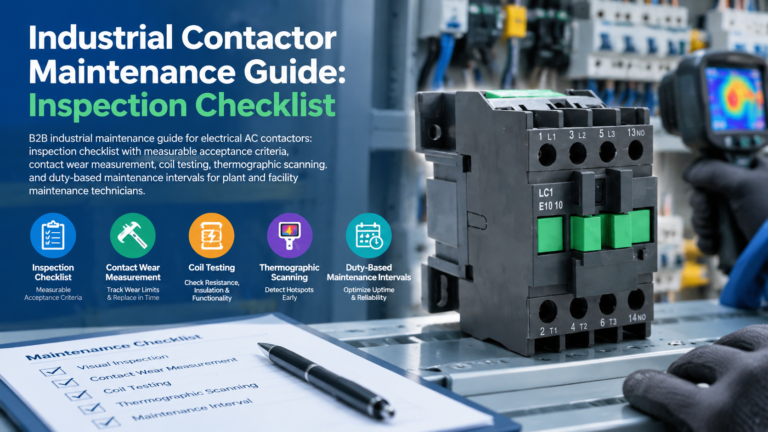
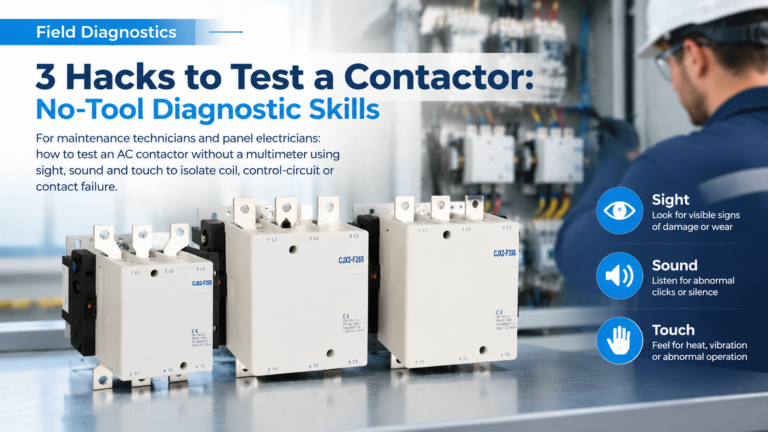
Three field-proven hacks to test a contactor without a multimeter — read what you can see, hear and feel to isolate coil, control-circuit or contact failure before you reach for tools.
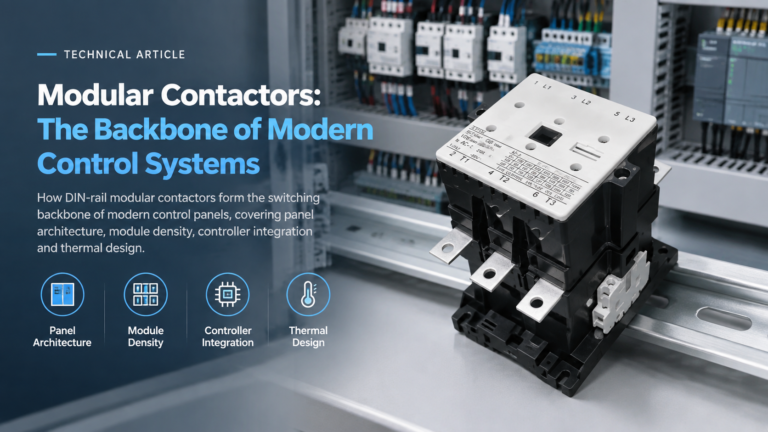
Modular contactors are the structural switching layer of modern control panels. Covers the control chain, the 17.5 mm module grid, IEC 61095 vs IEC 60947-4-1, coil integration and thermal design.
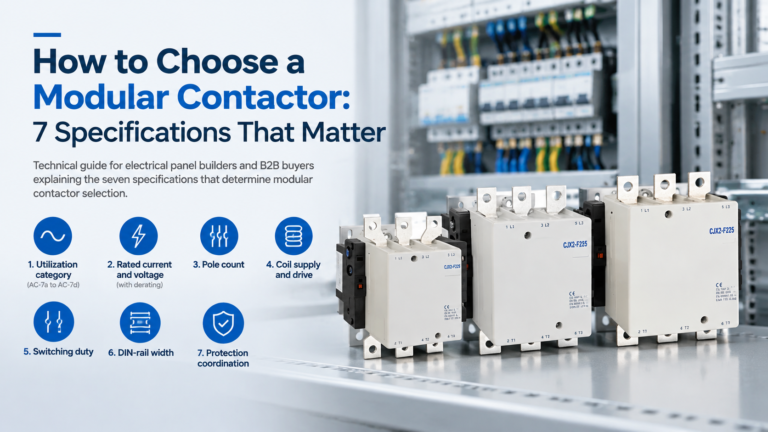
Seven specifications decide whether a modular contactor survives or fails: utilization category, current and derating, poles, coil supply, duty, rail space and protection.
Modular and traditional AC contactors are built for different duty. Compare standard, utilization category, coil design, panel space and cost, then use the decision matrix to specify the right one.
A practical thermal overload relay selection guide: match the current range to motor FLA, choose direct, indirect, or CT heating, set the trip class, and pick manual or auto reset.
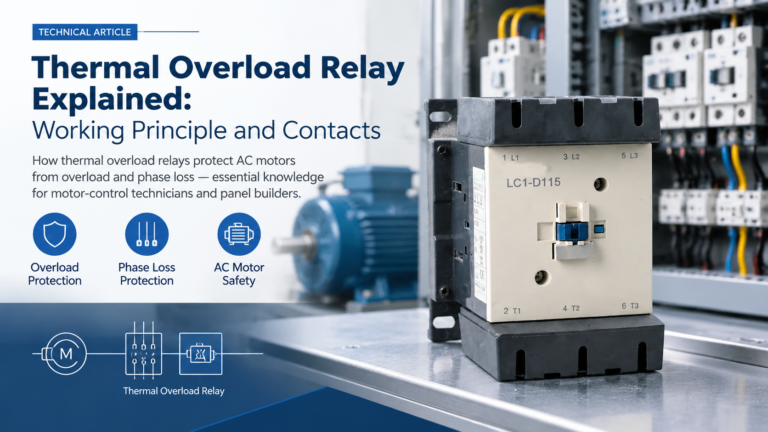
How a thermal overload relay protects motors: the bimetallic working principle, 95-96 NC and 97-98 NO contacts, trip classes, phase-loss protection, and reset modes.
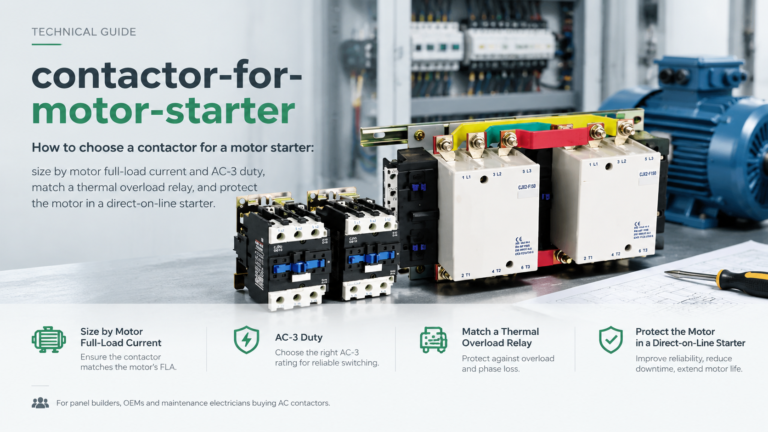
Choose a contactor for a motor starter from motor full-load current and AC-3 rating, match the overload relay range, and avoid the mistakes that burn out starters.
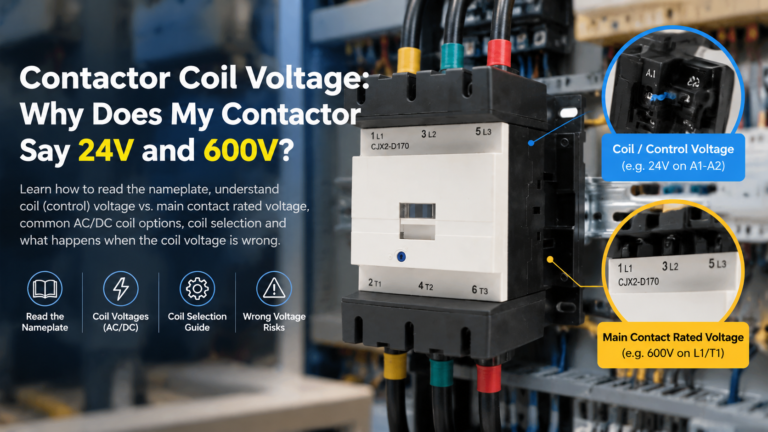
Two voltage ratings on one contactor confuse many buyers: 24V is the coil voltage for the control circuit, 600V is the main contact rating. Learn to read and choose coil voltage correctly.