








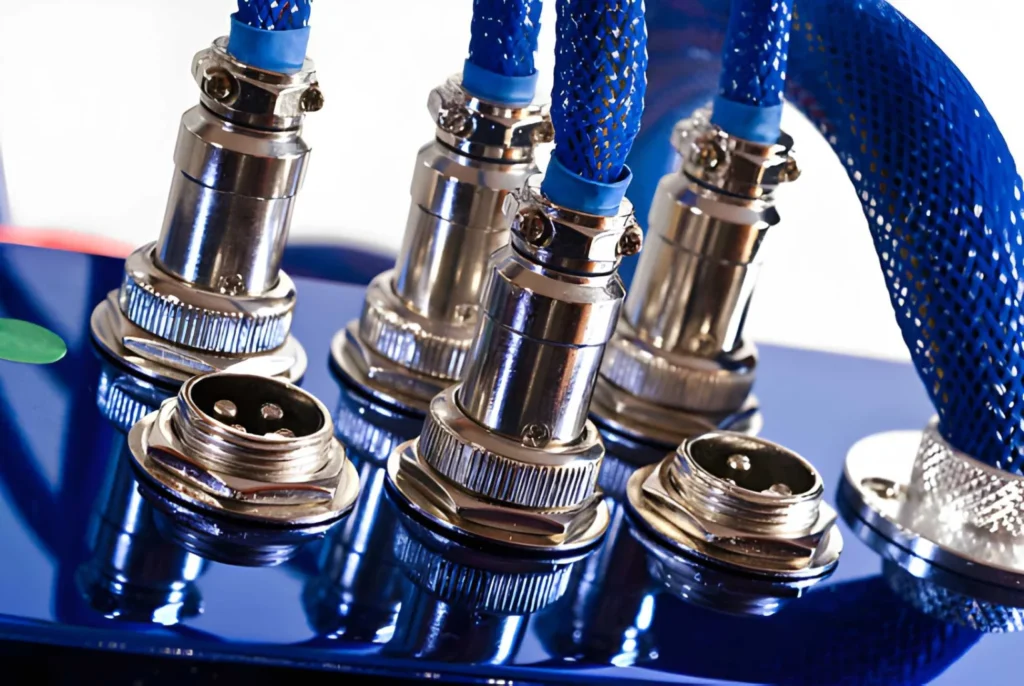
Working Principle of Aviation Connector Explained with Key Features
If you’re working with complex electrical systems, understanding the working principle of aviation connectors is essential. These robust circular aviation plugs are engineered to ensure secure, reliable connections—even in the harshest environments. From their precise locking mechanisms like threaded, bayonet, or push-pull couplings, to their carefully designed contacts and sealing gaskets, every feature plays a critical role in delivering stable power and signal transmission. In this post, you’ll get a clear, technical insight into how these connectors operate mechanically and electrically—and why they’re trusted across aerospace, industrial automation, and more. Let’s break down what makes aviation connectors stand out and how you can leverage them in your next project.
Introduction to Aviation Connectors
Aviation connectors are specialized electrical connectors originally designed for aerospace and military applications. Built to withstand extreme conditions like vibration, temperature changes, and moisture, these connectors ensure reliable electrical connections in critical environments. Over time, their robust design and high performance have made them popular beyond aerospace—finding extensive use in industrial automation, marine systems, robotics, and other non-aerospace fields where durability and secure connections matter.
Today, trusted suppliers like Wilmall offer a wide range of aviation connectors, including waterproof aviation connectors with high IP ratings. Wilmall stands out by providing reliable, cost-effective solutions that meet global market demands for rugged, vibration-resistant aviation plugs and circular aviation connector locking mechanisms. Whether you need connectors for harsh environment electrical connections or versatile industrial aviation plug applications, Wilmall’s product range is a go-to choice.
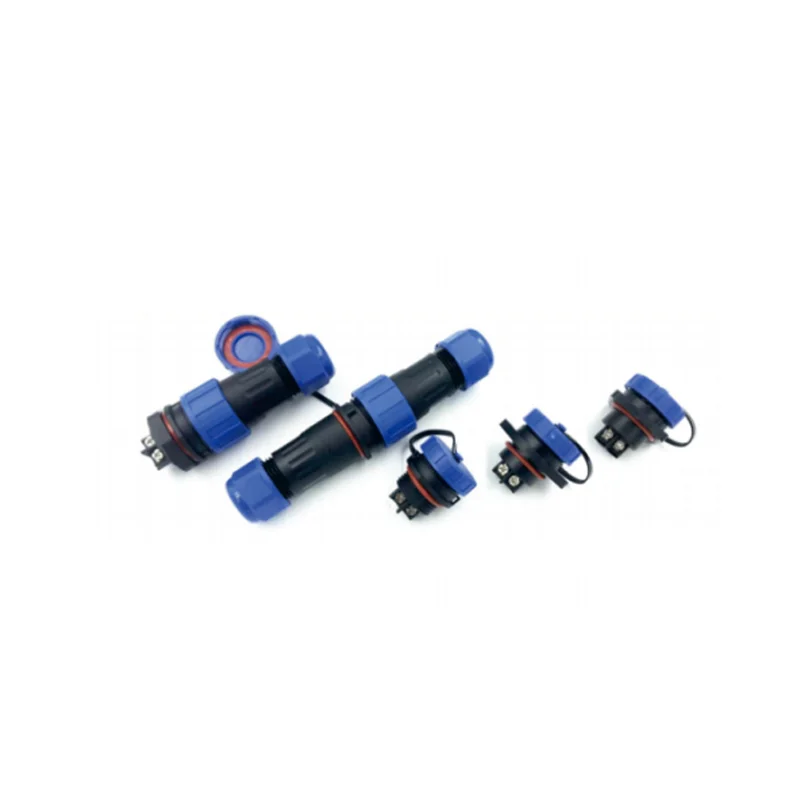
Core Components of an Aviation Connector
An aviation connector mainly consists of two parts: the plug, which is the male side featuring pins, and the prise (or receptacle), the female side containing matching contacts. These pins and sockets are the heart of the connector, establishing secure electrical connections for signal or power transmission.
Les shell or housing is typically made from durable materials like aluminum alloy or stainless steel, designed to protect the internal parts from mechanical damage and harsh environments. Inside the shell, insulating materials ensure that the pins and sockets don’t short-circuit and maintain consistent electrical isolation.
To maintain protection against dust, water, and chemicals, aviation connectors rely on sealing elements such as gaskets and O-rings. These seals help achieve high IP ratings, crucial for connectors operating in tough conditions.
Finally, aviation connectors use various coupling and locking systems to guarantee a stable connection. Common types include threaded coupling, bayonet locket push-pull self-locking mechanisms, each offering different levels of security and quickness in the mating process. These locking systems not only keep the connectors firmly joined but also ensure resistance to vibration and shock during use.
This precise design of pins, sockets, sealing gaskets, and locking types makes aviation connectors reliable in critical industrial, automation, and marine applications while maintaining excellent electrical contact performance. For example, trusted suppliers like Wilmall offer a range of aviation connectors that combine these core components with robust build quality for versatile use cases such as industrial control systems and emergency stop button interfaces, seen in their industrial controller options.
The Fundamental Working Principle
At the heart of every aviation connector is the basic electrical conductivity achieved through the connection of pins (male contacts) and sockets (female contacts). When the plug and socket mate, their metal contacts touch firmly, allowing electrical current to pass with minimal resistance. This ensures reliable signal or power transfer crucial in demanding environments.
Contact resistance plays a vital role here—it needs to be low to avoid power loss and heat buildup. Aviation connectors are designed with high-quality materials and precise contact geometry to maintain consistently low resistance even after many mating cycles.
Each connector comes with specific current and voltage ratings, which define the maximum electrical load they can handle safely. These ratings help users choose the right connector that fits their power and signal requirements.
In multi-pin aviation connectors, derating is important. When multiple contacts are packed into a single connector, heat buildup and electrical interference can reduce the overall performance. Derating accounts for this by lowering the maximum current each pin can carry to maintain safety and longevity.
This working principle ensures that aviation connectors deliver durable, high-performance connections, whether used in aerospace, industrial automation, or marine settings. For a reliable range of aviation connectors suited for various industrial needs, consider exploring Wilmall’s robust LD20 series aviation connector options.
Mating and Locking Mechanisms in Aviation Connectors
Aviation connectors rely on secure mating and locking systems to ensure reliable electrical connections under tough conditions. Here are the three main types of aviation connector locking mechanisms:
| Locking Type | Comment ça marche | Pour | Cons | Applications typiques |
|---|---|---|---|---|
| Threaded (Screw) Coupling | Rotate the coupling ring to tighten | Excellent vibration resistance Strong, secure connection | Slower connection/disconnection Needs proper torque | Aerospace, industrial equipment |
| Bayonet Coupling | Push and twist; latching pins and ramps lock | Quick connect/disconnect Good vibration resistance | Less secure than threaded under extreme vibration | Military, automation, field service |
| Push-Pull Self-Locking | Insert axially; automatic latch engages | Fast operation Tool-less locking/unlocking | Latch mechanisms may wear over time | Medical, aerospace, high-reliability gear |
Threaded Coupling Aviation Connector
This method uses a screw mechanism where the plug is rotated to engage threads inside the receptacle housing. It tightens the connection to resist vibration and shock, making it ideal for harsh environments where a secure, long-lasting connection is critical.
Bayonet Lock Aviation Plug
The bayonet coupling involves aligning the pins on the plug with slots in the socket, then twisting to lock. Its quick twist-lock system uses ramps and pins to secure the connector while allowing faster mating than threaded types.
Push-Pull Self-Locking Connector
This mechanism offers axial insertion with an automatic latch that locks immediately upon full connection. It enables fast and easy mating without tools, suited for applications needing quick connect/disconnect cycles with reliable locking.
Choosing the right mechanism depends on your environment’s vibration levels, speed of connection needs, and locking security requirements. For more rugged, vibration-resistant connections, threaded coupling remains the go-to, while bayonet and push-pull connectors offer speed and convenience.
Learn how these principles fit with other secure connections at Wilmall’s industrial direction controllers and see their durability in action.
Connection Process Step-by-Step
The working principle of aviation connectors involves a precise connection process to ensure secure electrical performance, even under vibration and shock. Here’s how it works:
- Alignment and Insertion: The aviation plug must be carefully aligned with its corresponding socket or receptacle. Most connectors have keying or polarization features to guarantee the plugs only fit one way, preventing mismating that could damage contacts or circuitry.
- Locking Engagement: Once aligned, the plug is inserted fully into the socket. Then, the chosen coupling mechanism—whether threaded, bayonet lock, or push-pull self-locking—engages to lock the connection firmly. This locking is crucial for withstanding vibration and mechanical stress.
- Full Mating: Complete engagement ensures that pins and sockets meet with optimal contact pressure. This reduces contact resistance, securing stable electrical conductivity essential for reliable signal and power transmission.
- Keying/Polarization: Prevents incorrect connections by only allowing plugs and sockets with matching alignments to mate. This feature is especially important in industrial and aviation settings where multiple connectors may be chained.
- Vibration and Shock Resistance: The connection and locking systems are designed to maintain contact integrity in harsh environments. Vibration resistant aviation plugs use coupling methods that resist loosening and incorporate sealing gaskets to keep contamination out.
By following this sequence step-by-step, aviation connectors deliver dependable performance across applications, from aerospace to industrial automation. For reliable and high-quality connectors, suppliers like Wilmall offer a broad range of aviation connector sockets and plugs engineered for such demanding connection processes. Visit their aviation connector socket plug male female range for more details.
Sealing and Environmental Protection Principles
Aviation connectors often work in tough environments, so sealing is crucial to keep out dust, water, and chemicals. Most waterproof aviation connectors come with IP ratings like IP67 or IP68, which guarantee protection against water immersion and solid particles. The higher the rating, the better the protection—for example, an IP68 rating ensures the connector can handle continuous underwater exposure.
To achieve this, aviation connectors use quality gaskets and sealing elements such as O-rings. These seals fit snugly between the plug and socket, preventing contaminants from entering and maintaining reliable contact even in harsh conditions.
These sealing designs let aviation connectors perform well in extreme temperatures, salt spray, and vibrations often found in industrial automation, marine, and outdoor applications. For dependable protection, suppliers like Wilmall offer a range of waterproof connectors designed with robust sealing to withstand these challenges. You can explore their waterproof aviation connector options for reliable environmental resistance.
Electrical and Mechanical Performance
Aviation connectors are designed to deliver reliable signal and power transmission even in demanding environments. Their contacts—pins and sockets—ensure stable electrical conductivity with minimal contact resistance, which is crucial for maintaining signal integrity and preventing power loss. High-quality aviation connectors support specific current and voltage ratings suited to industrial, automation, marine, and harsh environment electrical applications.
Mechanically, these connectors excel in resisting vibration and shock thanks to robust housings and secure coupling systems like threaded, bayonet, or push-pull self-locking mechanisms. This vibration resistant aviation plug design helps maintain a constant connection without loosening, making them perfect for mobile or high-impact environments.
Another key performance factor is EMI shielding, which protects sensitive signals from electromagnetic interference, essential in aerospace and industrial settings. Additionally, aviation connectors often feature reliable contact wipe action: when mated, the pins and sockets slide slightly against each other, which helps clean the contact surfaces, improving conductivity and extending mating cycles.
Mating cycles—the number of times a connector can be safely connected and disconnected—are critical for durability. High-end connectors, including the popular GX series and MIL-DTL-38999 connectors, offer thousands of mating cycles without performance degradation. This long lifespan reduces maintenance and replacement costs, ensuring stable operation over time.
For a solid selection of aviation connectors known for superior electrical and mechanical performance, you can explore Wilmall’s range of aviation connectors designed to meet diverse industrial needs.
Aviation Connector vs. Standard Cable Connectors
When comparing aviation connectors to standard cable connectors, several key differences stand out, especially in ruggedness, locking security, and environmental tolerance.
| Fonctionnalité | Aviation Connectors | Standard Cable Connectors |
|---|---|---|
| Ruggedness | Built for harsh environments; tough shells resist impact and corrosion | Generally less durable; not designed for extreme conditions |
| Locking Security | Multiple locking types (threaded, bayonet, push-pull) ensure vibration resistance and secure mating | Mainly friction or simple snap locks; risk of accidental disconnects |
| Environmental Tolerance | High IP ratings (IP67, IP68) with sealing gaskets and O-rings for dust, water, chemicals | Limited protection; usually not sealed against moisture or dust |
| Applications typiques | Aerospace, industrial automation, marine, military, robotics | Consumer electronics, light industrial, general wiring |
| Electrical Performance | Superior contact design reduces resistance; handles higher current & voltage loads | Basic contacts; limited current/voltage capabilities |
Why Aviation Connectors Outperform Ordinary Connectors
- Strong locking mechanisms like threaded coupling or bayonet locks prevent loosening under vibration or shock.
- Robust sealing systems protect against dust, moisture, and harsh chemicals, enabling use in extreme conditions.
- Precision contacts with low contact resistance ensure stable power and signal transmission in multi-pin configurations.
- Designed for reliable high-performance over thousands of mating cycles, making them ideal for mission-critical applications.
For industries needing dependable and waterproof aviation connectors, suppliers like Wilmall offer cost-effective solutions with proven durability. You can explore their selection of waterproof aviation connectors that outperform typical cable connectors across many environments.
In short, when you require connectors that won’t fail in tough conditions or under constant use, aviation connectors provide unmatched reliability compared to standard cable connectors.
Common Types and Series Overview
Aviation connectors come in various types, each designed for specific applications and environments. Two of the most popular series are the GX series threaded connectors and the MIL-DTL-38999 bayonet connectors.
- GX series threaded connectors feature a robust threaded coupling aviation connector design. This type uses a screw mechanism to tighten the connection, providing excellent vibration resistance and a secure seal. The threading ensures that the plug and socket stay firmly mated even in harsh industrial or marine environments. GX series connectors are widely used for power and signal transmission where reliability under mechanical stress is critical.
- MIL-DTL-38999 bayonet connectors use a bayonet lock aviation plug system, which enables quick and secure mating with a simple twist-lock motion. This makes them ideal for aerospace and military applications that demand fast and reliable connection and disconnection. The bayonet coupling offers good performance against vibration while enabling faster installation compared to threaded types.
Working Differences Among Popular Types
| Fonctionnalité | GX Series Threaded Connectors | MIL-DTL-38999 Bayonet Connectors |
|---|---|---|
| Coupling Type | Threaded (screw) | Bayonet (twist-lock) |
| Mating Speed | Slower due to threading | Faster with quick twist-lock |
| Vibration Resistance | High, due to secure screw locking | Good, with multiple locking positions |
| Applications typiques | Industrial automation, marine, power | Aerospace, military, robotics |
| Sealing & Environmental Protection | Often enhanced with gaskets for waterproof aviation connector IP rating | Excellent sealing, often IP67 or higher |
Both connector types excel in delivering dependable connections but suit different priorities—GX for secure, vibration-proof locking and MIL-DTL-38999 for rapid, reliable mating.
For an in-depth look at industrial connector applications, check out the Connecteurs de la série LD16, which offer excellent choices for industrial conditions requiring rugged and sealed connections.
Understanding these differences helps in selecting the right aviation connector that fits your operational needs and environmental demands.
Applications and Real-World Benefits of Aviation Connectors
Aviation connectors find strong use across multiple fields beyond aerospace, thanks to their reliability and rugged design. Here’s where they really shine:
| Application Area | Benefits | Typical Use Cases |
|---|---|---|
| Aerospace & Military | High vibration resistance, secure locking | Aircraft wiring, avionics |
| Automatisation industrielle | Durable in harsh environments, easy maintenance | Factory robots, conveyor controls |
| Robotique | Compact, reliable signal and power transmission | Robotic arms, sensors |
| Marine | Waterproof, corrosion-resistant | Shipboard instruments, navigation |
| Power Systems | High current ratings, stable connections | Power distribution, control panels |
Why Choose Aviation Connectors?
- Reliability: Designed for extreme conditions, they maintain stable connections through shock and vibration.
- Ease of Maintenance: Modular design allows quick mating/demating, reducing downtime during repairs.
- System Uptime: Prevents signal loss and failures, ensuring continuous operation in critical systems.
Wilmall’s range of waterproof aviation connectors offers excellent protection (IP67/IP68), making them ideal for harsh environments demanding stable performance. These connectors help maintain system uptime in industries where failure is not an option.
For those interested in robust control solutions, Wilmall also provides industrial remote control transmitters suited for heavy-duty automation.
Installation, Wiring, and Best Practices
Proper installation and wiring are key to getting the best performance from aviation connectors. Whether you’re working with a circular aviation connector or a GX series aviation plug, following the right steps helps avoid issues down the line.
Crimping and Soldering Contacts
- Use high-quality crimp tools designed for aviation connector contacts pins sockets to ensure a solid, reliable connection.
- If soldering, apply just enough heat to avoid damaging the contact or insulator.
- Always inspect the joint to confirm there are no cold solder joints or loose wires.
Proper Alignment and Torque for Threaded Connectors
- Align plugs and sockets carefully before engaging threaded coupling aviation connectors. Misalignment can damage pins or sealing gaskets.
- Tighten threaded connections to the recommended torque value. This guarantees consistent vibration resistance and environmental sealing, crucial in harsh environment electrical connector setups.
Maintenance Tips to Preserve Performance
- Regularly inspect connectors for dirt, corrosion, or seal damage, especially waterproof aviation connectors with IP ratings such as IP67 or IP68.
- Clean contact surfaces gently using contact cleaner sprays or wipes to maintain low contact resistance and strong conductivity.
- Avoid unnecessary mating cycles to extend connector lifespan and preserve the contact wipe action that keeps connections clean.
- Store connectors properly when not in use to protect from dust and mechanical damage.
For more detailed guidance on using aviation connectors in heavy-duty setups, consider reviewing the wiring and installation recommendations available with Wilmall’s range of SD20 series aviation connectors. These products emphasize ease of installation and robust performance in demanding industrial scenarios.
Choosing the Right Aviation Connector
Picking the right aviation connector comes down to a few key factors. First, consider the pin count—how many connections do you need? This impacts the size and complexity of the aviation plug. Next, look at the current and voltage rating to ensure the connector safely handles your power or signal requirements without overheating or failure.
Don’t overlook the IP rating, especially if your application faces harsh conditions. For example, a waterproof aviation connector with IP67 or IP68 ratings will protect against dust and water ingress, crucial for outdoor or marine environments.
Les coupling type is also vital. If your setup experiences vibration or frequent connection changes, a threaded coupling aviation connector or a bayonet lock aviation plug provides secure locking. For quick connect-disconnect needs, a push-pull self-locking connector might be the best fit.
At Wilmall, you’ll find a wide range of waterproof aviation connectors designed for tough environments but priced competitively. This makes it easier to get high quality and durability without breaking the budget. To make the best choice, consider your environment, electrical needs, and how often you’ll mate and unmate the connectors.
For more details on selecting compatible control components, you might also want to check out Wilmall’s durable pendant control stations that work well with aviation connectors in industrial settings.