









Points de connaissance pratique des détecteurs de proximité
Qu'est-ce qu'un détecteur de proximité ?
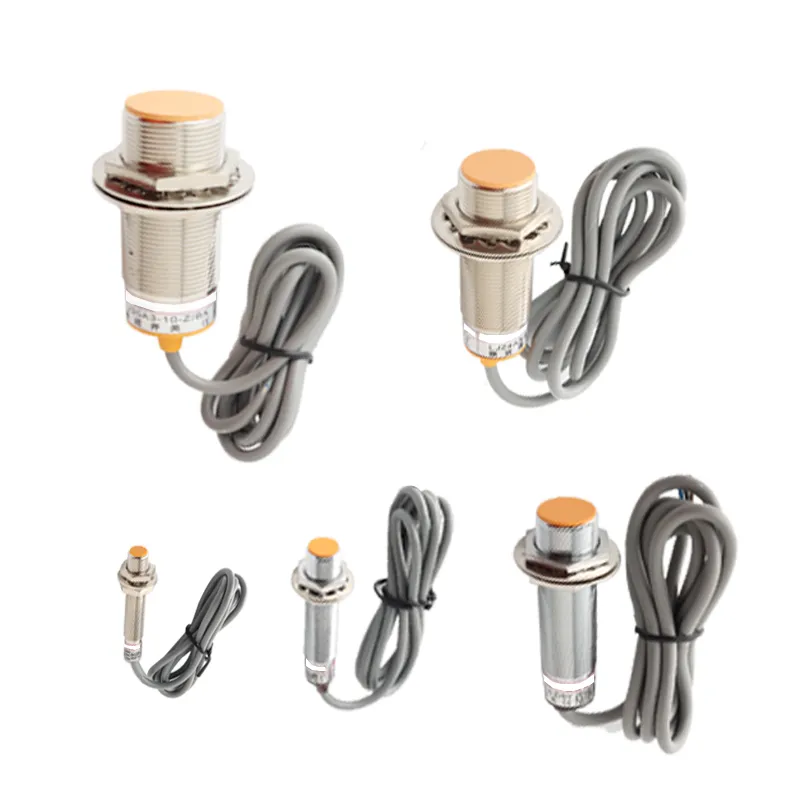
A proximity switch is an electronic device that detects the presence or absence of an object within a certain range without any physical contact. These switches are widely used in automation and control systems to enhance efficiency and safety. They can detect various objects, including metals, plastics, and liquids, making them versatile for different applications.
Proximity switches come in various types, including inductive, capacitive, photoelectric, and magnetic. Each type operates based on different principles and is suited for specific applications. For instance, inductive proximity switches are ideal for detecting metallic objects, while capacitive switches can sense non-metallic materials like plastic or glass.
How Does a Proximity Switch Work?
The working principle of a proximity switch depends on its type.
- Détecteurs de proximité inductifs: These utilize an oscillating electromagnetic field to detect metal objects. When a metal object enters the field, it alters the field’s oscillation, triggering the switch.
- Détecteurs de proximité capacitifs: These detect changes in capacitance caused by the presence of an object. They can sense both metallic and non-metallic materials by measuring the dielectric constant of the surrounding environment.
- Photoelectric Proximity Switches: These operate by emitting a beam of light (infrared or visible) and detecting the interruption of this beam by an object.
- Détecteurs magnétiques de proximité: These use magnets to detect the position of an object. When a magnetic field comes close to the switch, it activates the circuit.
Avantages et inconvénients
Proximity switches offer several benefits:
- Non-contact detection: This feature reduces wear and tear, increasing longevity.
- Haute fiabilité: They are less prone to mechanical failure compared to traditional switches.
- Temps de réponse rapide: Proximity switches can detect objects almost instantaneously.
However, they also have some drawbacks:
- Limited sensing range: Depending on the type, the detection range may be limited.
- Sensitivity to environmental conditions: Factors like temperature, humidity, and dust can affect performance.
- Coût: Some types of proximity switches can be more expensive than traditional mechanical switches.
Common Types of Proximity Switches
There are four primary types of proximity switches:
- Détecteurs de proximité inductifs: Best for detecting metallic objects.
- Détecteurs de proximité capacitifs: Suitable for detecting both metallic and non-metallic objects.
- Photoelectric Proximity Switches: Ideal for applications requiring long-range detection.
- Détecteurs magnétiques de proximité: Commonly used in security systems and automation.
Each type has specific applications based on its strengths and limitations.
Scénarios d'application
Proximity switches are employed in various industries:
Fabrication: Used in assembly lines for object detection and counting.
Automobile: Commonly found in vehicle systems for position sensing.
Robotique: Essential for obstacle detection and navigation.
Home Automation: Used in security systems to detect intruders or monitor doors.
These applications highlight the versatility and importance of proximity switches in modern technology.
Comment choisir le bon détecteur de proximité
Selecting the appropriate proximity switch involves several considerations:
- Type of Object: Determine whether you need to detect metallic or non-metallic objects.
- Environmental Conditions: Assess factors like temperature, humidity, and exposure to dust or chemicals that may affect performance.
- Sensing Range: Consider how far away you need to detect an object.
- Espace d'installation: Ensure there is enough room for installation without interfering with other components.
By evaluating these factors, you can choose a proximity switch that best meets your needs while ensuring optimal performance in your specific application.