








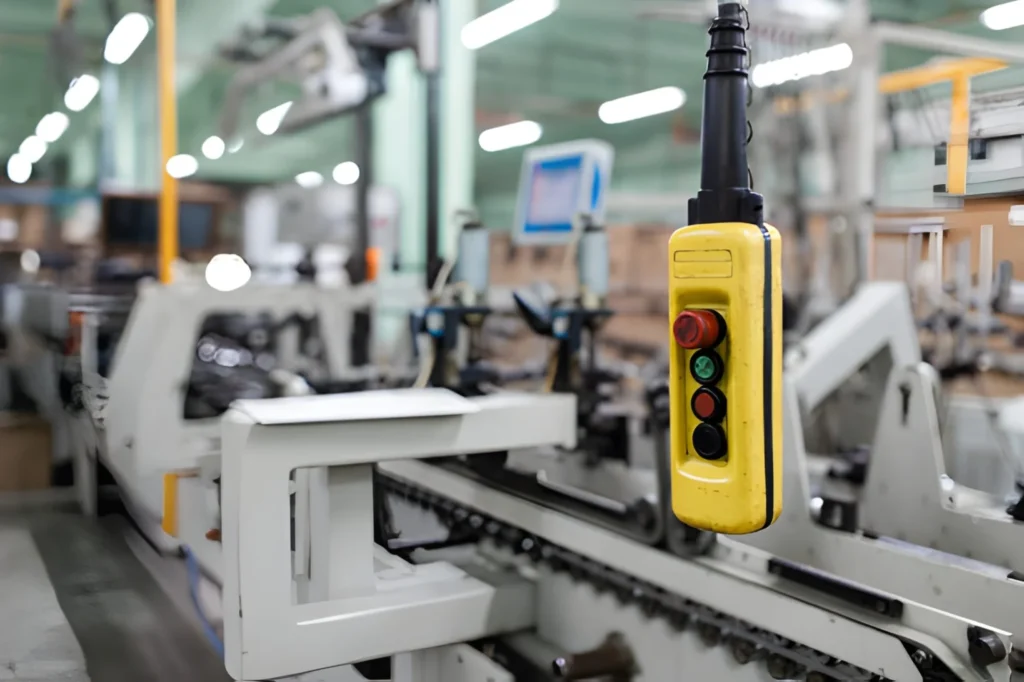
How to choose a suitable Pendant Control Station
Choosing the right Pendant Control Station can feel like a small decision—until a crane stops over a 5‑ton load and the operator says, “These buttons don’t feel safe.” For B2B buyers, OEMs, and MRO teams, getting this component right means smoother lifting, fewer breakdowns, and less operator fatigue.
In this guide, you’ll see what a pendant control station actually does, how to choose the right one, which configurations are common in the market, and what to check for safety, installation, and maintenance.
What is a Pendant Control Station?
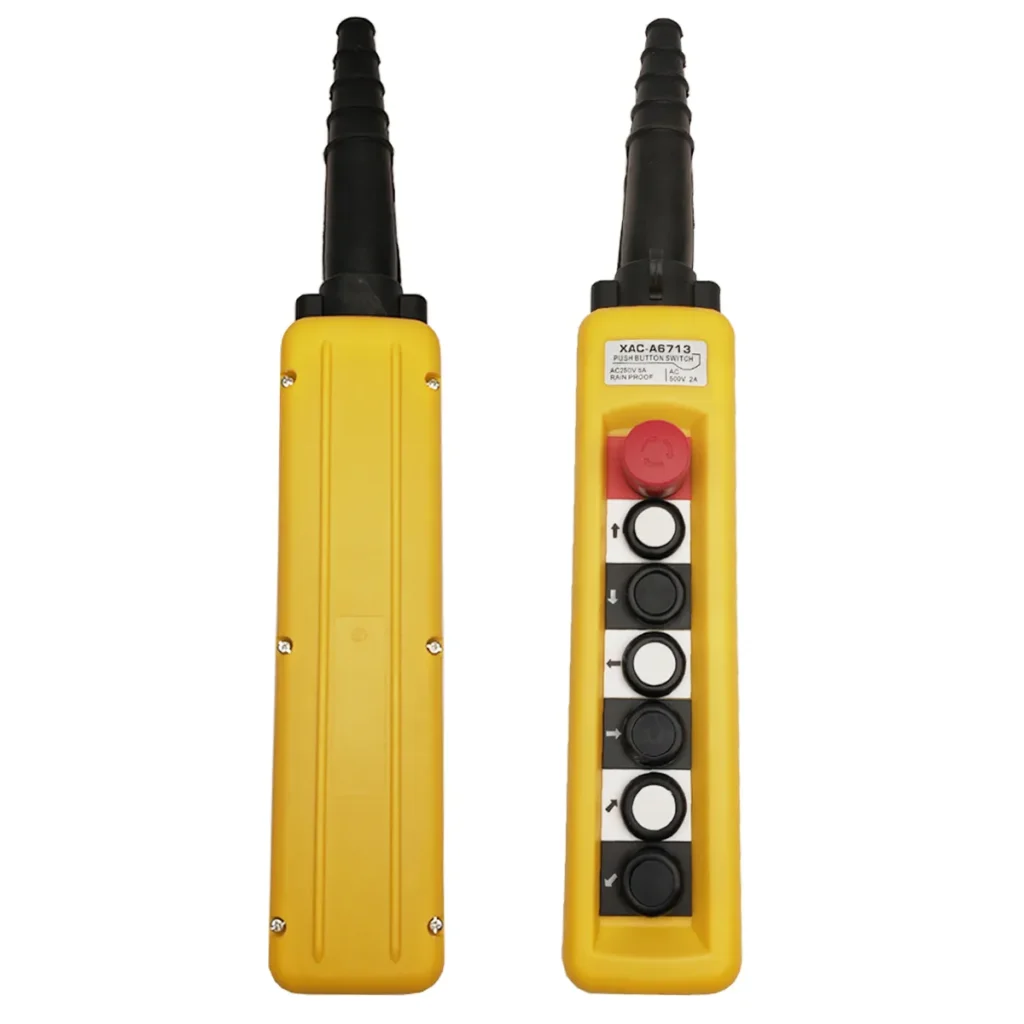
A Pendant Control Station XAC-A6713 is a handheld control device with push buttons or switches that lets the operator remotely control equipment such as hoists, cranes, winches, and industrial doors. It usually hangs from a cable, giving the operator a clear line of sight to the load while keeping them out of danger zones.
In modern material‑handling systems, pendant control stations are used everywhere from factory production lines and warehouses to construction hoists and waste-handling machines, where precise, fingertip control over motion is critical.
Key Selection Factors for B2B Buyers
When you choose a pendant control station for an OEM project or a retrofit, start with the technical basics: the required voltage, current, number of functions, and whether you need single‑speed or 2‑speed hoist pendant control. At the same time, match the enclosure rating and materials to the environment—IP65 or NEMA 4 is typical for dusty, wet, or outdoor crane applications where durability and safety are non‑negotiable.
For B2B buyers, it is also smart to consider ergonomics, cable entry options, and standards compliance (for example, IEC/EN 60947 for industrial control gear), because these factors affect operator comfort, long‑term reliability, and audit or inspection outcomes. When you send an inquiry or RFQ for a pendant control station, include your load type, environment, wiring diagram, and required certifications—this helps suppliers quote faster and more accurately for your project.
Quick tip: if you are working on a series project, ask your supplier for a standard pendant control station platform that can be slightly customized—this keeps your stock simpler while still covering different machines.
Common Configurations and Market Options
Most manufacturers offer pendant control stations in families: small 2–3 button models for compact hoists, mid‑range 4–6 button models with 2‑speed hoist crane control, and larger 8–12 button pendants for complex overhead crane systems. You will also see product lines that scale from basic “up/down + emergency stop” units to fully configurable multi‑row pendants with extra functions such as travel, traverse, horn, and auxiliary controls.
Modern industrial hoist control pendant products typically ship as complete kits or configurable housings, allowing you to choose the enclosure, buttons, contact blocks, and accessories while keeping the same mechanical platform. This gives B2B buyers a good balance between off‑the‑shelf availability and customization for project‑based orders or OEM series production.
If you are collecting supplier quotations, it helps to specify not just “6‑button pendant” but the exact functions you need (e.g., slow up, fast up, slow down, fast down, left, right, emergency stop) so that contact blocks and interlocks are chosen correctly.
Installation, Safety, and Maintenance Tips
Even the best waterproof pendant control station will fail early if installed with poor cable support or no strain relief, so pay attention to mounting accessories and cable glands when planning your project. Proper labeling of button functions, clear directional arrows, and visible emergency stop positions help operators react quickly and reduce training time.
From a safety point of view, it is worth checking that the pendant’s emergency stop function integrates correctly with your safety circuit and that the enclosure rating matches your wash‑down, outdoor, or dusty environment. Regular inspection for cracked housings, worn labels, sticky buttons, or damaged cables is a low‑cost way to avoid unplanned downtime in cranes and hoists.
Planning a new crane line or upgrading older hoists? This is a great moment to standardize on one or two pendant control station types across your plant and send a consolidated RFQ to your preferred suppliers for better pricing and easier spare‑parts management.
If you are ready to source pendant control stations for a new line or as part of an MRO framework contract, send your preferred supplier a clear specification based on the factors above and ask for both standard and customizable options—this often reveals cost savings and simplifies future expansions. And of course, if you already work with a trusted industrial control manufacturer, sharing your typical crane and hoist layouts can help them propose a pendant control station platform that fits all your key applications with minimal engineering time.
FAQ
What IP rating do I need?
IP65 or NEMA 4 is recommended for most crane and hoist uses, as it protects against water and dust.
When is two-speed control needed?
Use a two-speed pendant for applications requiring slow, precise load placement and smooth movement control.
How many buttons should I specify?
Count each required movement (hoist, travel, extras) separately and always include an emergency stop button.
Can button layouts be customized?
Yes. Many suppliers offer customizable layouts, allowing you to pick enclosure size, button types, and functions.
What standards should I check?
Look for IEC/EN 60947 compliance and relevant market approvals, such as CE certification.