








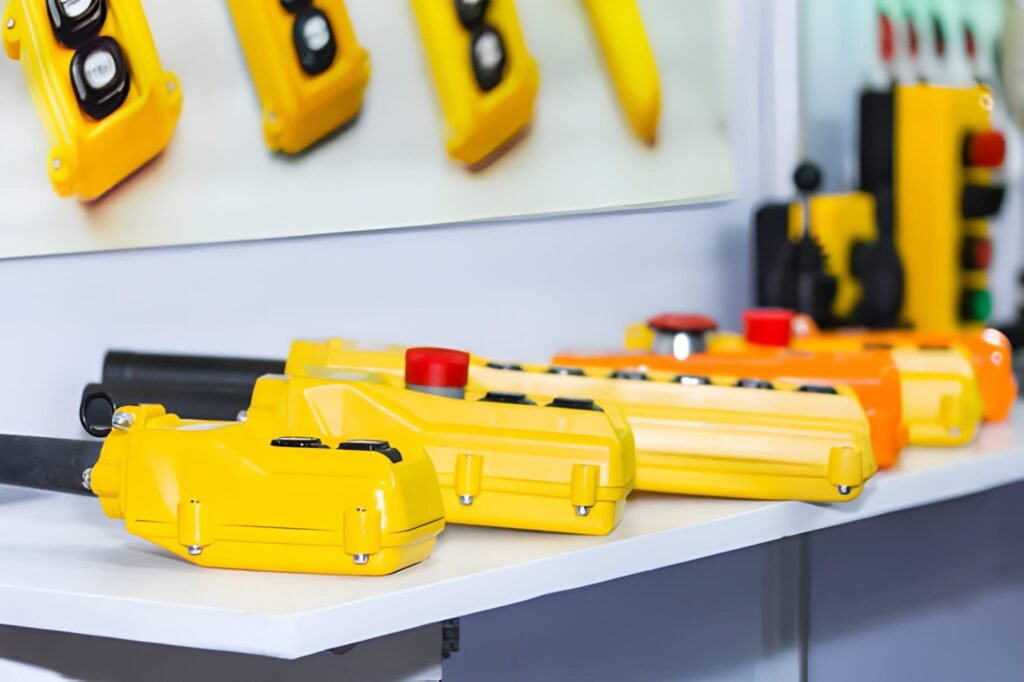
펜던트 제어 스테이션이란 무엇인가요?
이란 무엇인가요? 펜던트 제어 스테이션? A simple handheld interface that gives operators direct, safe control over large industrial equipment from a distance. Think of it as the operator’s extended hand, letting you start, stop, lift, or orient a crane or conveyor without stepping close to moving parts. It combines ergonomic design with robust electrical safety features so you can work efficiently while protecting people and machinery.
In a world where uptime matters, a Pendant Control Station is a practical investment for any facility handling lifting, material handling, or automated processes. If you’re evaluating options for your plant, this guide explains what Pendant Control Station is, why it matters, and how to choose the right model for your needs—and how to place an order or request a quote with ease. Ready to explore? Let’s dive in.
펜던트 제어 스테이션이란 무엇인가요?
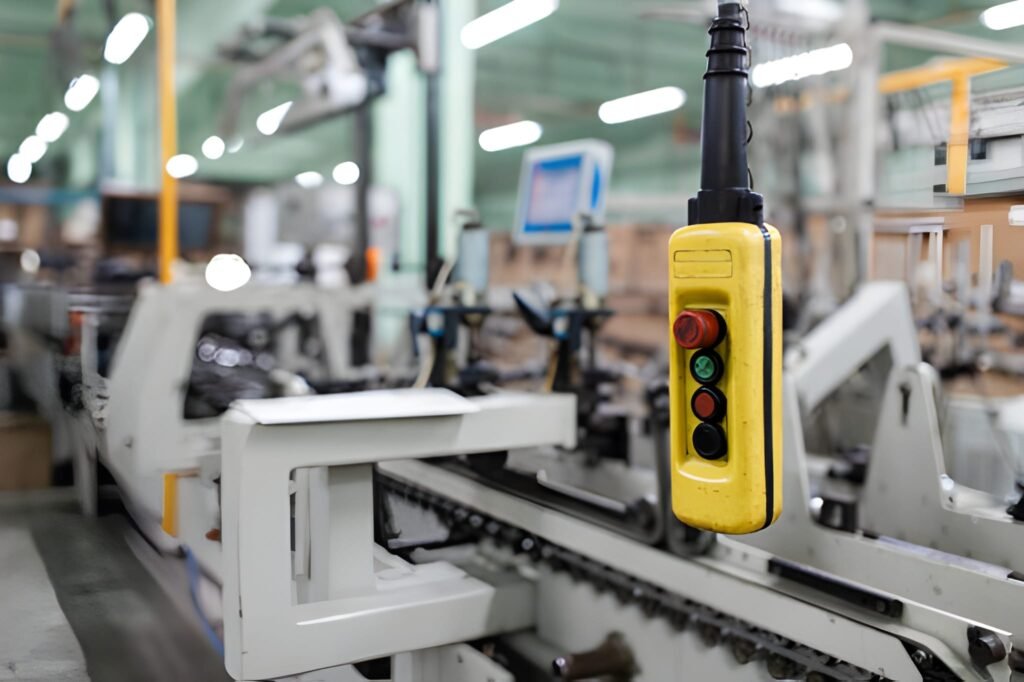
A COB-61C Pendant Control Station is a handheld control unit that houses a group of switches, pushbuttons, or joysticks. It signals a machine’s controller—such as a PLC or relay network—to perform actions like start, stop, reverse, lift, or lower. It often sits on a flexible cord that connects to the equipment, so the operator can stay outside of the machine’s immediate danger zone while controlling movement.
These stations are widely used with cranes, hoists, conveyors, pumps, and other industrial machinery, where precision and safety are paramount. The design emphasizes reliability, ease of maintenance, and clear visual cues (LED indicators, color-coding) that help operators verify mode and status at a glance. If you’re ordering for a facility that handles heavy loads or automated lines, a Pendant Control Station should be a central consideration.

How Pendant Control Station works
The operator activates a control element (button or joystick).
The signal travels through a connection to the system’s controller.
The controller interprets the input and drives the appropriate actuator (motor, valve, or relay).
Safety interlocks and emergency stop cut power when needed.
Status indicators on the pendant provide feedback to the operator.
| 단계 | Action | Outcome |
|---|---|---|
| 1 | Button pressed | Signal is sent to controller |
| 2 | Controller interprets | Executes commanded action |
| 3 | Actuator responds | Machinery moves accordingly |
| 4 | Safety interlock checks | System stays safe, or stops on fault |
| 5 | Operator sees status | LED or display confirms state |
What makes a Pendant Control Station valuable?
Ergonomics and ease of use reduce operator fatigue and training time.
Remote operation keeps workers out of hazardous zones.
Built-in safety features such as emergency stop (E-stop) enhance risk management.
Customizable layouts (button count, switch types, joystick interfaces) support diverse equipment.
Durable enclosures protect against dust, moisture, and mechanical shock.
Compatibility with cranes, hoists, conveyors, and bespoke automation systems.
| 혜택 | Why it matters for your plant | Typical scenarios |
|---|---|---|
| Ergonomic design | Improves comfort and reduces errors | Long shifts, repetitive controls |
| Remote operation | Improves safety around moving equipment | Crane operation, lifting tasks |
| 안전 기능 | Minimizes risk and compliance concerns | Emergency stops, guarded operations |
| Customizable layouts | Fits exact control needs | Different job sites with unique controls |
| Rugged enclosure | Withstands harsh industrial environments | Dusty workshops, damp facilities |
| Equipment compatibility | Works with existing automation | Integration with PLCs and VFDs |
Classification and configuration: understanding the options
Pendant Control Station configurations vary by contact arrangement, speed, and features. The most common distinctions are:
Single vs. double contact types
Mechanical versus electronic interlocks
Presence of emergency stop, reset, and indication lights
Waterproof or dustproof rating (IP/NEMA)
Corded versus wireless variants (for certain environments)
Long-tail ideas to weave into sections:
- single contact pendant station advantages
- double contact pendant control station use cases
- industrial remote control safety standards
- IP-rated pendant control stations for harsh environments
- customization options for button layouts and color coding
맞춤형 펜던트 선택 도움말
소니 엔지니어가 고객의 정확한 업무 주기와 환경에 맞게 펜던트 제어 스테이션 솔루션을 맞춤 제작할 수 있습니다. 레이아웃 목업, 커스터마이징 타임라인, 의무 없는 비용 견적을 제공합니다.
Choosing the right model
Determine the workload: lifting capacity, motor type (AC/DC), speed control requirements
Assess environmental conditions: dust, moisture, temperature, washdown needs
Check compatibility: PLC inputs, safety circuits, radio interference
Plan for maintenance: availability of spare parts, modular components, service life
Evaluate certifications: compliance with local safety standards and industry norms
| 요인 | Questions to answer | Recommended preference |
|---|---|---|
| 환경 | Dust, water exposure, cleaning methods | IP65 or higher, sealed enclosure |
| Control needs | Number of operations, speed control | Match button count; include speed/joystick if needed |
| 안전 | E-stop, safety interlocks | Always include E-stop and reset features |
| 배선 | System voltage, PLC compatibility | Ensure voltage and signal levels align with PLC |
| 유지 관리 | Spare parts availability | Choose brands with local support |
Product structure and key components
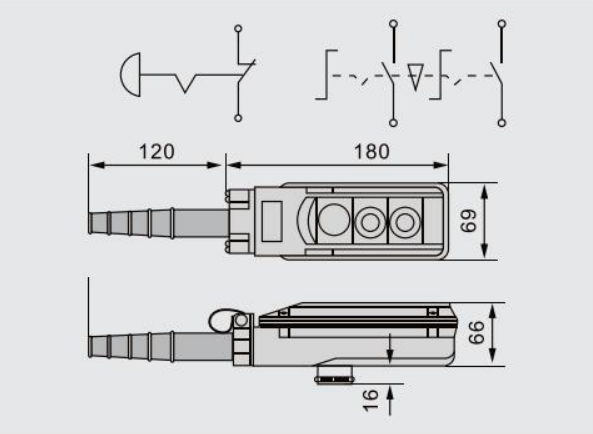
A Pendant Control Station typically includes:
- An ergonomic housing with a durable, weather-resistant shell
- A set of control elements: pushbuttons, push-push toggles, mushroom-head stops, and occasionally a joystick
- A signal wiring harness and cable management system
- Safety features such as emergency stop, lockout, and protective shrouds
- Status indicators (LEDs, color codes)
When designing or selecting a pendant, it’s vital to ensure the enclosure offers sufficient ingress protection for your environment, and that the control elements are rated for the voltage and current of your system. A well-designed pendant also includes clear labeling and a layout that minimizes operator confusion during high-stress tasks. A good vendor will offer variants with modular components so you can tailor the pendant to a specific equipment stack or workflow.
| 구성 요소 | 역할 | 중요한 이유 |
|---|---|---|
| 인클로저 | Protects internals from dust and water | Prolongs life, reduces maintenance |
| Pushbuttons | Primary on/off and function controls | Intuitive operation, quick training |
| Emergency stop | Immediate power cut in emergencies | Critical safety feature |
| Indicator lights | Visual status cues | Quick situational awareness |
| Joystick (optional) | Directional/velocity control | Precision in crane or conveyor movement |
| Cable assembly | Connects pendant to equipment | Reliability of signals and ease of routing |
Delving into types and applications
Pendant Control Station types can be categorized by application and configuration:
- Crane and hoist control stations: common in material handling and construction environments. They emphasize smooth crane motion, stop safety, and clear status indicators.
- Conveyor and process line pendants: emphasize reliable control of feed, stop, start, and speed adjustments in continuous processes.
- Custom industrial control pendants: designed to fit unique automation setups, often with tailored button arrays and LED indicators.
| 애플리케이션 | Why it fits | Key features to look for |
|---|---|---|
| Cranes/Hoists | Direct crane and hook control | Many buttons, dead-man tolerance, E-stop |
| Conveyors | Start/stop with optional speed control | Quiet operation, robust wiring |
| Process lines | Sequencing and safety control | Clear status indicators, modularity |
| Custom automation | Unique control sequences | Custom labeling, programmable inputs |
How Pendant Control Station supports safety and efficiency
Safety is a core benefit of Pendant Control Station use. Operators can stay at a safe distance from moving machinery while still controlling it directly. The most effective pendants include:
- Clear E-stop placement and easy access
- Protective housings that prevent accidental activation
- Positive interlocks that ensure only intentional actions are performed
- Visual feedback to confirm mode and state
- Durable construction that withstands the plant’s environment
In practice, this translates to fewer near-misses, faster response times, and easier training. When a new operator joins, a pendant-based workflow is typically quicker to learn compared with fixed control panels that require a fixed position in a control room.
Installation considerations for a smooth setup
- Plan the physical routing of the pendant’s cable or the wireless path to avoid interference and damage.
- Position the pendant within easy reach of the operation zone but away from pinch points.
- Verify that the signal and power wiring meet the equipment’s electrical standards.
- Test the E-stop and safety interlocks in a controlled environment before live operation.
- Document the configuration so maintenance teams can service quickly.
| Practice | 혜택 | 예 |
|---|---|---|
| Cable routing | Reduces wear and trip hazards | Use cable trays and strain relief |
| Ergonomic placement | Reduces fatigue | Place at comfortable height and angle |
| Safety interlock testing | Confirms protection | Simulate fault conditions |
| Labeling | Simpler maintenance | Clear button legends and color codes |
| Documentation | Faster maintenance | Keep an up-to-date wiring diagram |
Maintenance and lifecycle discussion
- A well-maintained pendant reduces downtime and extends equipment life. Regularly inspect buttons, seals, and connectors; replace worn components promptly; and verify safety interlocks during routine safety checks.
- Consider spare parts availability and local service support when choosing a supplier. A pendant station with reliable local service reduces downtime and speeds repairs.
| Task | Frequency | Indicator of good health |
|---|---|---|
| Visual inspection of buttons and housing | Weekly | No cracks, no moisture intrusion |
| Function test of each control | Monthly | All functions respond correctly |
| Safety interlock check | Quarterly | Interlock engages reliably |
| Seals and gaskets check | Semi-annually | Intact seals, no leaks |
| Cable and connector inspection | Annually | No frayed wires, secure connections |
Case for B2B partnerships and order facilitation
- We offer customization, rapid prototyping, and scalable solutions to fit varied industrial settings. If you’re coordinating a multi-site deployment, we can manage standardized configurations across locations to ensure consistency and easier maintenance.
- For quick procurement, provide a few details about your environment, controller interfaces, and required safety features. A specialist can propose the best Pendant Control Station configuration and provide a clear quote.
펜던트 제어 스테이션 is more than a handheld gadget. It’s a practical, safety-forward way to manage heavy equipment from a safe distance. By choosing the right configuration, you ensure reliable operation, faster response times, and better overall plant safety. Whether you operate cranes, conveyors, or automated lines, a well-chosen 펜던트 스테이션 can become a core component of your control ecosystem. If you’d like to discuss options, request a tailored recommendation, or receive a quote, reach out today.
자주 묻는 질문
What industries most benefit from Pendant Control Station?
Heavy lifting, material handling, automation lines, and remote operation tasks across manufacturing and warehousing benefit most; cranes and hoists are classic examples.
How do I choose the right number of controls?
Start with your primary operations. If the job involves multiple steps, include dedicated buttons or a joystick for essential commands; add optional indicators for status.
Are wireless pendants available?
Yes, for environments where cables hinder movement or safety, wireless pendants with robust pairing and interference protection are common.
Can pendants be customized?
Absolutely. Many suppliers offer modular button layouts, color coding, and programmable features to fit specific tasks.
What maintenance do pendants require?
Regular inspection of buttons, seals, and connectors; replacement of worn parts; and verification of safety interlocks during periodic safety checks.
목차
무료 상담
애플리케이션 세부 정보(듀티 사이클, 주변 조건, PLC 인터페이스)를 공유하고 공식적인 공급업체 평가 체크리스트와 상위 옵션의 나란히 비교를 받아보세요.