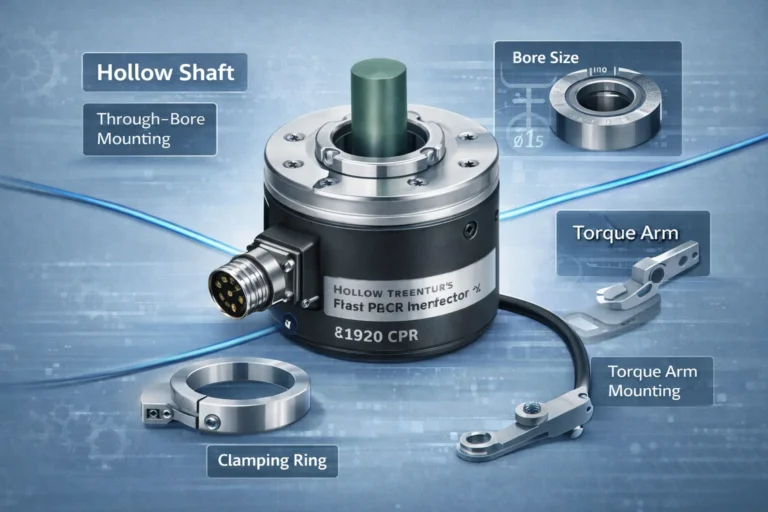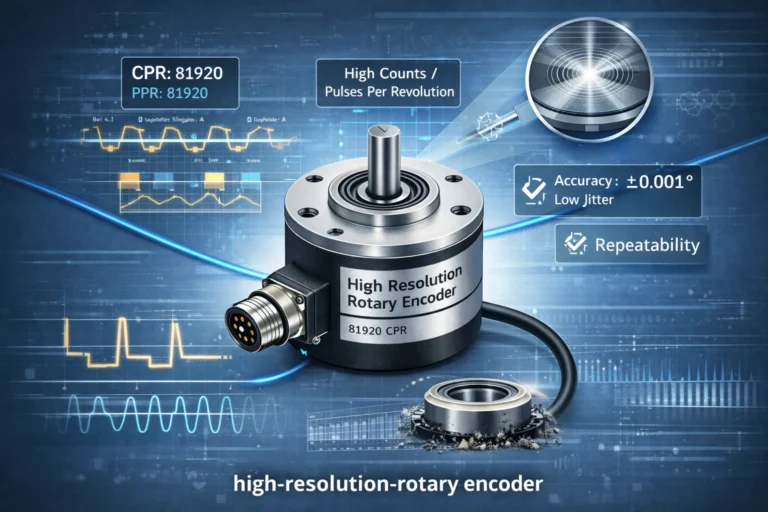







If you’ve ever marveled at how a robot arm knows exactly where to stop, or wondered how a conveyor belt keeps things moving at just the right speed, you’ve already seen encoders at work—though you might not have realized it.
Encoders are like the nervous system of modern machines. They sense movement and position, then turn that information into signals your control system can actually use.
Let’s dive in and see what makes encoders tick, why they matter, and how you can pick the right one for your job.
What’s an Encoder, Anyway?
Think of an encoder as a translator. It takes the physical movement—rotation or straight-line travel—and converts it into electrical signals.
These signals tell your system exactly where something is, how fast it’s moving, and which way it’s going.
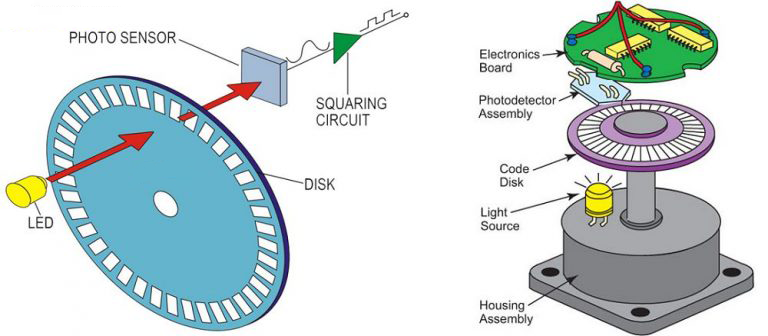
The heart of most encoders is a code disc or strip—sometimes optical, sometimes magnetic, sometimes capacitive.
As the disc moves, a sensor picks up changes and sends out a stream of signals. It’s a bit like Morse code for machines.
Types of Encoders: Not All Are Created Equal
You’ll find encoders in all shapes and sizes, but most fall into a few main camps:
Rotary Encoders: These measure how much something turns. You’ll see them on motors, robot joints, and CNC machines.
Linear Encoders: These track straight-line movement. Think of high-precision measuring tables or semiconductor machines.
Optical Encoders: These use light to read the code disc. They’re precise and reliable—perfect for clean environments.
Magnetic Encoders: These use magnets instead of light, so they laugh in the face of dust and oil. Great for harsh settings.
Capacitive Encoders: These sense changes in capacitance. They don’t wear out easily and work well in dusty places.
Let’s not forget the big split: incremental vs. absolute encoders.
Incremental vs. Absolute: The Great Divide
Feature
Incremental Encoder
Absolute Encoder
How it works
Sends pulses as it moves
Sends a unique code for every position
Power loss
Loses position; needs to re-home
Remembers position even after power loss
Output
A/B channels for direction, Z for home
Multi-bit code (like binary or Gray code)
Typical use
Speed feedback, basic motion control
Precise positioning, safety-critical tasks
Cost & complexity
Lower cost, simpler
Pricier, more complex
Picking the Right Encoder: What Should You Look For?
Choosing an encoder isn’t just about grabbing the first one you see. You need to think about:
Resolution: How finely can it measure? More pulses or codes mean greater precision.
Output Type: TTL, HTL, analog, or even fieldbus protocols like CANopen. Make sure it talks the same language as your controller.
Protection Rating: Will it face dust, water, or oil? Look for IP ratings like IP65 or IP67.
Mounting Style: Shaft, hollow bore, flange—pick what fits your machine.
Environmental Needs: Does it need to survive heat, vibration, or chemicals?
Where Do You Find Encoders in the Wild?
Encoders pop up in all sorts of places:
Motor Control: They help servo and stepper motors hit the right speed and stop at the right spot.
Robotics: Every joint and axis relies on encoders for smooth, precise movement.
CNC and Semiconductor Equipment: They guarantee the accuracy needed for high-precision work.
Production Lines: From packaging to textiles, encoders keep things moving in sync.
Automotive and Medical Devices: When reliability is life-or-death, encoders deliver.
Tips for Getting the Most from Your Encoder
Don’t just slap an encoder on and hope for the best. Here’s how to get real value:
Know your needs—precision, speed, and environment all matter.
Match the output to your control system. No one likes a language barrier.
Plan your wiring to avoid electrical noise and interference.
Test before you trust—run it through its paces before going live.
Conclusion
Encoders may not get the spotlight, but they’re the unsung heroes keeping automation on track.
They’re the eyes and ears of your system, quietly translating motion into information you can use.
Choose wisely, integrate carefully, and your machines will run smoother than ever.
If you ever find yourself stuck, just remember: behind every precise move, there’s probably an encoder making it happen.
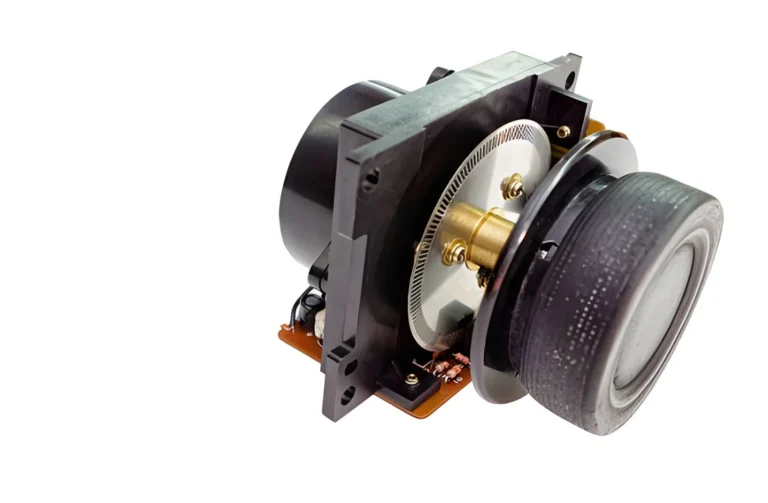
Choosing the right incremental rotary encoder can seem like a puzzle, especially if you’re new to automation or industrial control systems. But don’t worry—it’s not rocket science! Incremental rotary encoders are essential components in many mechanical and electronic systems, translating rotational motion into electrical pulses to measure speed, position, or direction. They play a critical […]
When you’re working with automation, robotics, or industrial control systems, you’ll often come across the term “encoder.” But have you ever stopped to wonder what the encoder symbols means in technical diagrams? Let’s break it down together—so the next time you see an encoder symbol, you’ll know exactly what you’re looking at and why it […]
An Incremental Rotary Encoder is a sensor that detects the rotation of a shaft or axle and converts it into an electrical signal. It is widely used in industrial automation, robotics, and many other applications to provide precise position, speed, and direction feedback. Understanding the incremental rotary encoder is crucial for selecting the right encoder […]
We use cookies to enhance your browsing experience, serve personalised ads or content, and analyse our traffic. By clicking "Accept All", you consent to our use of cookies.