A structural map of the AC contactor market: the IEC, UL and NEMA standards worlds, four demand segments, and what each sourcing region is actually good at.
Find the right diagnostic page in minutes: a five-minute triage flow, a twelve-symptom index table and the repair-or-replace decision line for AC contactors.
Indicative 2026 price bands for AC contactors from 9 A to 630 A, where the money goes inside one unit, and the specification sheet that keeps quotes comparable.
Six discriminators, a twelve-point audit checklist and the quotation structure that reveals whether your AC contactor supplier is a factory or a trader.
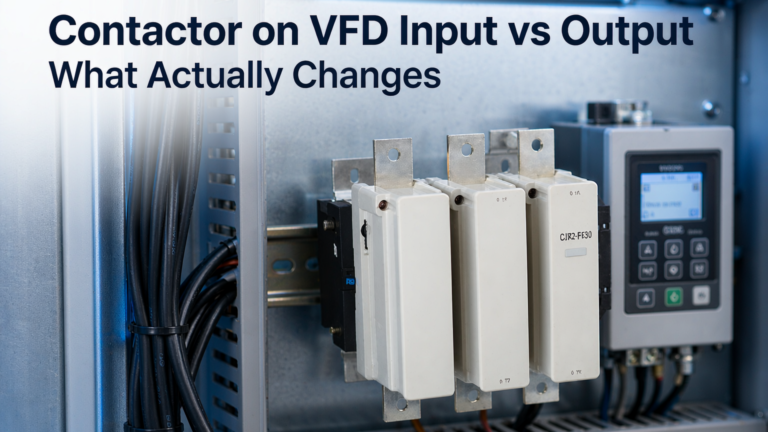
Input side sees harmonics, output side sees PWM — and neither contactor should do the drive's job. Selection margins, sequencing rules, bypass interlocking, and the DC paths where AC contactors must not go.
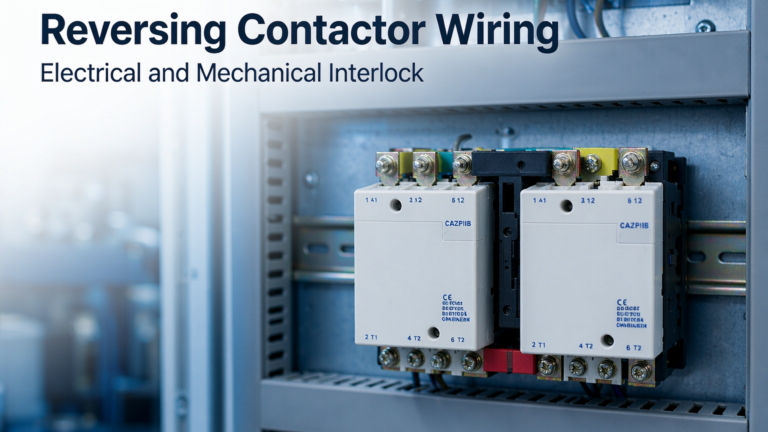
The full reversing starter: power wiring with two phases swapped, cross-coupled NC electrical interlock, mechanical interlock backstop, 50–100 ms dead time, and why weld detection is the layer no interlock provides.
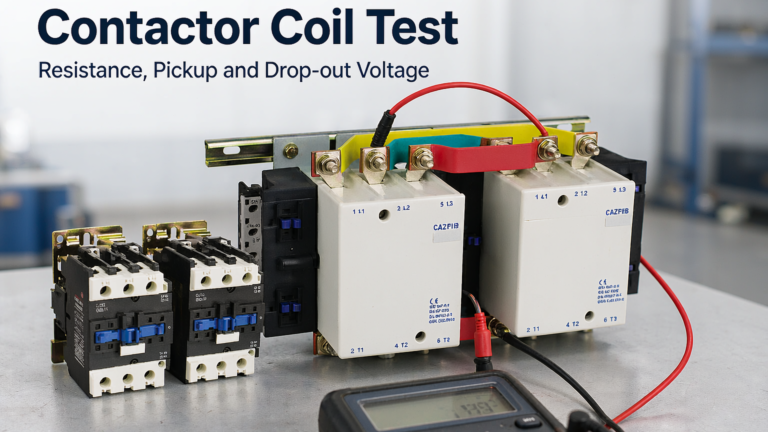
Resistance screens the winding, pickup voltage proves it will seat on a sagging bus, drop-out proves it will release. Reference bands, IEC windows, and the five root causes behind burnt coils.
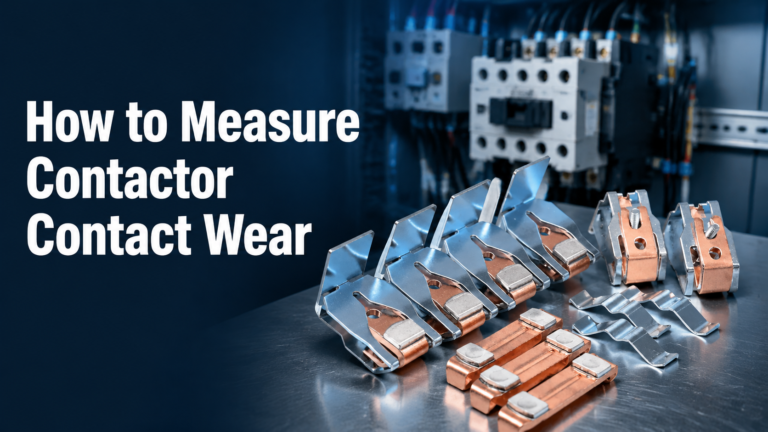
Four measurable wear indicators with instruments, thresholds and baselines: 4-wire micro-ohm resistance, tip thickness, overtravel, and IR temperature rise — and the judgment line between new tips and a new contactor.
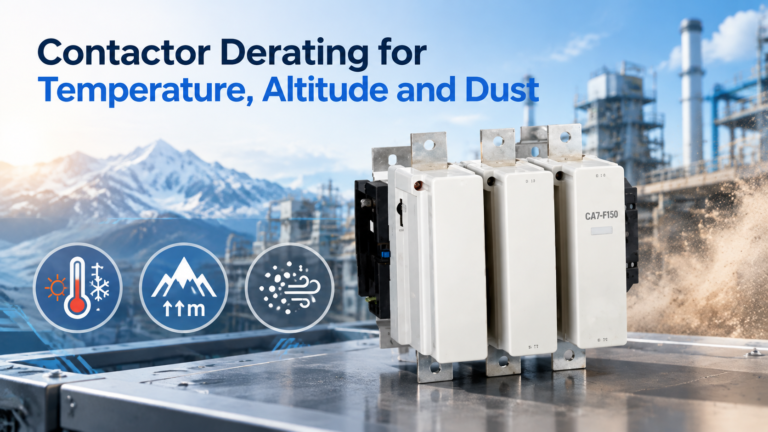
Derating is three different mechanisms, not one multiplier: temperature spends thermal margin, altitude spends thermal and dielectric margin, dust invalidates the environment. Factors, stacking order, and worked example.
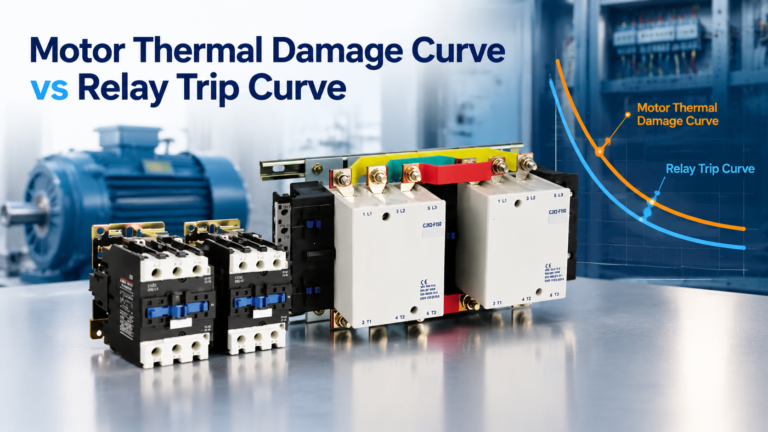
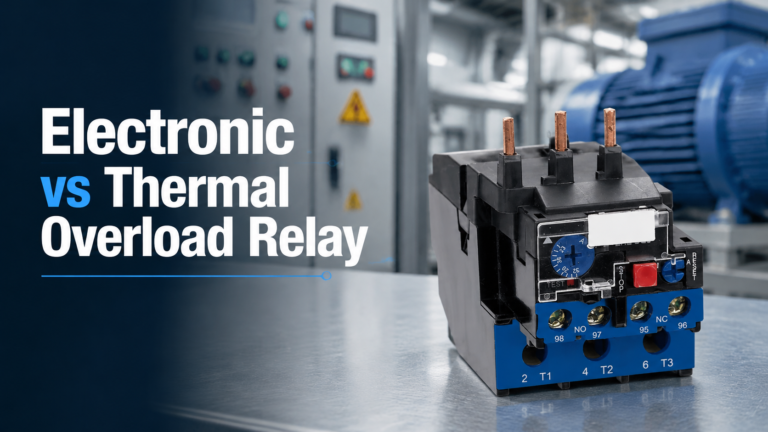
Thermal relays model heat physically; electronic relays calculate it. Compare accuracy, VFD duty and high-inertia starts, and see where each type belongs.