





The Ultimate Cable gland size chart You Must Use Today

今日から使える究極のケーブルグランド・サイズ表

10 Powerful Insights for Engineers: The Ultimate Cable gland size chart You Must Use Today

10 Powerful Insights for Engineers: The Ultimate Cable gland size chart You Must Use Today

Choosing the correct cable gland size is crucial for safety, performance, and longevity across industrial installations. This article provides an authoritative Cable gland size chart and practical guidance for matching threads, diameters, and applications.

Introduction to Cable Gland Size Chart

A Cable gland size chart is a practical reference used to match thread type, thread size, and cable outer diameter to the correct gland model. Cable glands follow several international standards — Metric (M), PG, NPT, and BSP/G — and the chart simplifies selection, helping engineers and installers eliminate guesswork.

Proper sizing ensures a secure mechanical hold, reliable sealing (IP ratings), strain relief, and long-term durability. Incorrect sizing can cause leaks, cable damage, loss of ingress protection, and potential electrical faults.

Why Cable Gland Sizing Matters in Industrial Applications

In critical sectors such as oil & gas, marine, manufacturing, and automation, precise gland sizing is essential. Mistakes in sizing can lead to cable slippage, moisture ingress, contamination, and in hazardous-area applications, a loss of explosion-proof integrity.

Key outcomes of correct sizing:
  • Reliable sealing and ingress protection (IP66, IP67, IP68, IP69K)
  • Proper strain relief to prevent conductor damage
  • Compliance with electrical and safety standards

Understanding Thread Types in Cable Glands

Understanding thread standards is necessary when using a Cable gland size chart. Common series include Metric (M), PG, NPT (tapered), and G/BSP (parallel).

Metric Threads (M-Series)

Metric threads are the most commonly used worldwide. Typical sizes run from M12 through M63, with M16, M20, M25, M32 being frequent choices for control and power cabling.

PG Threads

PG is a German legacy standard. PG threads (PG7–PG48) have a different form factor and are still encountered in older equipment or regional installations.

NPT Threads

NPT (National Pipe Taper) is common in North America. Because NPT is tapered, sealing behavior differs from parallel-threaded glands and may rely on thread engagement or sealant.

G / BSP Threads

BSP (British Standard Pipe) parallel threads (often labeled G) are used across industrial and offshore equipment. They require correct sealing methods for best IP performance.

Core Elements of a Cable Gland Size Chart

An effective sizing chart includes the following fields:

  • Thread Diameter: The nominal gland thread (e.g., M20, PG16, 1/2" NPT).
  • Cable Outer Diameter (OD): Range the gland will clamp and seal around.
  • Clamping Range: Minimum and maximum cable OD for reliable sealing.
  • Ingress Protection Level (IP): Typical ratings the gland supports.
  • Material & Application Notes: Suggested materials (brass, stainless steel, nylon) for environments.

Comprehensive Cable Gland Size Chart

The tables below present common industry reference ranges for Metric, PG, NPT, and BSP/G series. Use manufacturer datasheets to confirm exact clamping ranges for a specific product.

Metric Cable Gland Size Chart

Metric SizeThread (mm)Clamping Range (mm)Typical Cable Application
M1212 × 1.53–6.5Small sensor cables
M1616 × 1.54–8Control cable
M2020 × 1.56–12Signal/power
M2525 × 1.59–17Industrial power
M3232 × 1.512–21Machinery cable
M4040 × 1.519–28Heavy power

PG Cable Gland Size Chart

PG SizeClamping Range (mm)代表的なアプリケーション
PG73–6.5Light cables
PG94–8Sensors
PG115–10Control systems
PG13.56–12Panels
PG1610–14Automation

NPT Cable Gland Size Chart

NPT SizeThread OD (approx)Clamping Range (mm)
1/4"13.7 mm3–6
3/8"17 mm4–8
1/2"21.5 mm6–12
3/4"27 mm9–17

G / BSP Cable Gland Size Chart

BSP SizeThread OD (approx)Cable Range (mm)
G1/413.1 mm3–6
G3/816.7 mm4–8
G1/220.9 mm6–12
G133.3 mm12–21

How to Choose the Right Cable Gland Size

Follow these steps to select the proper gland:

  1. Measure the cable outer diameter (OD): Use a calibrated vernier caliper and measure over the cable jacket (keep measurements to two decimal places where possible).
  2. Match the OD to the clamping range: The cable OD should fall within the gland’s specified clamping range — ideally near the mid-point of that range for best seal performance.
  3. Select the thread type: Use the thread series required by the enclosure or equipment (Metric is commonly the default).
  4. Confirm IP and environmental requirements: Choose glands rated for the environment (e.g., IP68 for permanent submersion or IP69K for high-pressure washdown).

When in doubt, consult the manufacturer’s datasheet for the specific gland model. Manufacturer tolerances and seal designs vary.

Common Sizing Mistakes & How to Avoid Them

  • Using a gland that is too tight: Can damage cable jackets during installation and affect conductor insulation.
  • Oversizing “just in case”: Leads to poor sealing and reduced ingress protection.
  • Ignoring armor or braid: Armored cables require appropriate armored glands with dedicated sealing for the armor.
  • Mismatching thread standards: Do not force different thread standards together; use proper adapters if required.

Application-Based Cable Gland Sizing Examples

Electrical Control Panels

Typical gland sizes for control panels range from M16 への M25, depending on cable bundles and IP requirements.

Oil & Gas Explosion-Proof Installations

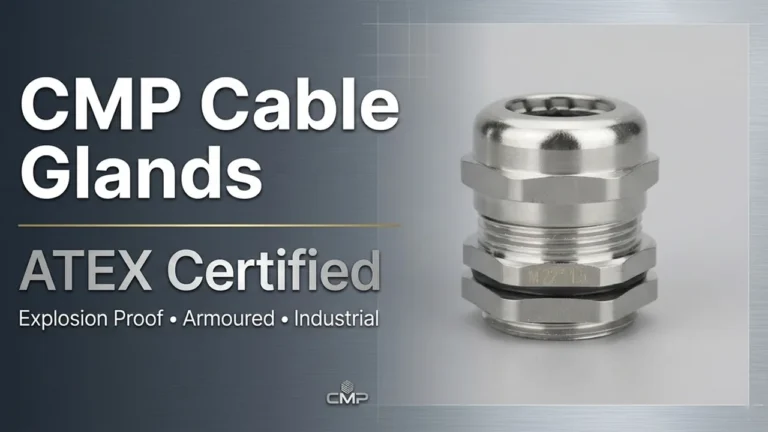
Explosive/hazardous-area installations frequently use metallic glands (brass or stainless steel) with size choices such as M20 への M32. Select glands certified for the required hazardous-area class (e.g., Ex d).

Outdoor Waterproof Enclosures

Outdoor enclosures needing submersion or high ingress protection often use IP68 rated glands. Sizes like M20 そして M25 are common for typical power and signal entries.

Material Selection Based on Size & Environment

Material matters as much as size when environmental conditions are harsh.

  • Brass: Good mechanical strength and common for control installations.
  • Stainless Steel (316): Preferred for marine, offshore, and corrosive sites.
  • Nylon / Plastic: Lightweight and cost-effective for non-critical indoor uses; may not be suitable for high temperatures or corrosive environments.

Advanced Sizing Considerations

EMC/EMI Shielding

When cable screening/shielding is required for EMC performance, use metal glands with an integrated EMC clamp or a separate EMC earthing kit.

Multiple Cable Entry Glands

For enclosures with bundled cable entries, use multi-hole plates, grommets, or modular multi-gland solutions sized to the combined cable diameters and required IP rating.

High-Temperature Applications

Select seal materials rated for the expected operating temperature (e.g., silicone or Viton seals for elevated temperatures) and confirm thermal expansion effects on clamping ranges.

よくある質問

1. How do I know which size cable gland to choose?
Measure the cable outer diameter (OD), consult a reliable Cable gland size chart, and select a gland whose clamping range includes your cable OD. Confirm thread type and IP rating.
2. Is Metric better than PG or NPT?
Metric (M series) is the global standard in many industries and provides consistent sizing ranges. PG and NPT may be required for legacy equipment or region-specific installations.
3. Can I use one size larger “just in case”?
No. Oversizing a gland can compromise sealing effectiveness and reduce the gland’s IP rating. Always match the cable OD to the specified clamping range.
4. What happens if the cable OD is too small?
If the cable OD is below the gland’s minimum clamping range, the gland will not form a proper seal and ingress protection will be compromised.
5. Can I mix thread types?
Threads are not interchangeable without adapters. Use the appropriate thread type for the enclosure or use a certified adapter designed for the intended application.
6. Where can I find engineering-approved charts?
Consult manufacturer datasheets and engineering catalogs from reputable suppliers such as LAPP or other certified manufacturers for model-specific clamping ranges and performance data.

結論

A precise Cable gland size chart is a fundamental tool for safe, reliable, and code-compliant cable installations. By measuring cable OD accurately, matching the clamping range, selecting the correct thread type, and verifying material and IP requirements, engineers and installers can avoid common pitfalls and ensure long-lasting, high-integrity connections across any industrial environment.

For product-specific charts and model data, always consult manufacturer datasheets.
関連記事

Cable Gland Installation Guide: 7 Professional Tips for Watertight Sealing

ケーブルグランド設置ガイド防水シーリングのためのプロフェッショナルな7つのヒント

ケーブルグランド設置ガイド:防水シーリングのためのプロフェッショナルな 7 つのヒント 不適切なケーブルグランドの取り付けは、湿気の浸入による産業用機器の故障の 60% を占め、コストのかかるダウンタイムと安全上の危険につながります。サプライヤーの能力を評価する調達マネージャーであれ、IECに準拠した手順を求める設置エンジニアであれ、このガイドは、IP68規格の防水シーリングを達成するための実用的なテクニックを提供します。ケーブルグランドの設置規格を理解する ケーブルグランドの設置は、安全性、信頼性、および環境保護を確保するために国際規格に準拠する必要があります。主な枠組みは、IEC 62444:2010であり、電気設備で使用されるケーブルグランドの構造と性能要件を規定している[web:6]。この規格は、メートルエントリースレッドを持つ完全なケーブルグランドをカバーし、試験 [...] を確立している。

続きを読む
Overhead Crane Remote Control the complete guide

天井クレーン遠隔操作完全ガイド

今日のめまぐるしく変化する産業環境では、安全性と効率性が本当に重要です。天井クレーンの遠隔操作システムは、製造業、建設業、物流業を問わず、産業界にとって最も価値のあるツールの1つとなっています。遠隔操作システムにより、オペレーターは安全な距離からクレーンを操作することができ、視界が広がり、生産性が向上します。このガイドでは、天井クレーンのリモートコントロールの基本構造と主要コンポーネントについて説明します。クレーン操作のアップグレードをお考えの方、または単にこれらのシステムの仕組みを理解したい方は、このガイドをご覧ください。ここでは、これらの高度な制御システムを構成する主要部品と、それらがどのように連携して、安全で正確な作業を保証するのかについて説明します。

続きを読む
Crane Remote Control Definition, Types & Key Benefit

クレーン・リモコンの定義、種類、主な利点

巨大なクレーンをハンドヘルド・デバイスだけでコントロールすることを想像してみてほしい。そう、その未来は今なのだ!クレーン・リモート・コントロールは、オペレーターが安全な距離からワイヤレスでクレーンを制御できるようにすることで、重量物運搬を一変させました。これは安全性を高めるだけでなく、オペレーターに優れた柔軟性と制御を与えることで生産性を向上させます。橋型クレーン、天井クレーン、または産業用ホイストのいずれを管理している場合でも、クレーン遠隔制御とは何かを理解することで、業務の効率を著しく向上させることができます。クレーン遠隔制御とは?COP-21JKクレーン・リモート・コントロールの核心は、オペレータがクレーンの動きをワイヤレスで管理できるようにする電子機器です。通常、2つの主要部品で構成されています。

続きを読む