






Why Is My MCB Tripping? Causes & Fixes
Your MCB trips for four main reasons: overload, short circuit, earth leakage, or a faulty breaker. This guide explains each cause, how to find it, and how to fix it safely.
Read More
When I talk with buyers, I notice the same pattern again and again: everyone wants a control solution that is simple, durable, easy to train on, and not allergic to factory reality. That is exactly why the 6 Button Pendant Control still earns serious respect in workshops, hoist systems, and light crane applications. It is not flashy, and honestly, that is part of its charm. A good hanging station does not need to impress the marketing department; it needs to survive operators, dust, gloves, and Monday mornings.
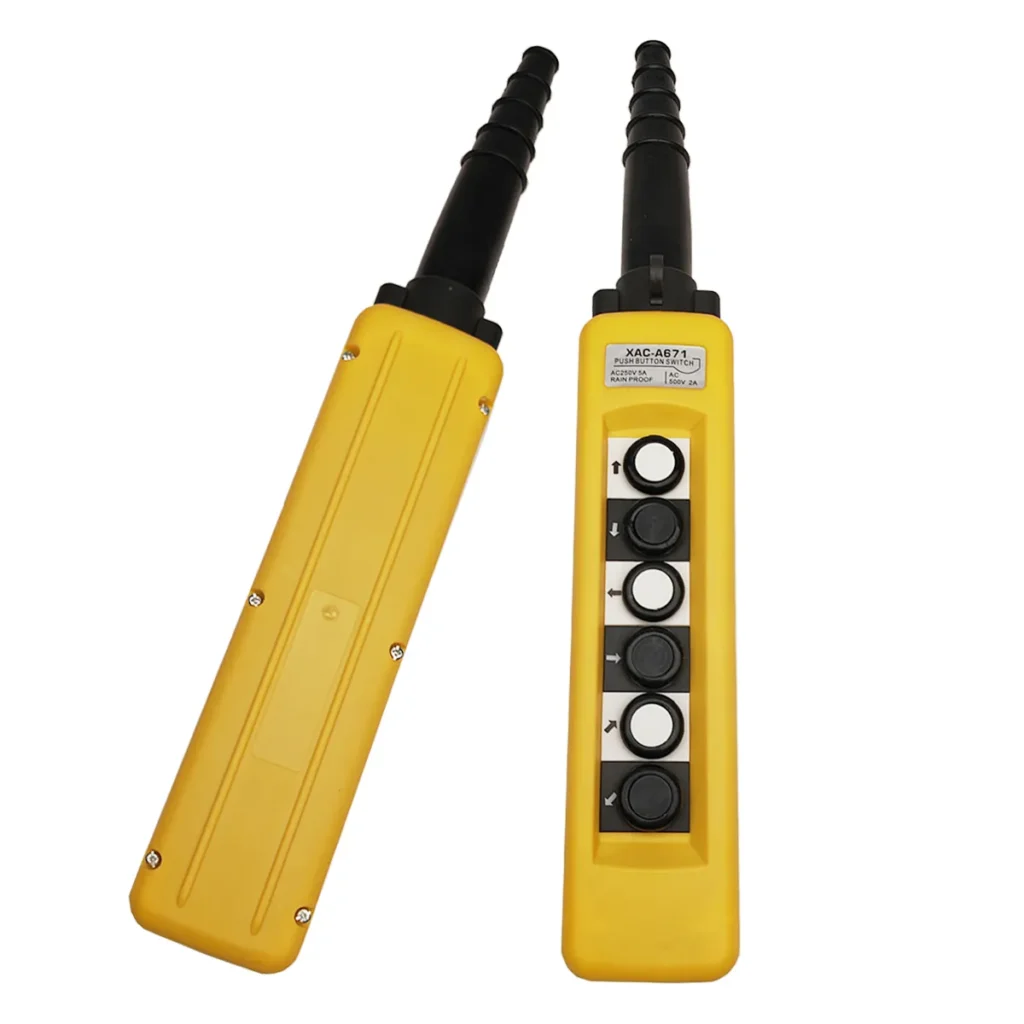
For B2B buyers, the real value starts when a control pendant does more than “work.” It should fit the motion logic of the equipment, reduce wiring confusion, help operators react quickly, and stay serviceable over a long production cycle. In that context, the Pendant Station XAC-A671 Manufacturer profile is commercially interesting because market-listed XAC-A671 and XAC-A6713 variants are described as 6-pushbutton pendant control stations for single-speed motor control, typically using a double-insulated polypropylene enclosure with protection levels around IP65 or IP67. That combination makes the product relevant for buyers searching not only for a push button pendant, but also for a pendant control station, pendant station, and crane pendant control option that balances practicality with industrial safety expectations.
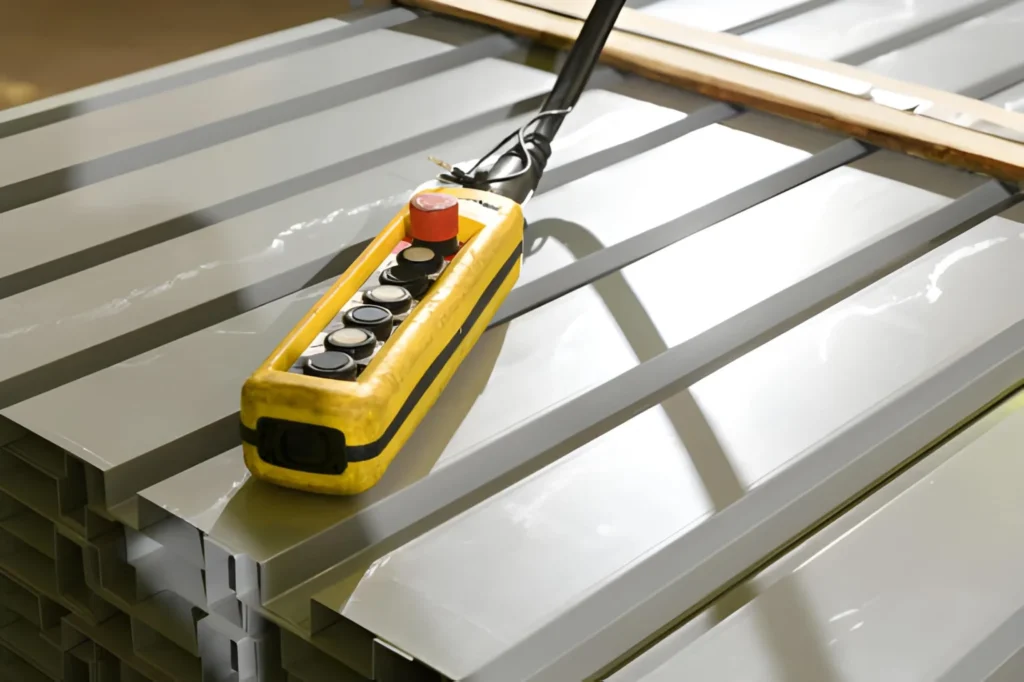
A 6 button pendant control makes sense because six motions fit many real industrial tasks without making the operator hunt for the right command. In market listings for XAC-A671/XAC-A6713, the station is presented for single-speed hoist motor control with six pushbuttons, and typical button functions include raise, lower, left, right, forward, and reverse. I like this layout because it mirrors the way an operator thinks on the floor: lift, lower, travel, position, repeat, and hopefully avoid drama before lunch.
In real purchasing terms, that means the product is useful for overhead handling where the user wants direct local control without the extra complexity of variable-speed electronics or wireless remote systems. This is also where the long-tail keywords matter commercially, because a buyer searching for a control pendant or pendant station often is not browsing for theory; they are trying to solve motion control in a hoist, monorail, workshop crane, or compact lifting setup.
What matters here is not just the number of buttons, but the logic behind them. A badly chosen pendant station slows the operator down, increases training time, and creates avoidable mistakes. A well-matched push button pendant makes the machine feel predictable, and in industrial environments, predictable is a beautiful word.
For the Pendant Station XAC-A671 Manufacturer discussion, the most useful product-level clues come from consistent market listings around the same model family. Those listings describe the XAC-A671 or XACA671 as a complete pendant control station with 6 pushbuttons for single-speed motor control, typically in a yellow polypropylene enclosure, with 10A rating and up to 600V control circuit references in market data. Some sources also list a mechanical durability of 1,000,000 cycles and a rubber sleeve cable entry sized for roughly 8 mm to 26 mm cable diameter.
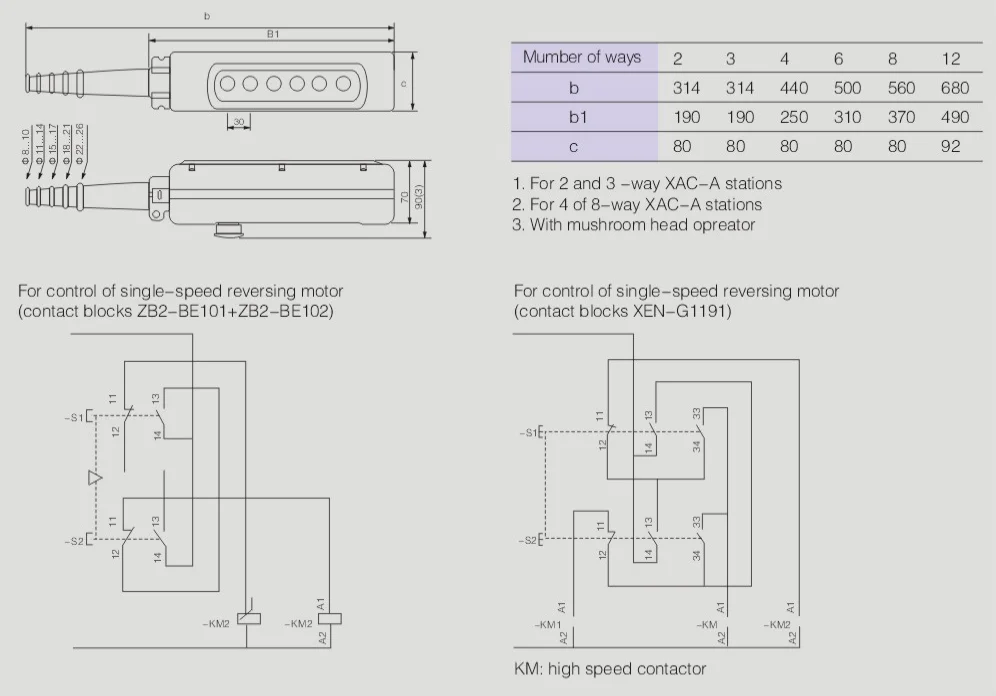
From a B-end perspective, these details matter because they tell me the product is not merely a “generic box with buttons.” It sits in a known industrial format: compact, glove-friendly, serviceable, and familiar to maintenance teams. If I were evaluating a supplier or exporter in China, I would immediately check whether their offered configuration truly matches this common XAC-A671 profile or whether the housing, contact blocks, and sealing level have been downgraded somewhere between the factory sample and the shipment. Yes, that happens more often than brochures admit.
This is why I tell procurement teams not to buy on photo similarity alone. Two pendant control station offers can look almost identical, yet differ in sealing, contact quality, life cycle, or cable support. If you are sourcing for wholesale, project tenders, or repeat OEM demand, those small differences become very large after the first batch reaches a wet, dusty, impatient production site.
A crane pendant control is where this product family becomes especially useful. OSHA’s overhead and gantry crane rule states that the control circuit voltage shall not exceed 600 volts AC or DC, the voltage at pendant push-buttons shall not exceed 150 volts AC or 300 volts DC, and a suspended pushbutton station must be supported in a satisfactory way that protects conductors against strain. The same rule also states that pushbuttons in pendant stations shall return to the off position when pressure is released.
Those are not abstract legal lines for a compliance binder that nobody opens. They directly affect 6 Button Pendant Control product selection, cable design, and installation quality. If a buyer wants a control pendant for an overhead crane, electric hoist, or transfer trolley, the smart conversation is not only “How much is the 6 Button Pendant Control unit?” but also “What is the control voltage, what contact arrangement is used, how are opposite directions interlocked, and How is the 6-button pendant control cable supported?” That is where a serious supplier, manufacturer, or factory partner earns trust. contact us!
In practical wiring terms, the XAC-A671 style pendant station is best understood as a command device, not a magic box. The 6 Button Pendant Control normally feeds control signals to contactors or relay logic, and the actual motor power path stays in the panel or crane electrical system. For a Single/Dual Speed arrangement, opposite commands should be electrically and mechanically managed so the operator cannot request both directions on the same motion path at the same time. Market listings explicitly mention mechanical interlock between pairs on comparable XAC-A6713 products.
I would not promise exact terminal numbering without the 6 Button Pendant Control supplier drawing, because that is where good engineering stops pretending and starts checking documents. Still, for B2B buyers comparing samples, the right questions are very concrete: contact block type, NO/NC arrangement, cable entry range, voltage class, enclosure sealing, and whether an emergency stop variant is required. If your project has operators in gloves, humid air, or frequent washdown exposure, those details matter more than a low unit price that looks handsome only on the quotation sheet.
Some buyers still treat a pendant station as a low-value accessory, but the safety numbers say otherwise. A crane accident summary citing U.S. Bureau of Labor Statistics data reported 297 deaths involving cranes from 2011 to 2017, an annual average of 42, with just over 50% of fatalities involving a worker struck by an object or equipment; 43% of fatal crane injuries occurred in private construction and 24% in manufacturing. Another crane safety study summary reported 249 overhead crane incidents tied to 838 OSHA violations, resulting in 133 injuries and 133 fatalities.
Those figures do not prove that the 6 Button Pendant Control itself causes the problem, of course. What they do prove is that weak control architecture, poor maintenance, unclear operation, and bad procurement choices are not harmless shortcuts. OSHA’s crane guidance also places responsibility on employers to verify equipment condition, conduct required inspections, train workers, and correct unsafe conditions before operation. So when a buyer chooses a 6 Button Pendant Control pendant, that decision sits inside a much bigger safety chain.
Here is the commercial point I make to B2B customers: a reliable pendant control station is cheap compared with downtime, rework, or an incident review. If you are preparing a tender or an annual wholesale purchasing plan, send the supplier your voltage, motion list, environment, and cable requirements before you place the order. It saves time, freight, and a surprising number of emergency phone calls that begin with “We assumed it was standard.”
For international buyers, a China manufacturer or China supplier can be very competitive on this product category, especially when the order volume is stable and the specification is clear. The market around XAC-style pendant station products includes sellers describing themselves as manufacturer, OEM source, distributor, importer, exporter, and wholesaler, which tells me the channel is broad but not equally controlled. In other words, the sourcing opportunity is real, but so is the need for disciplined vendor evaluation.
When I assess a factory or exporter for a 6 button pendant control, I want consistency more than grand promises. I look for confirmation of enclosure material, sealing grade, mechanical life, contact block reference, inspection process, carton labeling, and after-sales service. A supplier that can answer these questions cleanly usually handles volume better than one that responds with “same same” and three blurry photos. I smile at that phrase, but I do not approve purchase orders based on it.
A practical example makes this clearer. Suppose a buyer needs a pendant station for a single-speed workshop hoist used in light fabrication. The cheap offer may look acceptable until you realize the cable gland range is wrong, the internal contact blocks are underspecified, and the housing seal is weaker than the application needs. The slightly better factory quote wins in the end because it reduces failure risk, speeds installation, and supports repeat service parts. That is not glamorous purchasing, but it is profitable purchasing.
My short answer on selection is this: choose the control pendant that matches the machine’s motion logic, the operator’s habits, and the site environment. My short answer on sourcing is even simpler: choose the supplier that gives you confident technical answers before payment, not creative excuses after delivery.
In the end, the 6 button pendant control remains a very sensible B2B product because it solves a very real factory problem with very little theater. When the Pendant Station XAC-A671 Manufacturer specification is matched properly to voltage, motion, enclosure, and service expectations, it becomes the sort of industrial component buyers actually appreciate: straightforward, durable, easy to understand, and ready for repeat orders. And between us, in industrial control, “boring and dependable” is often the highest compliment I can give.
No. Market listings describe the XAC-A671/XACA671 family for Single Speed motor and Dual Speed hoist control, which makes it relevant for hoists and other industrial motion tasks beyond classic overhead crane use.
Not always, but a related 6-button plus emergency stop version exists in the same product family, so buyers should choose based on machine risk assessment and control design.
Comparable listings show polypropylene construction and IP65/IP67 protection, which supports industrial use when the total installation is specified correctly.
Ask for the wiring diagram, contact arrangement, cable entry range, mechanical life, enclosure rating, and inspection standard. The cable entry and life data are specifically listed in catalog-style XACA671 references.
One that can explain voltage fit, cable support, interlock logic, and documentation instead of only quoting the lowest price. OSHA rules make those details important in real installations.