






Détecteur de proximité 7 conseils pour choisir NPN ou PNP
Wilmall supplies Proximity Switch Sensor for B2B buyers, wholesalers and exporters, with factory price, OEM/ODM, custom, private label and white label service.
Read More
If you work with industrial automation—or even just sensors—you’ve probably heard of a capteur de proximité. These nifty devices can detect objects without physical contact by simply sensing their presence within a specific distance. But did you know that the sensing distance can significantly influence which output type you should choose for your sensor?
It’s true! Understanding how sensing distance interacts with output types like PNP and NPN is crucial for getting reliable, efficient sensor performance. In this blog, we’re going to break all this down in simple terms so you can make smart decisions for your applications.
Whether you are a seasoned engineer or just getting started, by the end of this article, you’ll have a clear grasp of how to pick the right output based on sensing distance—and some handy tips to help you avoid common pitfalls.
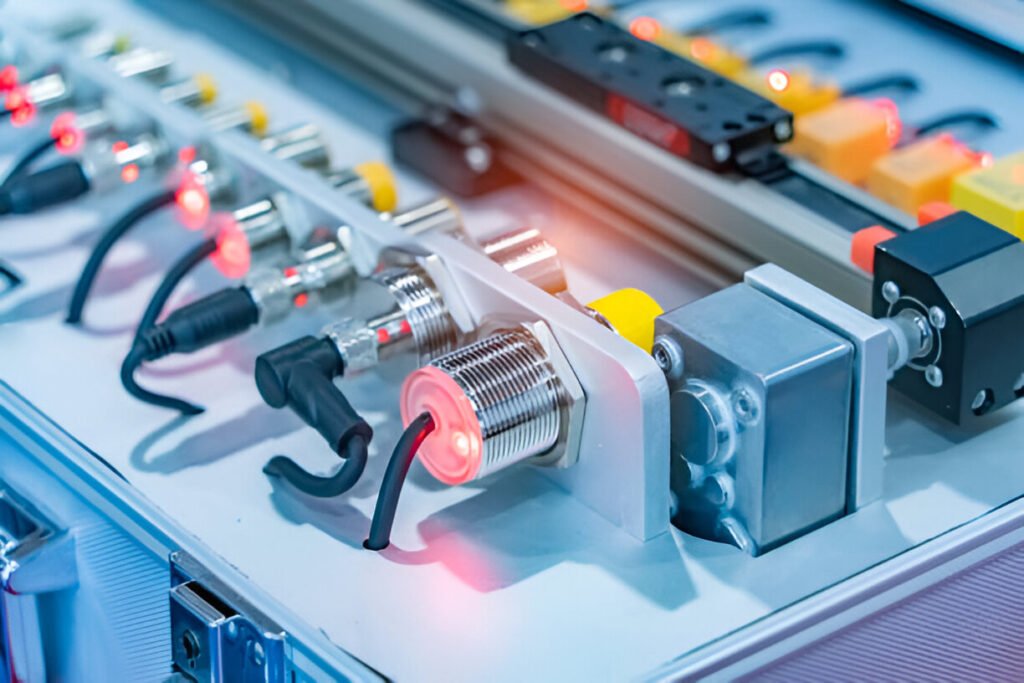
Before diving deeper, let’s get clear on what sensing distance actually means.
Different types of proximity sensors have typical sensing distance ranges:
| Type de capteur | Distance de détection typique |
|---|---|
| Inductif | 1 mm to 60 mm |
| Capacitif | 1 mm to 50 mm |
| Ultrasons | Up to several meters |
| Photoélectrique | Several centimeters to meters |
Why does this matter? Because a Proximity switch sensor output type may work better at certain sensing distances. For example, longer sensing distances may require different output characteristics for signal clarity and electrical compatibility.
Now that sensing distance basics are clear, let’s talk output types:
Here’s a simplified table comparing these:
| Type de sortie | Principe de fonctionnement | Common Application |
|---|---|---|
| PNP | Sources current to the controller input | When PLC or controller expects positive signals |
| NPN | Sinks current from the controller input | When PLC or controller reads grounded signals |
| NO | Conducts current only on object detection | Detect presence only |
| NC | Conducts current until object detected | Safety or fail-safe applications |
Each output type has pros and cons depending on sensing distance and load conditions.
Now the million-dollar question: how does sensing distance affect which output type to choose?
A few key points to consider:
| Condition | Type de sortie recommandé | Raison |
|---|---|---|
| Long sensing distance (>30mm) | PNP | Better noise immunity and signal stability |
| Short sensing distance (<10mm) | NPN | Simple circuits, less interference risk |
| Mixed load or complex control | NO/NC | Reliable on/off switching modes |
Understanding these trade-offs can save time and prevent costly Proximity switch sensor malfunctions.
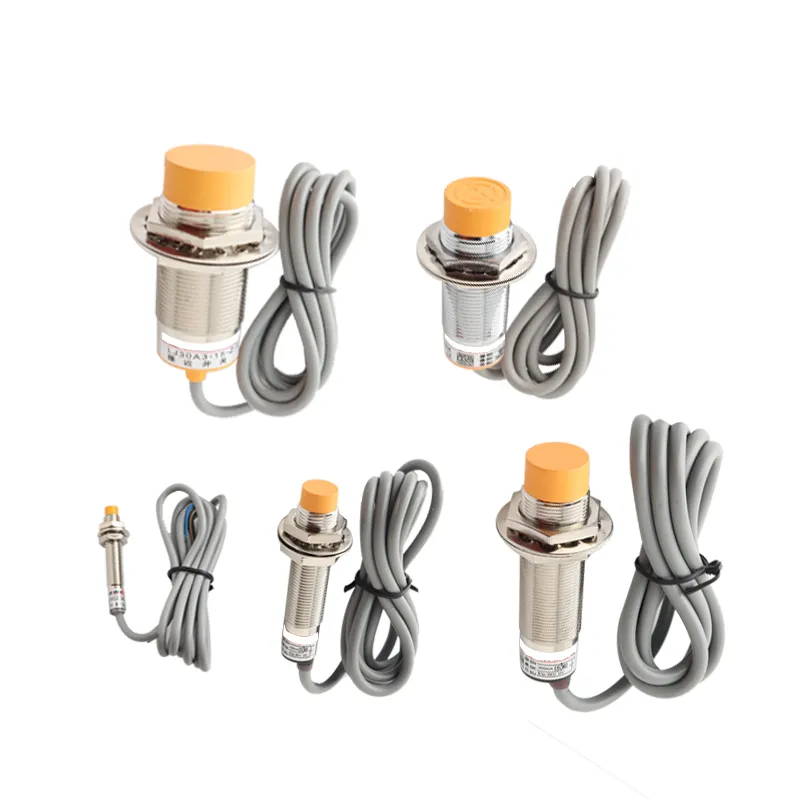
Boost your automation reliability by choosing the right proximity switch sensor output type today!
Wondering how to tell if the sensing distance on your Proximity switch sensor matches your needs? Here are some tips.
Here’s a checklist for suitability:
| Checkpoint | What to Look For | Action Needed |
|---|---|---|
| Environmental effects | Temperature, dust, humidity | Choose sensor with protected casing |
| Target material properties | Metal vs non-metal surfaces | Adjust sensor type accordingly |
| Required detection speed | Fast-moving vs static objects | Choose appropriate sensor response time |
| Wiring distance and noise | Long cables, industrial electrical noise | Prefer PNP output and shielded cables |
If uncertain, always ask your supplier for customized advice to optimize sensing distance and output types.
Let’s talk about the two main output types you’ll encounter—PNP and NPN—and how they perform across sensing distances.
| Fonctionnalité | Sortie PNP | Sortie NPN |
|---|---|---|
| Wiring | Sources positive voltage | Sinks to ground |
| Immunité au bruit | Typically better for long distances | More prone to noise at long cable runs |
| Common Industrial Use | Preferred for longer sensing distances | Used often in Europe and some PLC systems |
| Maintenance | Simplified wiring and troubleshooting | Sometimes requires more complex grounding |
When sensing distance is long, PNP tends to provide more reliable output signals by effectively driving voltage through the load. Short distances and simpler wiring often benefit from NPN’s sinking output.
In the world of proximity switch sensor, sensing distance is not just an arbitrary number—it directly shapes the choice of output type. Short distances might call for simple NPN outputs, but when you need that extra reach and reliability, PNP shines.
By weighing factors like environment, target material, wiring length, and control system compatibility, you can pick sensors that perform consistently in your applications. Remember to test in real-world conditions and consult your trusted capteur de proximité supplier.
If this all sounds a bit overwhelming, don’t worry—contacting a professional team can simplify sensor selection and keep your production line running smoothly.
Ready to optimize your sensor setup? Reach out and get a customized solution tailored to your exact needs today!
Usually, sensors have fixed rated distances, but some models allow sensitivity tuning to optimize performance per application needs.
No. They have opposing wiring and logic. Using the wrong type can cause circuit malfunction or damage. Always verify your system’s input requirements.
Incorrect output choice can lead to signal unreliability, false triggers, or no detection at all, potentially causing production downtime.
Miswiring power and output lines between PNP and NPN sensors is a frequent error. Always refer to wiring diagrams and label cables carefully.
Generally, longer sensing distances and more complex output types drive up costs, but investing properly avoids larger operational risks.