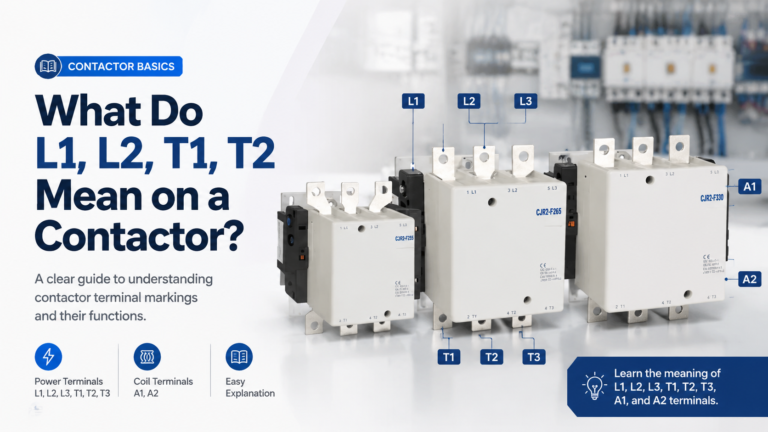
L1/L2 are the line (supply) terminals of a contactor and T1/T2 are the load terminals. Learn the single-phase and three-phase wiring rules, coil A1/A2, aux contacts, and the mistakes that burn contactors.
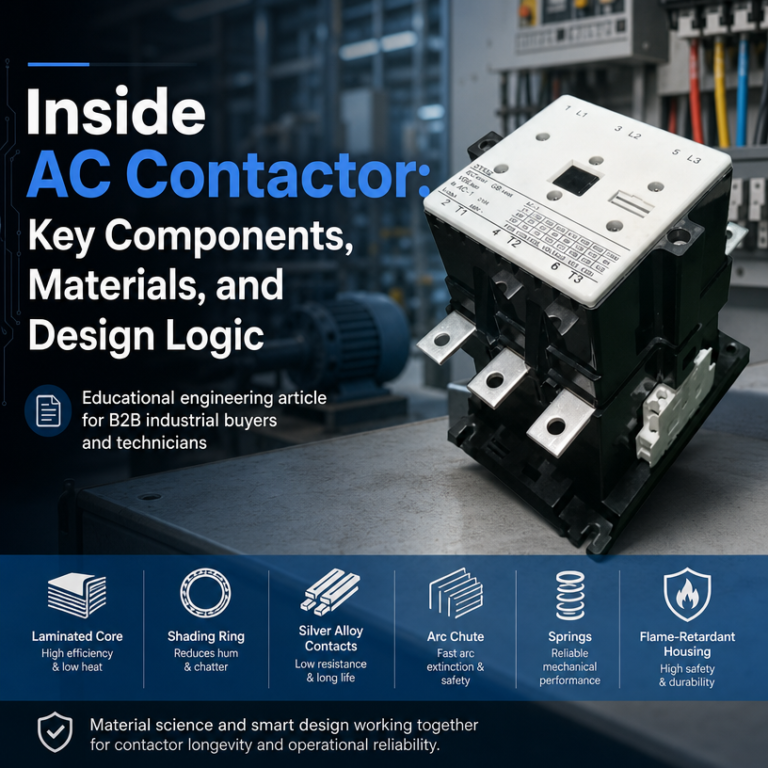
Take a look inside an AC contactor: coil, laminated core, shading ring, silver-alloy contacts, arc chute and springs — and the material science that decides contactor life.
Step-by-step contactor troubleshooting for buzzing, chattering, and coil failure — match the sound to the cause, measure coil voltage under fault, and fix the root issue without replacing good parts.
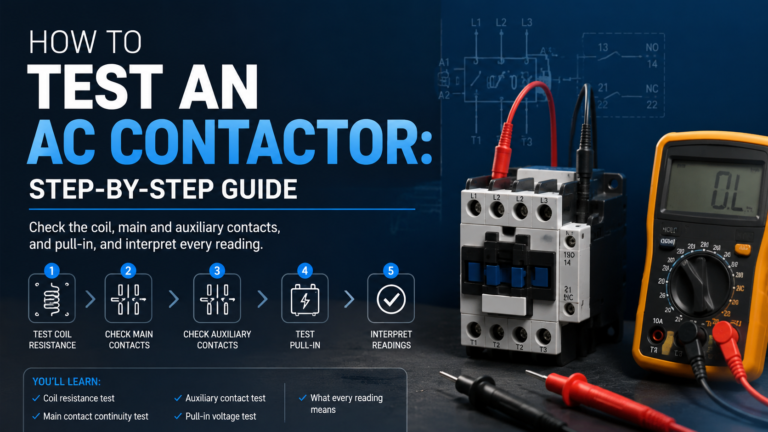
A bad AC contactor can silence your entire cooling system. This guide walks you through the top symptoms of contactor failure and step-by-step multimeter testing to confirm the diagnosis before replacing parts.
A practical comparison of contactors and control relays covering current ratings, arc suppression, contact configuration, standards, and selection guidance for industrial motor and control circuit applications.
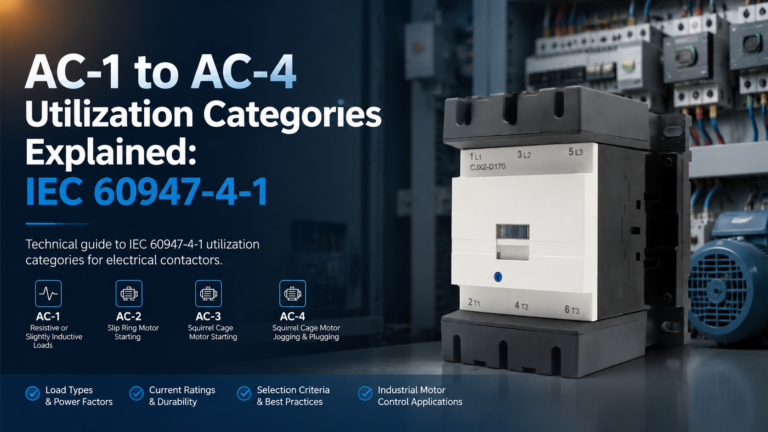
IEC 60947-4-1 defines AC-1 to AC-4 utilization categories for contactors. Learn the differences in load type, power factor, current ratings, and how to select the right category for your motor application.
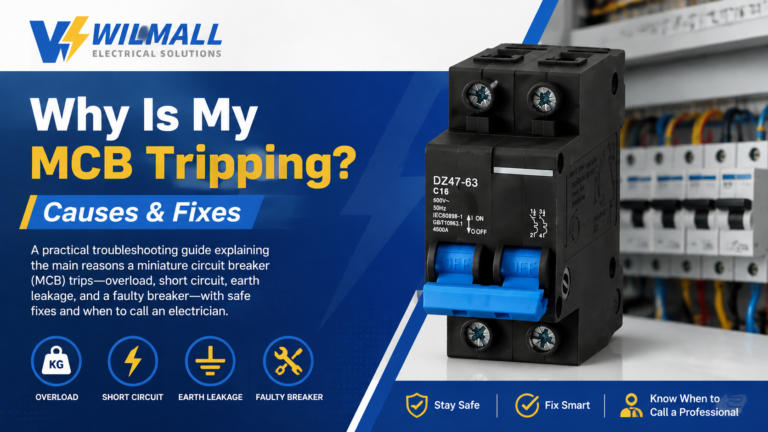
Your MCB trips for four main reasons: overload, short circuit, earth leakage, or a faulty breaker. This guide explains each cause, how to find it, and how to fix it safely.
Step-by-step guide to testing an AC contactor with a multimeter: check the coil, main and auxiliary contacts, and pull-in, and interpret every reading.
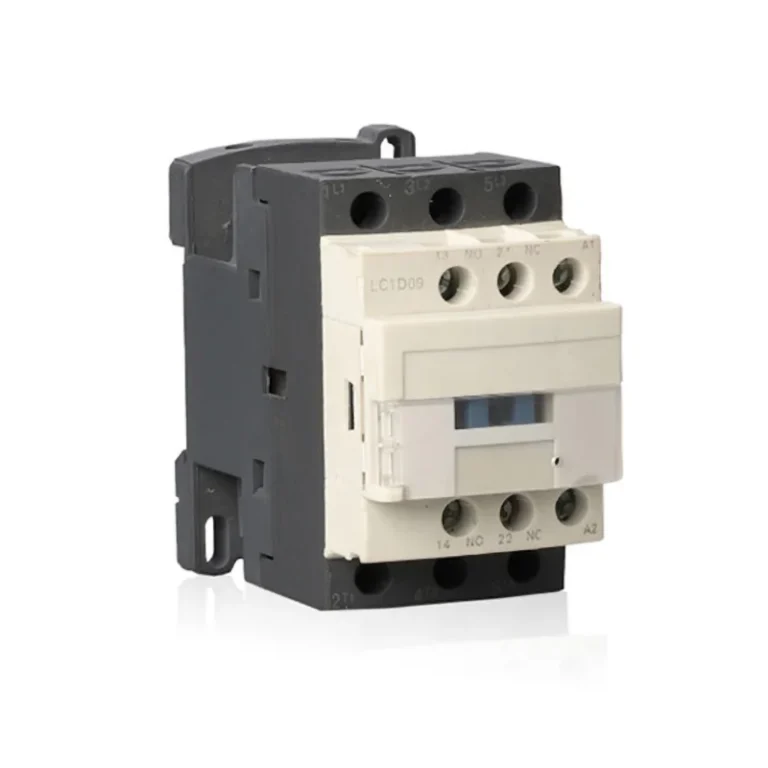
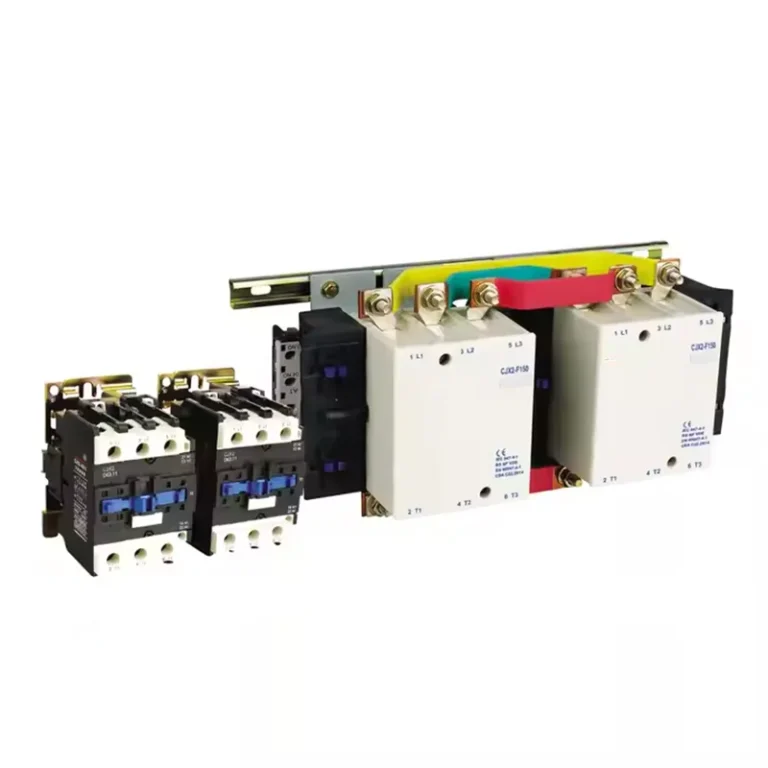
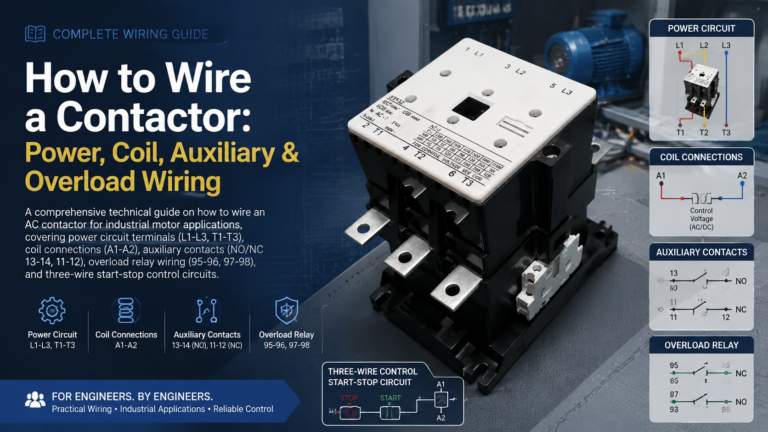
Understanding Contactor Terminal Markings Before wiring any contactor, you need to read its terminal markings correctly. Every contactor follows standardized numbering conventions that tell you exactly where each wire goes. Getting these wrong can short your control circuit, burn the coil, or fail to energize the motor at all. Terminal Function Notes L1, L2, L3 Line (power input) Three-phase supply from breaker T1, T2, T3 Load (power output) Motor or downstream load A1, A2 Coil terminals Control voltage input 13 → 14 Auxiliary NO contact Normally open; closes when coil energizes 11 → 12 Auxiliary NC contact Normally closed; opens when coil energizes 95 → 96 Overload relay NC Opens […]
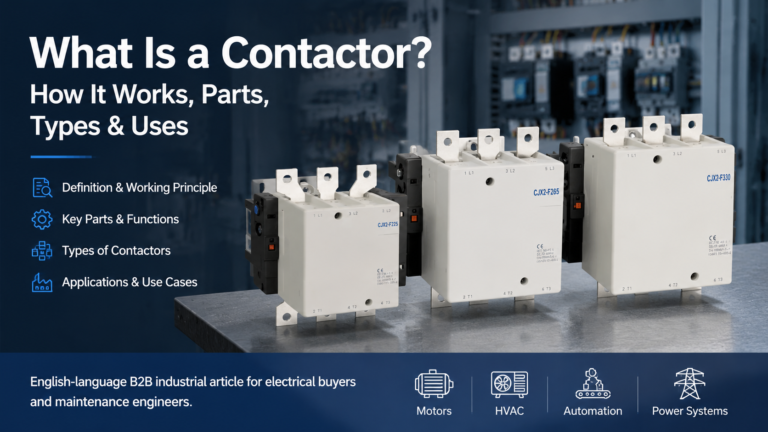
A contactor is an electrically controlled switch for repeated high-current switching. Learn how it works, its main parts, common types, and typical industrial uses.