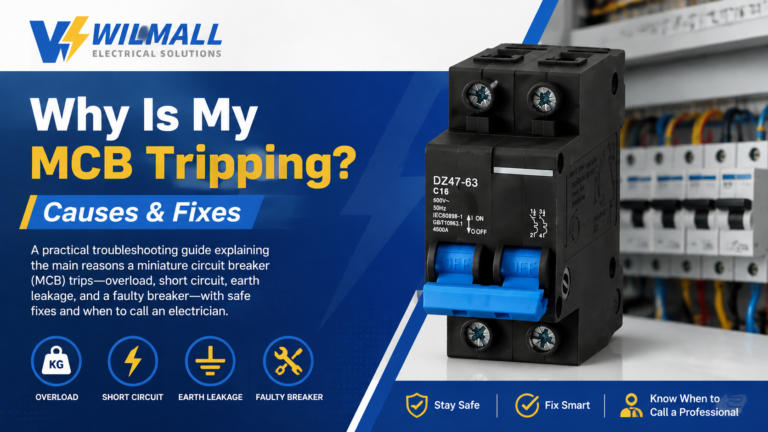







Why Is My MCB Tripping? Causes & Fixes
Your MCB trips for four main reasons: overload, short circuit, earth leakage, or a faulty breaker. This guide explains each cause, how to find it, and how to fix it safely.
Read More
A 2 button pendant control looks simple, but choosing the wrong one can create real problems in hoist and lift applications. A pendant that does not match the control circuit, operating logic, or site conditions may lead to wiring changes, awkward operation, premature wear, or a replacement that still does not solve the original issue.
This article helps you make a practical decision. You will see what a 2 button pendant control actually does, where it fits, where it does not, what to check before buying, and how to avoid the common mistakes buyers make when comparing an electric hoist push button switch, a lift pendant control switch, or an overhead crane pendant control.
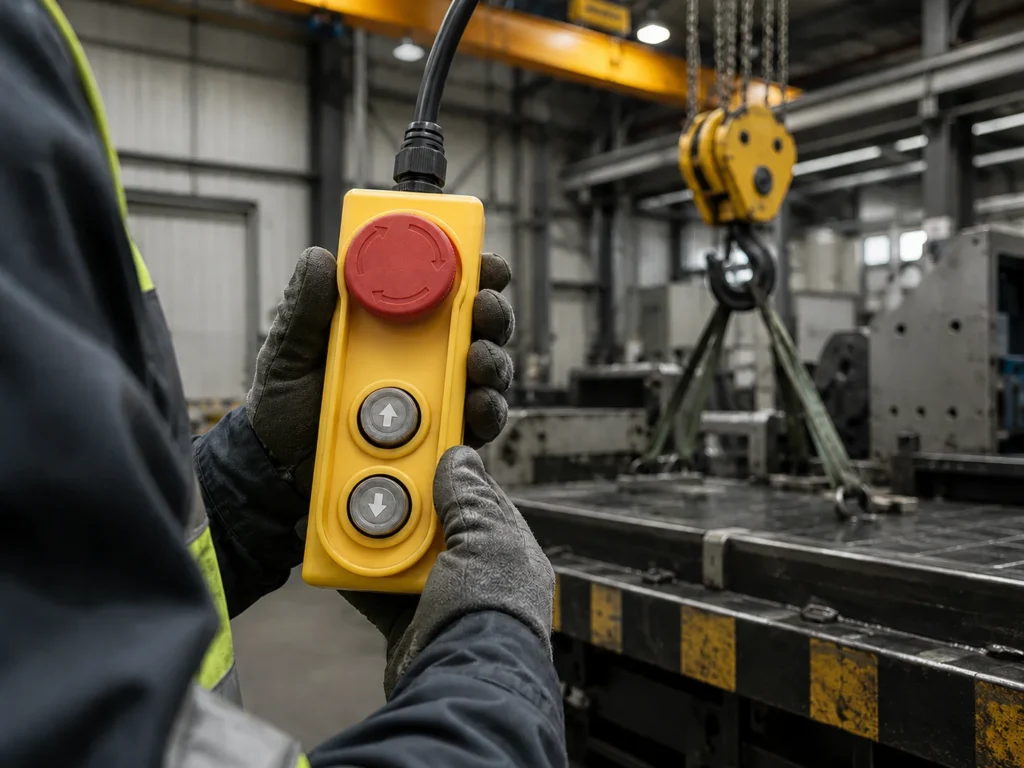
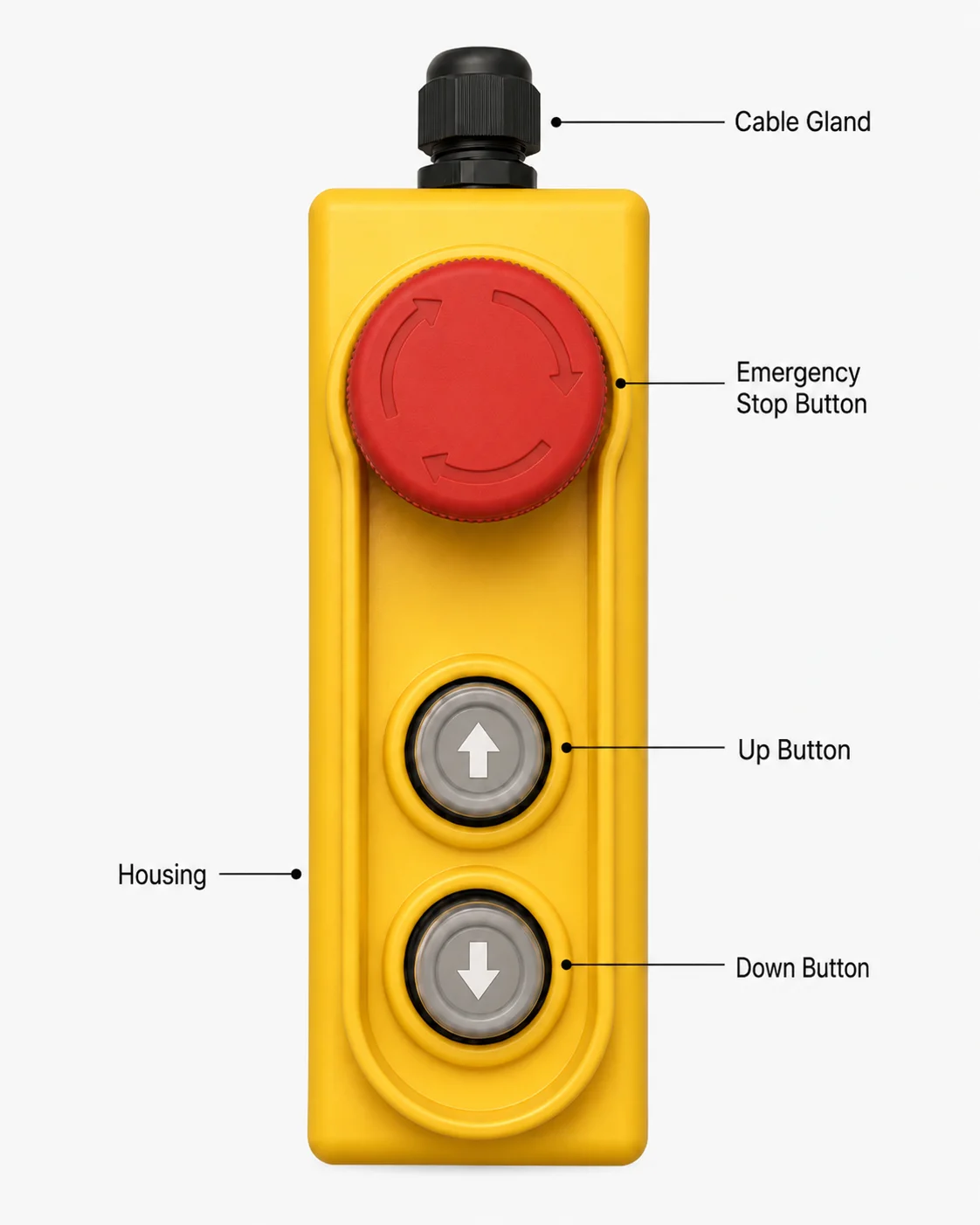
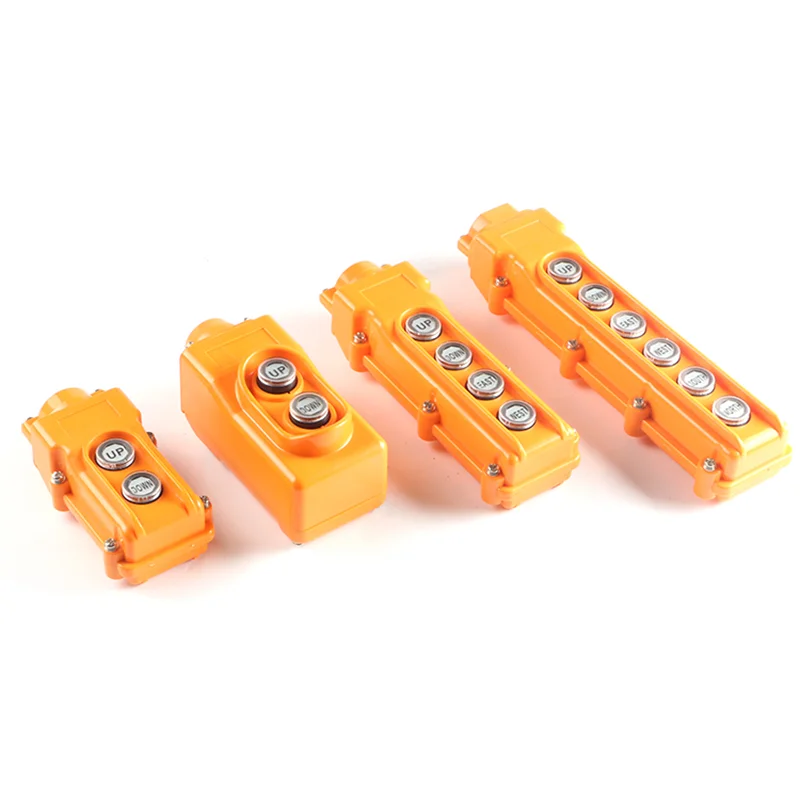
A 2 button pendant control is a hand-held control station designed for simple machine motion. In most cases, the two buttons command one reversible action, such as up/down or forward/reverse. That makes it a common starting point for basic lifting or motion tasks where the operator only needs two deliberate inputs.
In hoist applications, the pendant usually sends low-voltage or control-circuit commands to a contactor or relay system rather than switching the motor load directly. That distinction matters, because buyers often focus on the number of buttons and overlook the control circuit behind them.
Different buyers also use different names for very similar products. The table below helps connect the search terms.
| Search term | What it usually refers to | 代表的な使用例 |
|---|---|---|
| 2 button pendant control | A pendant with two command buttons | Up/down or two-direction control |
| Electric hoist push button switch | A pendant or switch unit for hoist control | Hoists, lifts, small lifting stations |
| Lift pendant control switch | A hand-held switch for lift motion | Platform lifts, hoists, service lifts |
| Hoist control pendant station | A pendant housing with one or more control buttons | Hoist and crane control |
| Push button control box for crane | A control enclosure with push buttons for crane motion | Crane or material handling systems |
So if you are searching for a hoist control pendant station, you may still be looking at the same product family as a 2 button pendant control. The real question is not the label. It is whether two buttons are enough for the job you need to control.
A 2 button pendant control works best when the machine only needs one basic reversible motion and the operator does not need extra functions such as travel, speed selection, horn, or emergency stop in the same pendant.
Typical fit-for-purpose scenarios include:
It can also make sense in retrofit work. If an older pendant failed and the machine still only requires two command functions, replacing it with another 2-button unit may be the cleanest path. That is especially true when you want to avoid redesigning the operator interface.
The key is to judge the motion requirement honestly. If the operator needs only one direction pair and nothing else, a 2 button pendant control can be the right level of control. If the job involves more actions, two buttons stop being a benefit and become a limitation.
Many buyers assume a 2-button unit is enough because the machine “basically goes up and down.” That may be true for a simple hoist, but it is not always true for a crane or more involved handling system.
A 2-button pendant control is usually enough when:
It is usually not enough when:
| 特徴 | 2-button pendant control | Multi-button pendant station |
|---|---|---|
| Controlled motions | One reversible motion | Multiple motions or extra functions |
| Typical fit | Small hoist, simple lift, jog control | Overhead crane, multi-axis lifting system |
| Operator demand | Low complexity | Higher complexity |
| Wiring complexity | Lower | Higher |
| Upgrade flexibility | Limited | Better for added functions |
This is where many overhead crane pendant control decisions go wrong. A user may search for a push button control box for crane and choose a 2-button model because the enclosure looks similar to the old unit. But if the crane also needs travel control or multi-speed operation, the new pendant will not match the actual use case.
The safer rule is this: start with the number of controlled actions, not the number of buttons you happen to see on a replacement part.
Even when two buttons are functionally enough, you still need to confirm whether the pendant matches the electrical and environmental demands of the application.
First, check the control voltage. A pendant for a control circuit at 24 V, 48 V, 110 V, or 220 V must match the actual system design. The pendant may look correct from the outside but still be wrong for the circuit logic or contact arrangement. IEC 60947 standards for low-voltage controlgear.
You should also confirm:
Pendant stations are used by hand, so grip and housing design matter more than many buyers expect. A control unit that feels acceptable on a product page may be tiring or awkward in a real lifting station.
Check:
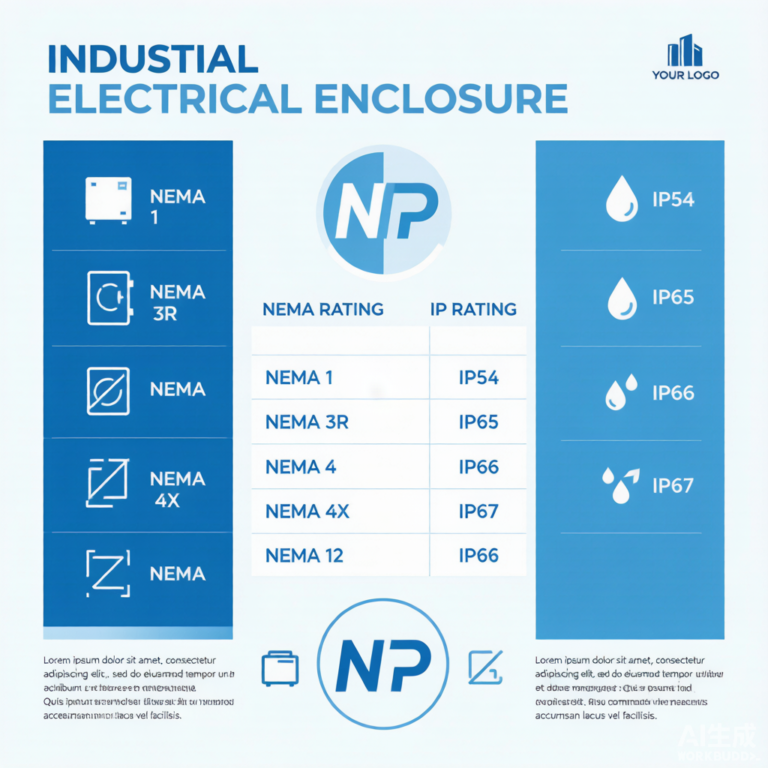
A pendant near a clean indoor assembly line does not face the same risks as one near dust, humidity, oil mist, or frequent washdown. If the site environment is harsh, enclosure protection should be part of the decision, not an afterthought.
| What to check | なぜそれが重要なのか | What can go wrong if ignored |
|---|---|---|
| Control voltage | Must match the control circuit | The pendant will not operate correctly |
| Contact type | Determines switching logic | Incorrect motion or no response |
| Button action | Affects operator control | Unsafe or inconvenient operation |
| Enclosure protection | Must suit dust, moisture, oil | Premature failure |
| Housing and grip | Affects daily use | Poor handling and operator fatigue |
| Wiring space | Impacts installation quality | Difficult wiring or maintenance issues |
| Replacement fit | Important in retrofit work | Rework, extra parts, longer downtime |
A 2 button pendant control is often purchased as a “simple part,” which is exactly why mistakes happen. The simpler a component looks, the more likely people are to assume any similar item will work.
Two buttons do not automatically mean the same function. One model may be intended for a basic hoist command circuit, while another may be configured for a different control logic. The correct question is not “Does it have two buttons?” but “Does it perform the same control task in the same circuit?”
This is one of the most expensive replacement errors. A pendant can match the old unit visually and still require different contact logic or different electrical conditions.
A hoist control pendant station is usually handled repeatedly and often while the operator watches moving loads. That makes ergonomics, hanging orientation, and enclosure durability more important than they would be in a stationary machine panel.
Many maintenance teams try to save time by matching shape, color, and button layout only. That works sometimes, but it is not a reliable method.
| Common mistake | Likely result | Better approach |
|---|---|---|
| Matching by appearance only | Wrong replacement | Verify circuit and contact details |
| Looking only at button count | Function gap | Start from machine motions |
| Ignoring environment | Short service life | Match enclosure to site conditions |
| Buying a generic box for hoist use | Poor handling or durability | Compare pendant-specific design features |
A simple step-by-step review usually gives a better result than comparing product photos.
List every action the operator needs to control from the pendant. If the answer is only up/down or one other two-direction movement, a 2-button unit may be appropriate. If you need hoist, trolley, and bridge movement, you are already beyond the scope of a basic 2-button design.
Check the voltage, contact arrangement, and wiring logic before you shortlist anything. This is the part buyers skip when they are under time pressure, and it is usually the reason a replacement does not go smoothly.
Think about where the pendant will be used, how often it will be handled, and what the enclosure will be exposed to. A pendant in a dry indoor station has a different requirement profile from one near oil, dust, or frequent handling during maintenance tasks.
If your application only needs basic up/down or two-direction control, a compact 2-button pendant control can be a useful reference when evaluating housing style, grip, and simple control layout. The point is not to assume that one model fits every job, but to compare your own electrical and operating requirements against a realistic product format.
If you are replacing an existing hoist control pendant station, confirm the control voltage, contact logic, and enclosure needs before you shortlist models. That small check often saves more time than ordering a visually similar replacement and then discovering it does not fit the application.
If you comparing 2 button pendant control for a hoist or lift project, Please contact us to explore suitable pendant control station options.
A 2 button pendant control is the right choice when the machine needs only one simple reversible action and the control circuit, enclosure, and operating conditions all line up with that simplicity. It is not the right choice just because the old pendant had two buttons or because the product looks compact and familiar.
If you are choosing for a hoist, lift, or replacement project, make the decision in this order: define the motion, verify the circuit, check the environment, and then compare pendant formats. That approach gives you a control device that fits the job instead of a part that only looks close enough.
It is typically used for one reversible motion, such as up/down or forward/reverse. Common examples include small electric hoists, lift controls, and simple industrial jog functions.
It can be, if the hoist only needs basic up/down control and no additional functions. If the system also needs travel control, multi-speed operation, or extra commands, you will likely need a larger pendant station.
A hoist control pendant station is usually designed for hand-held operation in lifting tasks, where grip, hanging use, and repeated operation matter. A general push button box may look similar but may not match the same operating conditions or control logic.
No. You should confirm the control voltage, contact arrangement, button behavior, and enclosure suitability first. A visually similar replacement can still be electrically incompatible.
Start with the number of motions you need to control, then check voltage, contact type, enclosure protection, and wiring fit. For crane use, it is also important to confirm whether the pendant needs to support travel, hoist, or multiple speeds.
Count the actual operator commands required during normal use. If the operator needs more than one reversible motion or any extra function beyond that, a 2-button pendant is usually too limited.